
Our Silent Gliss review in short: the Swiss company has made quiet curtain systems since 1952, and its electric tracks and dim-out blinds are first rate for long, heavy or hard-to-reach windows. QMotion, a battery blind we also specify, suits finished rooms. The catches are power at the window, gateways for smart control and no direct Lutron link.
Last reviewed: 17 October 2026
This is a look at both companies and what owning their products is like. For how we specify and install them, see our Silent Gliss and QMotion page.
Where do Silent Gliss and QMotion come from?
Silent Gliss began with a Swiss patent. According to a Wirtschaftsforum interview with its German business, the 1952 patent combined an aluminium track with nylon gliders, and the quiet, gliding curtain it produced gave the company its name. A motorised curtain track followed in 1964. Today the group headquarters is Silent Gliss International Ltd in Bern, Switzerland, and the same interview describes a Swiss holding company with 13 subsidiaries across Europe, the Middle East and the Far East. Neither source describes who owns the group.
QMotion is younger and American. Legrand North America bought QMotion in December 2015 to add shading to its lighting control business, and in 2022 it renamed the US brand Legrand Shading Systems. In the UK the QMotion name lives on through QMotion EMEA, which says it was incorporated in 2013 to make QMotion blinds in the UK and Ireland, is based in Milton Keynes and uses motors and parts supplied by Legrand (QMotion EMEA).
What are Silent Gliss and QMotion known for?
Silent Gliss is known for curtains that move quietly and smoothly, which it describes as the industry benchmark for its motorised systems (Silent Gliss motorisation). That is Silent Gliss’s own description, so we always hear one running in a silent room first. When we checked its electric curtain tracks on 14 October 2026, the range was the SG 5100 and the bigger SG 5600, rated for runs of up to 25 metres and 65 kg. Beyond tracks, its UK range covers the Metropole curtain pole, several kinds of blind and its own fabrics (checked 14 October 2026).
QMotion is known for one clever idea: a counterbalance spring in the tube carries the weight of the fabric, so even a big blind needs very little motor power. Its UK site, checked on 14 October 2026, rates the batteries at up to three years, offers a wired system called QIS for new builds and lets you move every blind by hand when you want to (QMotion EMEA).
Why do clients choose them?
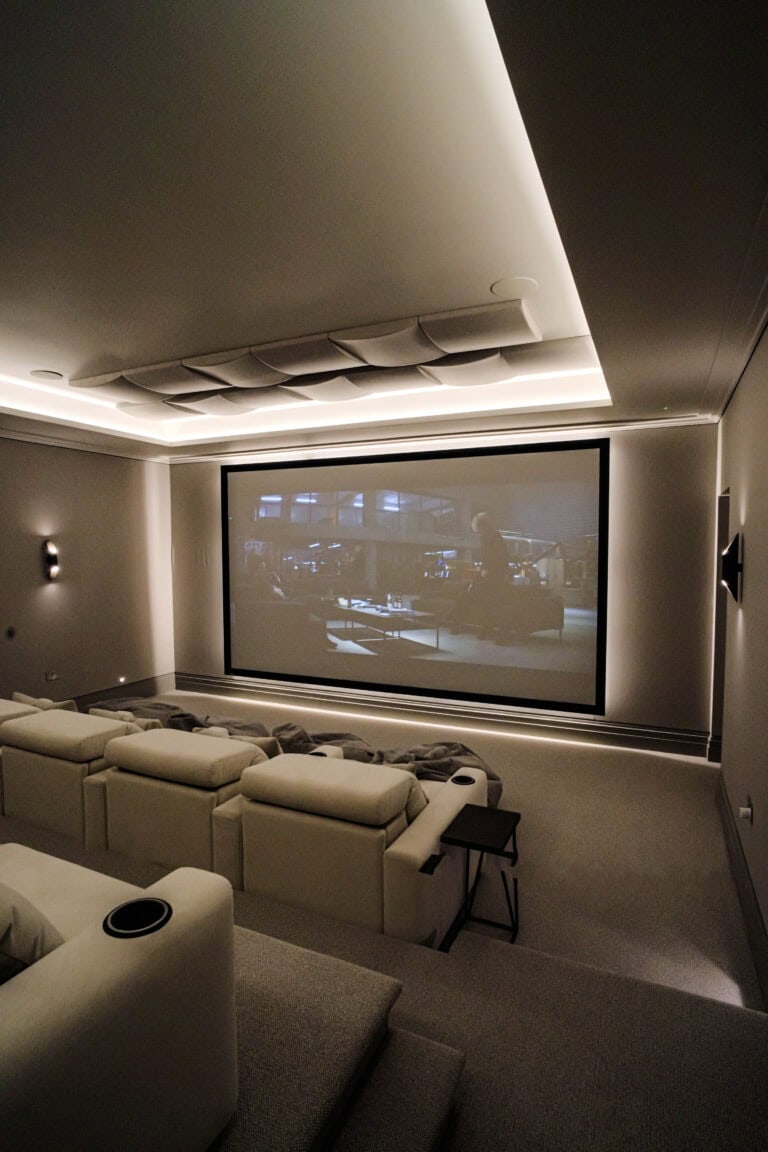
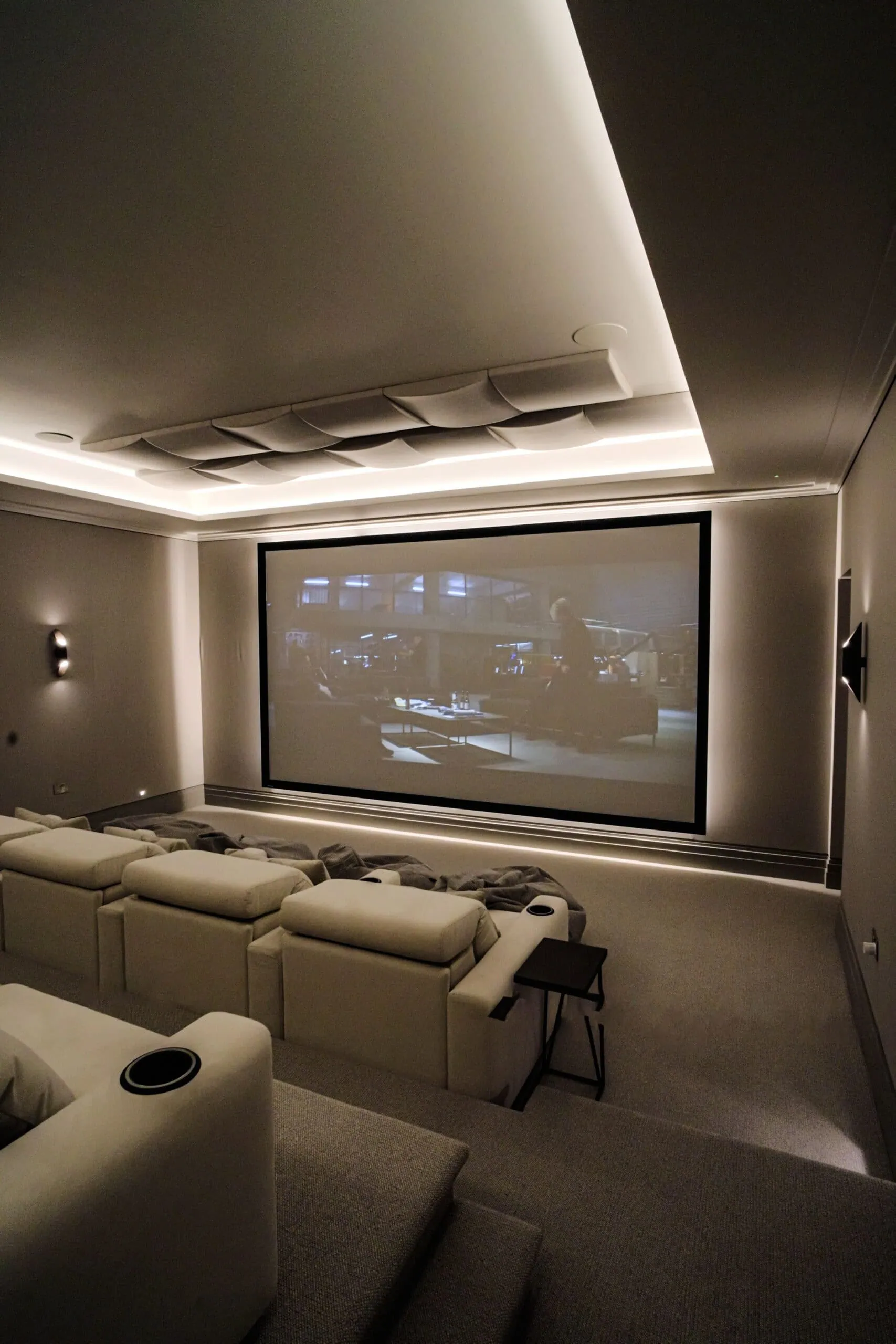
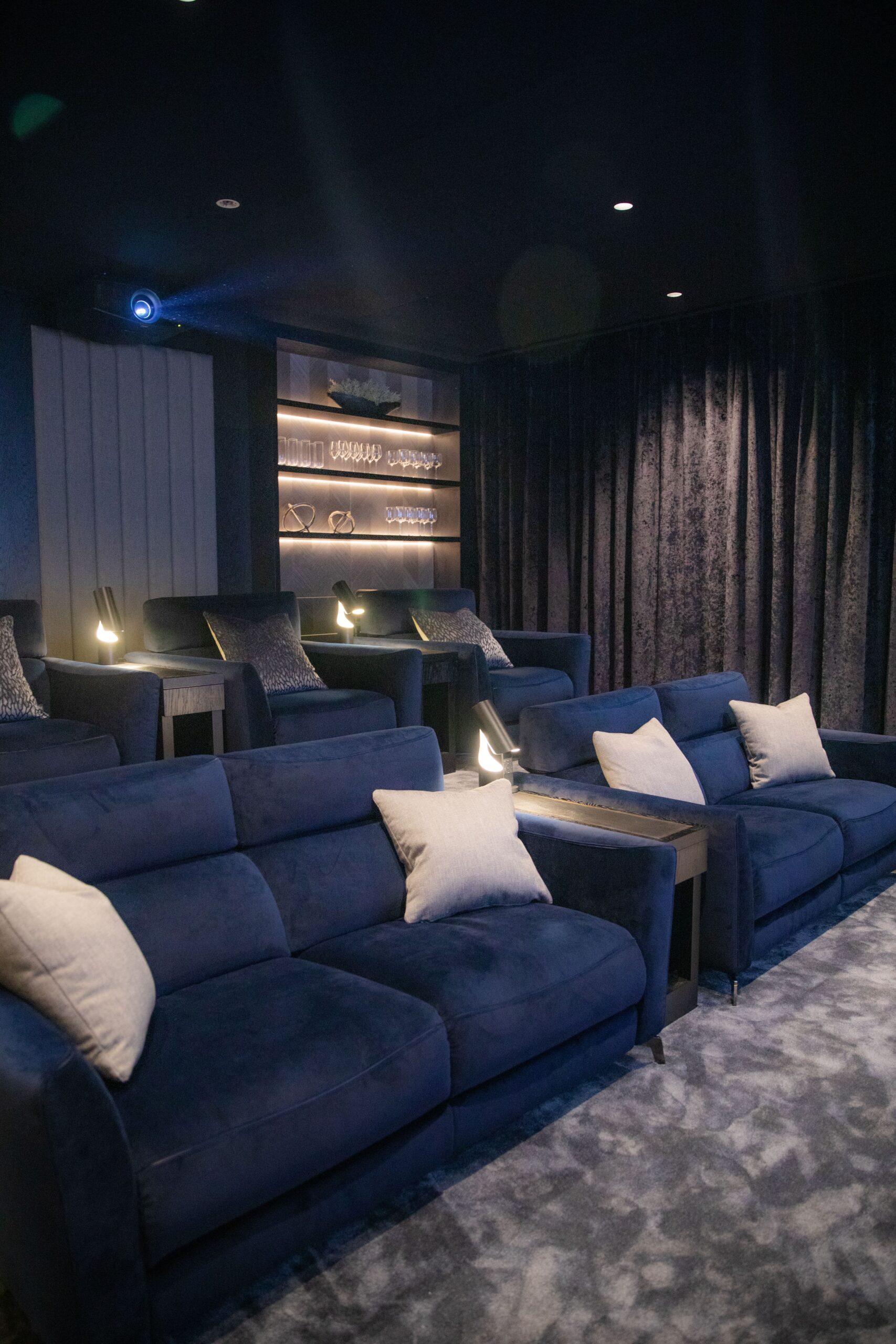
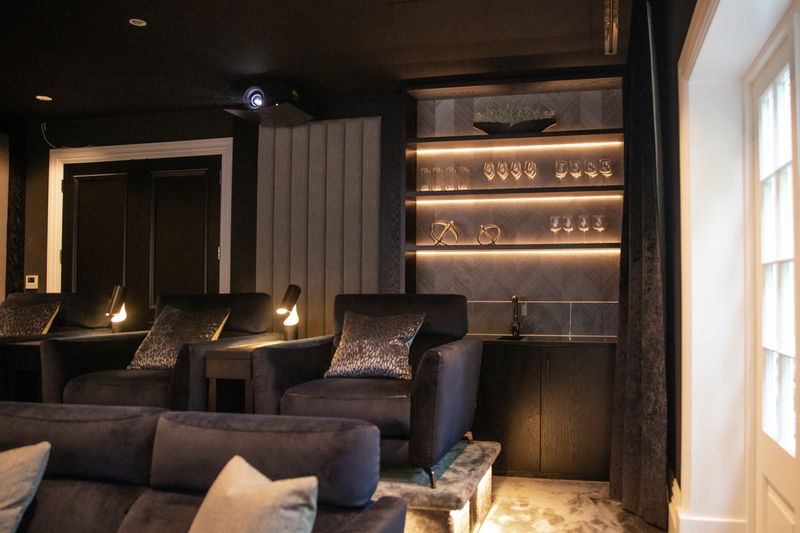
Usually for darkness, quiet and good looks. In the media room we renovated in Walton-on-Thames, designed with Fiona Brass Interiors, Silent Gliss supplied the blackout blinds, and they sit alongside Lutron HomeWorks lighting, Control4 automation and a Sony laser projector. The aim was a sleek, sophisticated media room, and the blinds are part of that finish.
In the Epsom media room and sports bar, the brief was one room for matches, films and games, so daylight had to be shut out on demand. QMotion automated blackout blinds do that job, and the family adjust them from the same control pad that changes the LED lighting and runs the AV. Battery blinds also appeal for a simpler reason: in a finished room they need no new cable to the window.

What are the pros and cons of Silent Gliss and QMotion?
Our honest summary, drawn from both makers’ websites and Control4’s driver database, all checked on 14 October 2026.
| Brand | Pros | Cons |
|---|---|---|
| Silent Gliss | More than 70 years of curtain engineering. Electric tracks for long, heavy or out-of-reach curtains. Its own blinds and fabrics, so one supplier covers the window. Smart motor drivers for Control4, Crestron, KNX, Savant and Rako. | Electric tracks need power at the head of the window, so they belong in the first-fix plan. Smart control needs Smart motors and a gateway. Lutron isn’t on its driver list. Quiet running is the maker’s claim, not an independent measurement. |
| QMotion | Battery blinds that need no new wiring. A manual override. Zigbee or wired QIS control (checked 14 October 2026), with QMotion drivers in Control4’s driver database. Blinds made in the UK by QMotion EMEA. | Batteries are rated for up to three years, so every headrail needs to stay reachable. QMotion had to issue motor firmware 2.1.23 to fix Control4 connection problems after power cuts or long idle periods. Its integration page doesn’t mention Lutron. |
Who do Silent Gliss and QMotion suit, and who do they not?
Silent Gliss suits renovations and new builds with tall windows, long runs of heavy fabric or glazing nobody can reach, particularly when an interior designer is choosing the fabrics. It works best while the walls are open, because power has to reach the window head. Our motorised blinds and shading service is where we plan that.
QMotion suits finished rooms, period interiors where nobody wants walls chased, and anyone who wants to be able to pull a blind down by hand when a battery is flat or the system is off. It is less suited to a house where nobody will ever want to reach a headrail to change batteries, and Silent Gliss electric tracks are less suited to a room that is already decorated and has no power near the window.
How do they fit a Control4 and Lutron home?
Both case studies are Control4 and Lutron houses, which is typical: most of our projects pair Lutron lighting with Control4 automation. Neither blind brand lists a direct Lutron link, so Control4 is where they meet. Silent Gliss Smart motors join through a gateway with a Control4 driver, and QMotion blinds talk to the Control4 controller over Zigbee or, in wired form, over serial. In a Control4 smart home, a Film scene can then close the blinds while the Lutron lights fade, and a Goodnight scene can close every blind on the ground floor.
Where a house has Rako lighting instead, both brands appear on Rako’s integration list, so blinds and lights can share a keypad. To see how lighting, blinds and AV come together in a working room, book a visit to our Walton-on-Thames showroom, by appointment.
Frequently asked questions
How old is Silent Gliss?
The company dates its history to 1952, when a Swiss patent for an aluminium curtain track with nylon gliders led to the first quiet, gliding curtain and gave Silent Gliss its name. A motorised curtain track followed in 1964. Its group headquarters today is in Bern, Switzerland.
Who owns QMotion?
In the US, QMotion has belonged to Legrand since December 2015, and Legrand renamed the US brand Legrand Shading Systems in 2022. In the UK, QMotion blinds are made by QMotion EMEA in Milton Keynes, which says its motors and parts are supplied by Legrand. Its site doesn’t describe a shareholding.
How often do QMotion batteries need changing?
QMotion rates its batteries for up to three years. Real life depends on how often the blind moves and how big it is, so we plan every headrail to stay reachable without taking down a pelmet or joinery, and we note battery dates in the handover.
Is Silent Gliss really silent?
Not literally, but it is quiet. Silent Gliss describes its motorised systems as the benchmark for quiet, smooth running, which is its own claim rather than an independent test. For a cinema or bedroom we arrange to hear the motor running first, because even a quiet motor stands out when everything else in the room is off.