
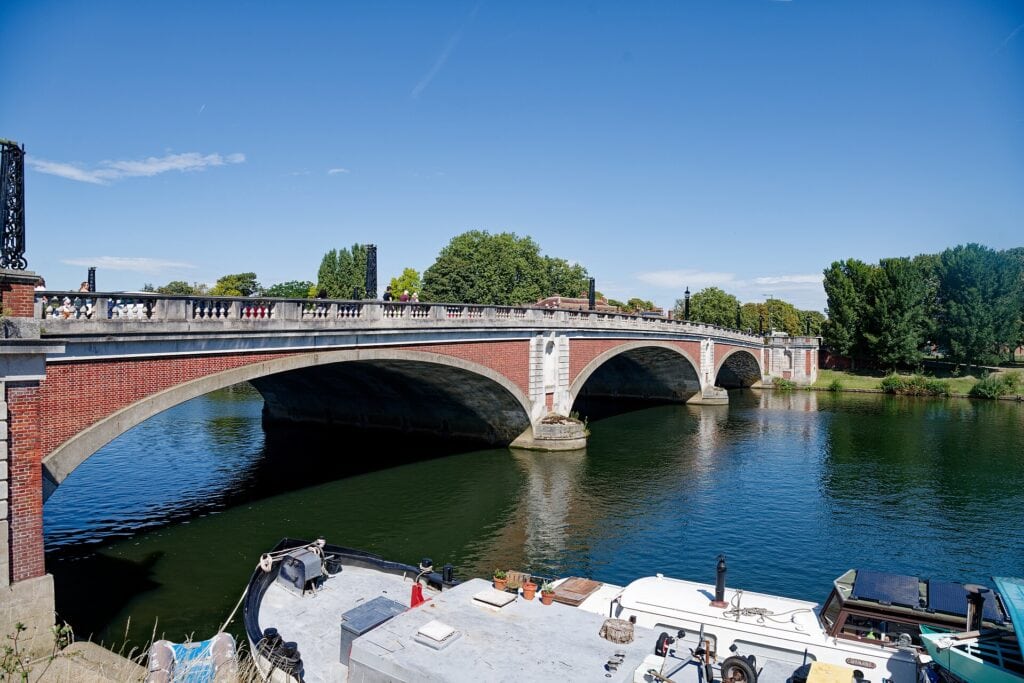
 Hampton Court Bridge over the River Thames. Photo: Tilman2007, CC BY-SA 4.0
What are homes in East Molesey like to wire?
East Molesey grew in layers, and each layer wires differently. After the railway arrived in 1849, the developer Francis Jackson Kent laid out the grid of generous residential roads near Hampton Court station that is now the Kent Town conservation area. The original village sits around St Mary's Church, and a good deal of the town's housing came later, in the 1930s. So one week we can be lifting floorboards in a Victorian villa with thick solid walls, and the next running cable through the roof space of a 1930s semi.
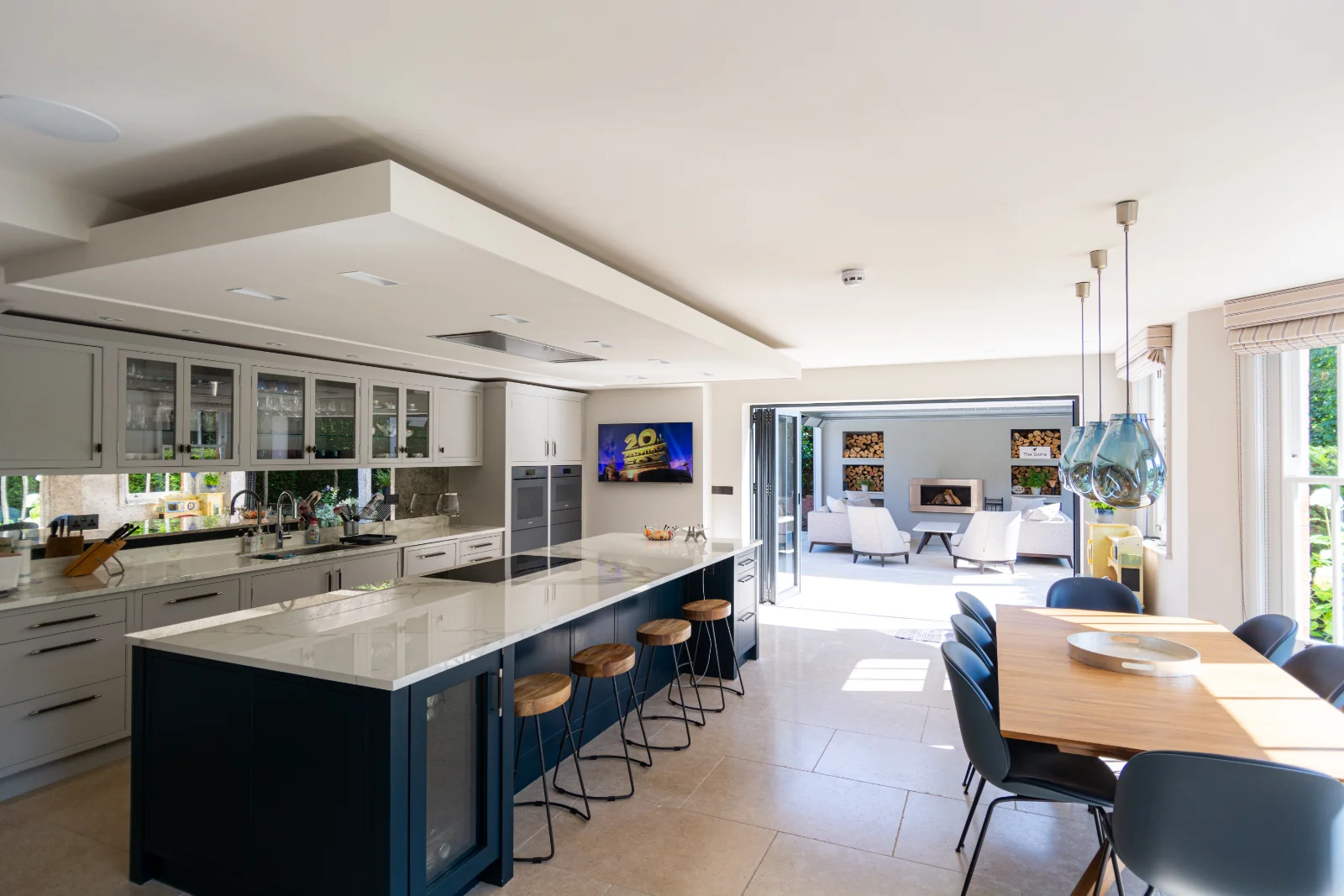
Solid Victorian walls are hard on Wi-Fi, so in these houses we usually start with the network: wired access points placed floor by floor, rather than one router doing its best from the hallway. That network then carries everything else, from multi-room audio in the kitchen and garden to 4K streaming in a media room. Our data and Wi-Fi networks page explains how we plan it.
From our Thames Ditton projectLiving beside the Thames: where should the equipment go?
East Molesey sits on the south bank of the Thames, between Molesey Lock and Hampton Court Bridge, with Hampton Court Palace across the river in the London Borough of Richmond upon Thames. The town has flooded before, notably in 1968 and again in 2014. The government describes the Thames between Egham and Teddington as the largest area of undefended, developed floodplain in England, and the Environment Agency and Surrey County Council are developing the River Thames Scheme to reduce that risk.
We cannot tell you whether your own home is at risk. The gov.uk long term flood risk service can, and it takes a couple of minutes with your postcode. What we can do is design with the river in mind. In riverside homes we generally:
- keep the equipment rack, network switch and control processor off the ground floor where the house allows, often in a first floor cupboard or the loft
- avoid putting the heart of the system in a garage or cellar at the lowest point of the plot
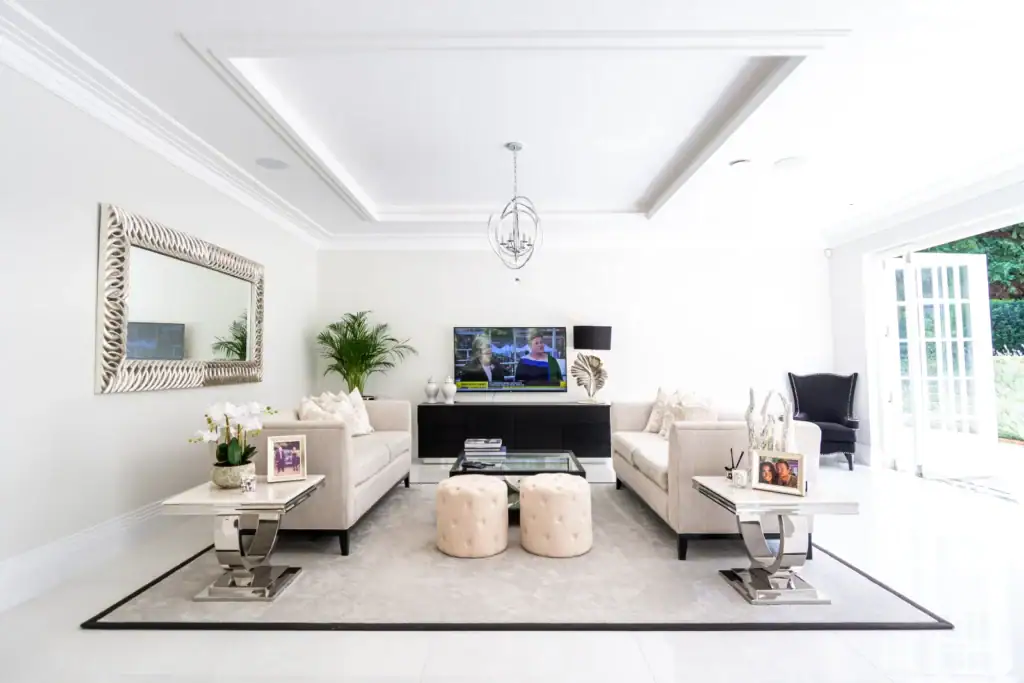
- choose in-ceiling speakers and wall-hung screens over floor-standing equipment in ground floor rooms
- document every cable run, so a room that ever has to be stripped out can be put back exactly as it was
From our Thames Ditton projectKent Town, Old Village and Bridge Road: what do the conservation areas mean for you?
East Molesey has three conservation areas: Kent Town, first designated by Surrey County Council in 1973, and Old Village (1975) and Bridge Road (1989), both designated by Elmbridge Borough Council. Most of our work happens inside the house, which is where a cinema room, a lighting system or a music system lives. The outside is where care is needed. For example, in a conservation area an aerial or satellite dish on a chimney, wall or roof slope that faces and is visible from a road is not covered by permitted development, so it needs planning permission.
We plan aerials, dishes and external cameras with that in mind, and we always suggest you check with Elmbridge Borough Council before anything is fixed to the front of your home. If your house is listed, the rules go further, and listed building consent can apply to internal works too.
Our demonstration cinema in Walton-on-ThamesUnder two miles from our showroom, so why not hear it first?
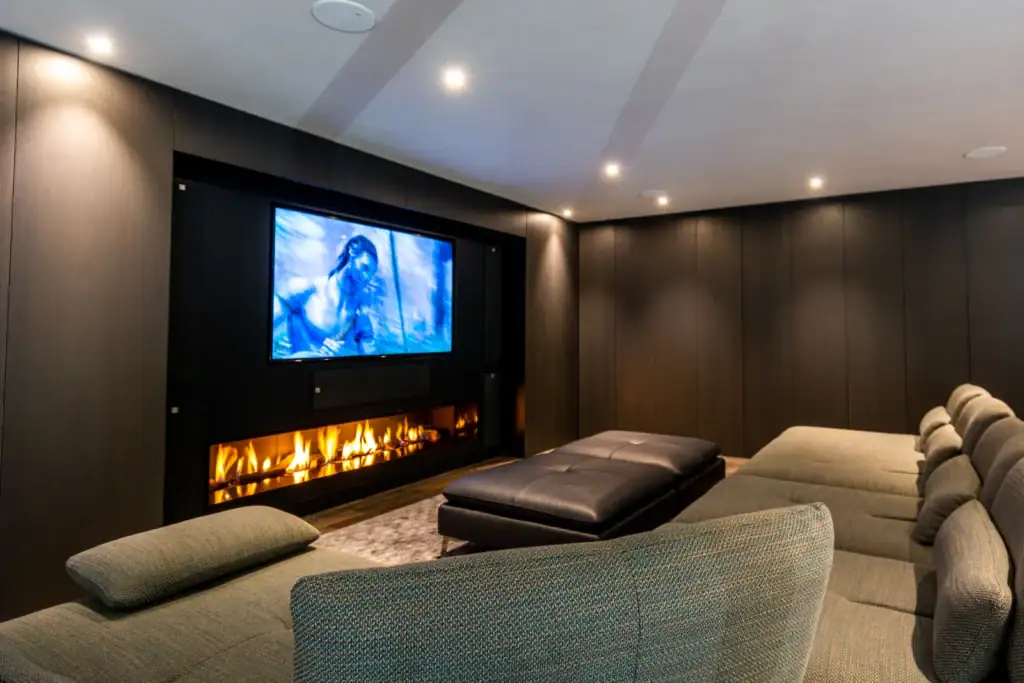
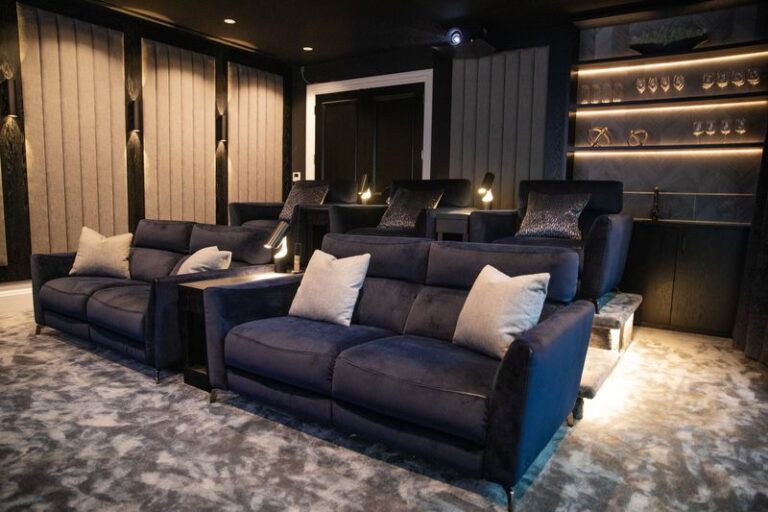
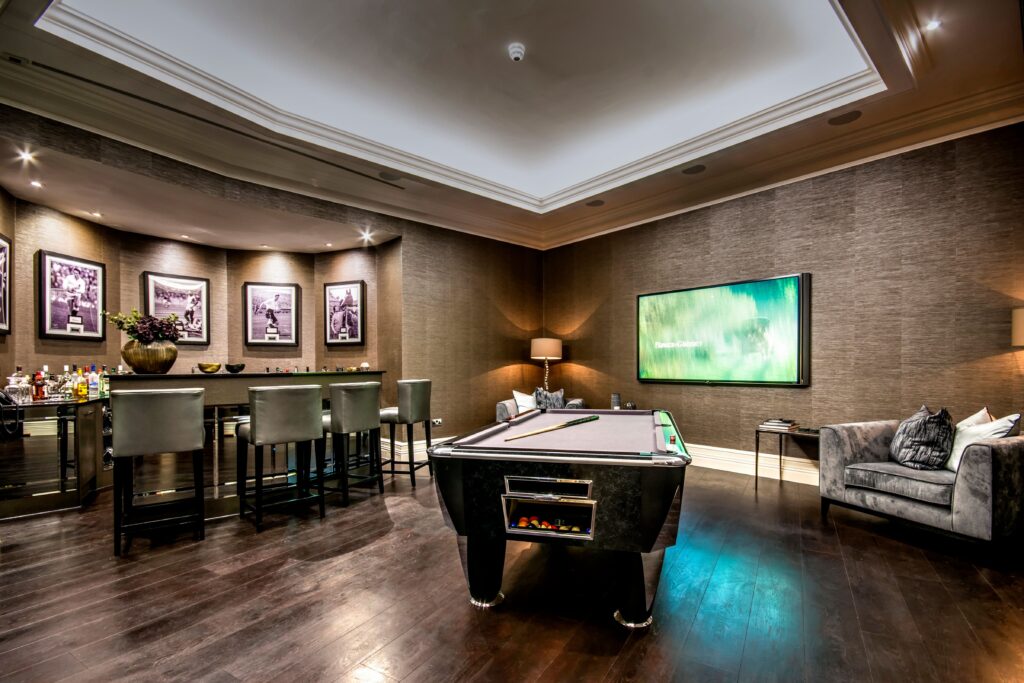
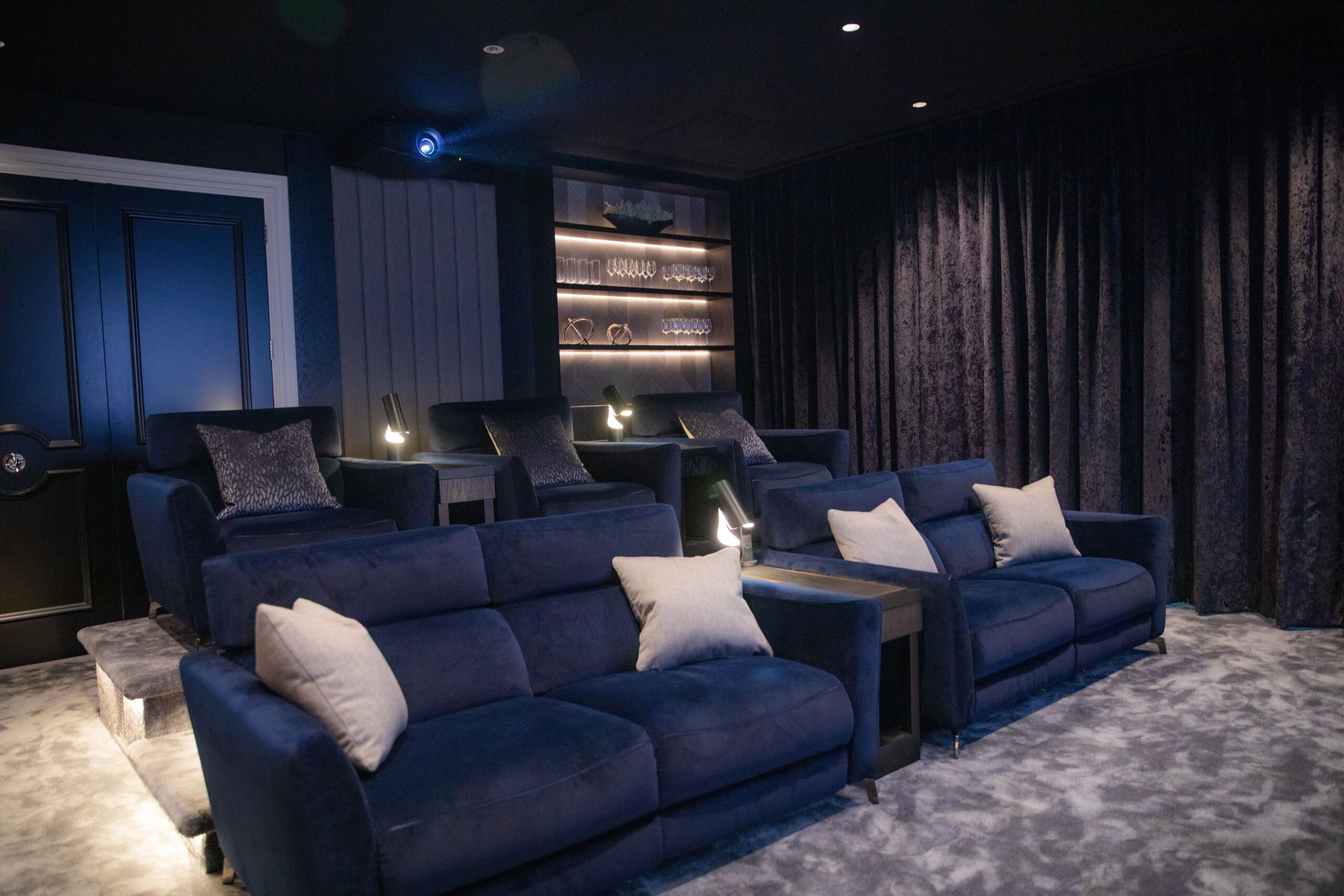
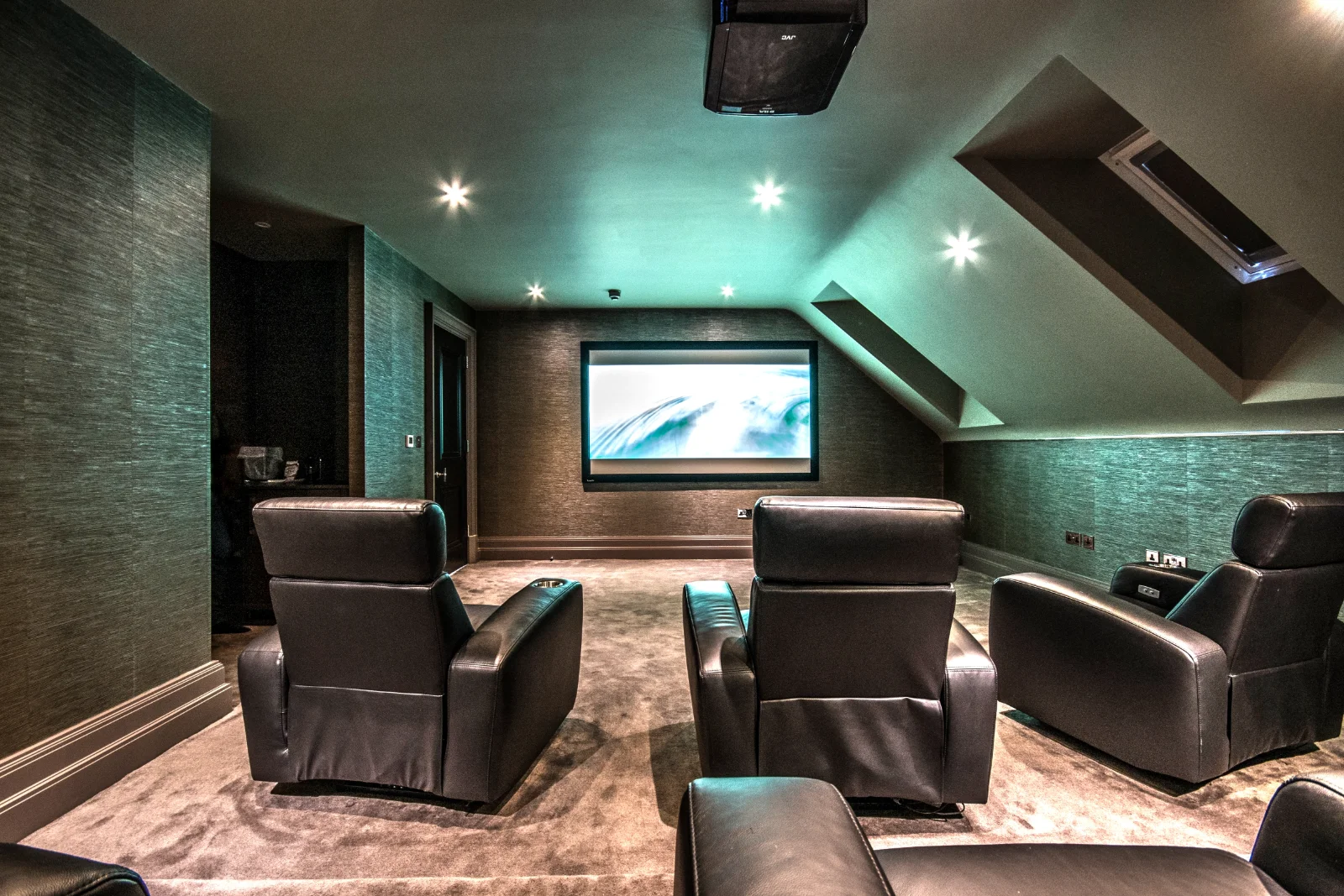
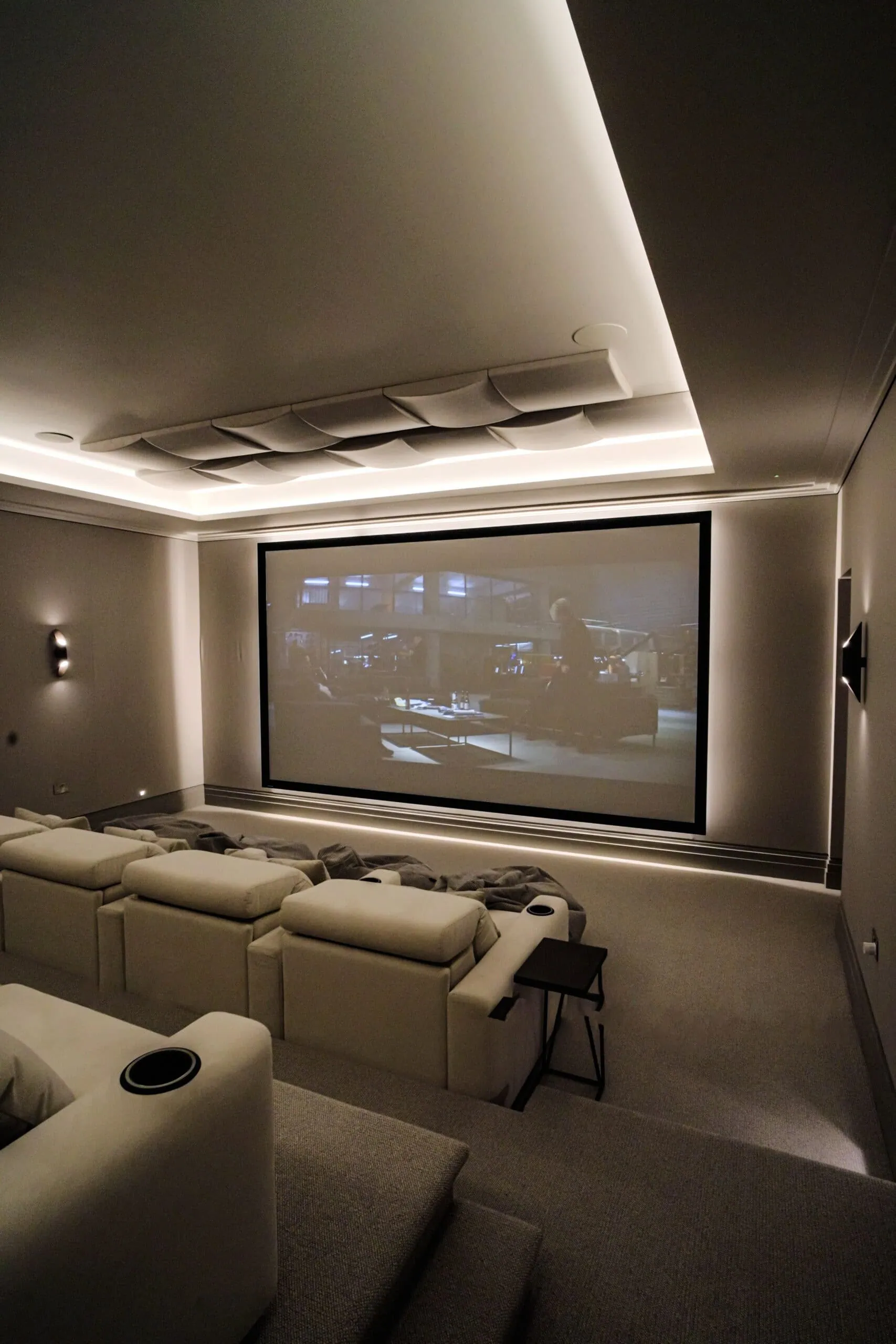
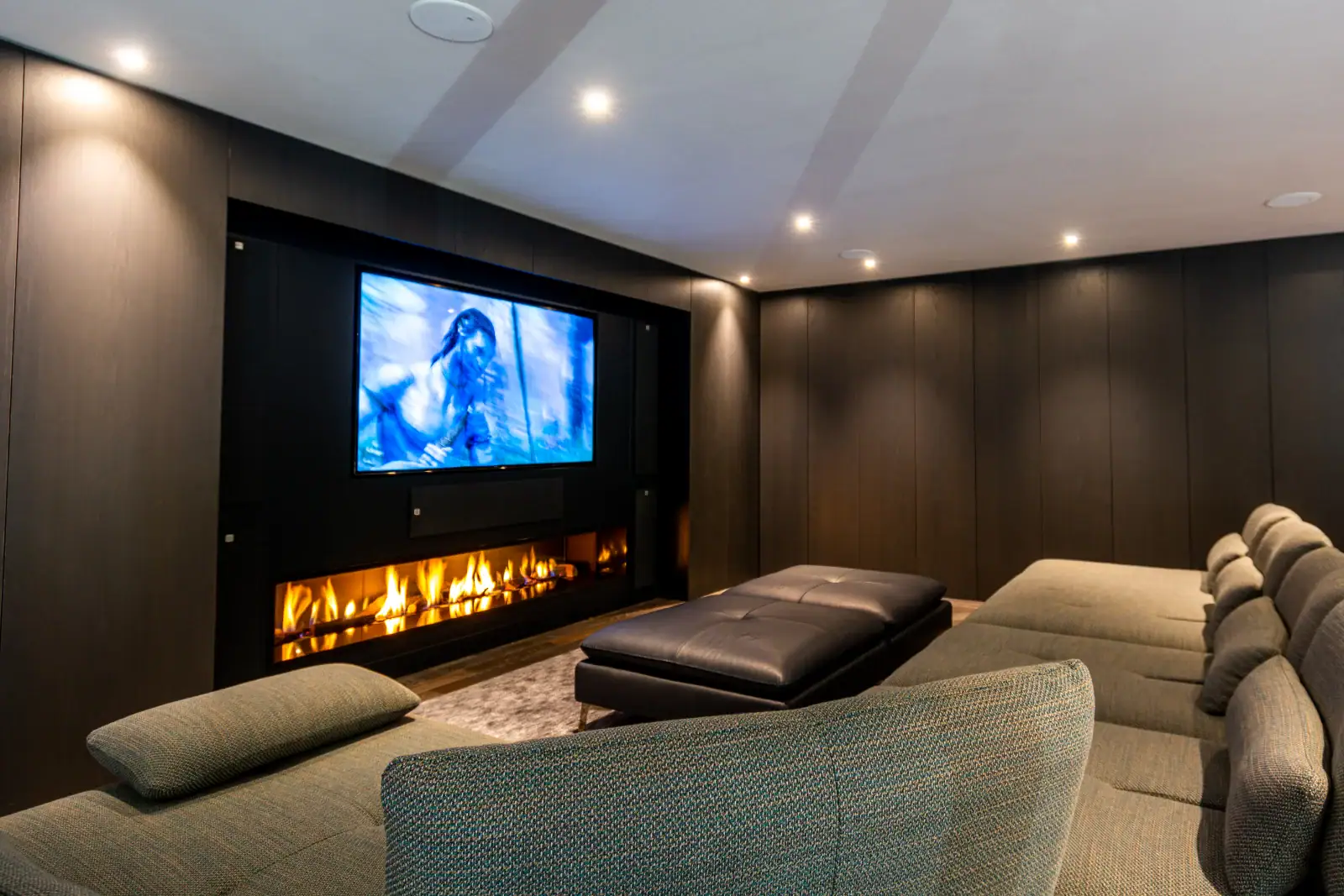
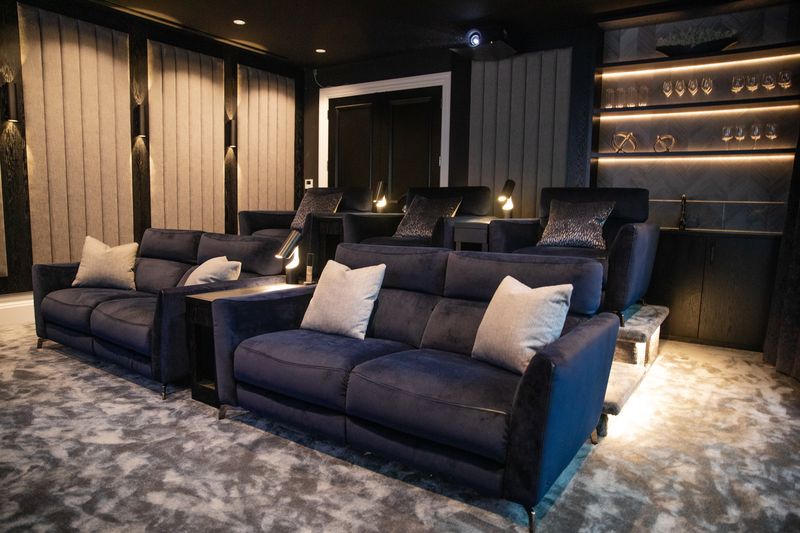
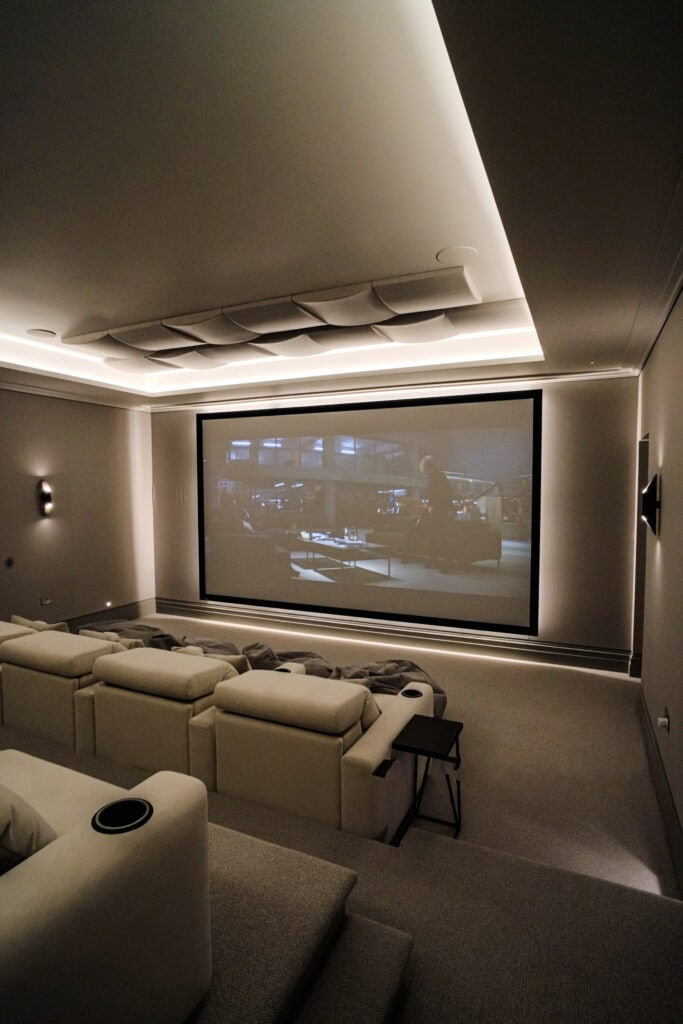
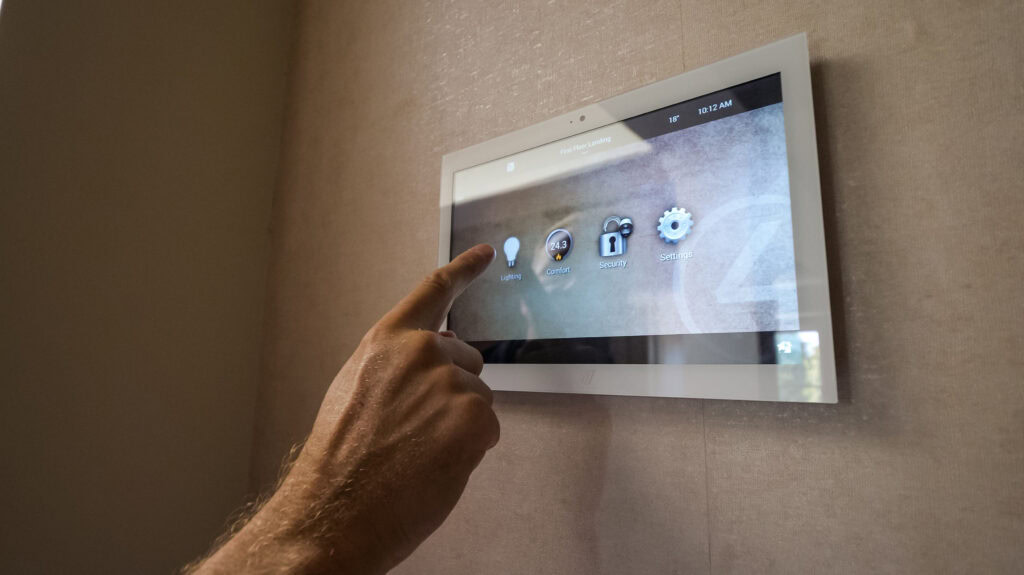
Our demonstration cinema has a Lyngdorf 7.2.2 sound system, a Sony 4K laser projector and a 2.8 metre wide acoustically transparent screen, and the Control4 system beside it lets you try lighting, music and intercom from one touchscreen. The nearest published project to East Molesey is our media room renovation in Walton-on-Thames, where one Control4 remote replaced a drawer full of handsets and Paradigm speakers disappeared behind an acoustically transparent screen and fabric ceiling panels.
We have designed and installed systems for homes in East Molesey and Hampton Court, and our in-house maintenance team looks after them after handover. We are a Platinum Control4 dealer, winner of the Control4 Circle of Excellence award in 2023, 2024 and 2025, and specialists in Lutron lighting control. Book a showroom visit, or book a free design consultation at your home.