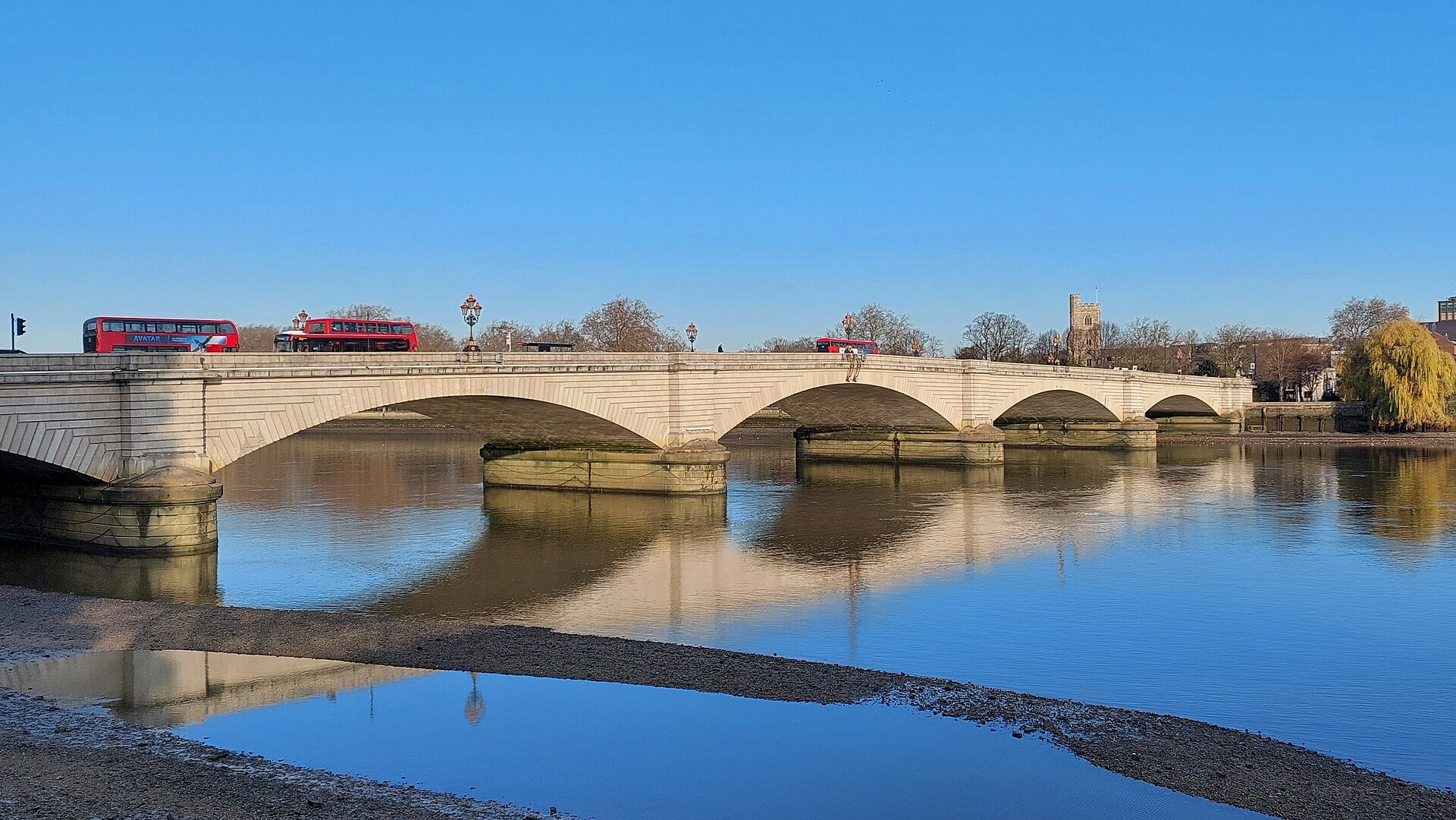



 Rowing club boathouses along the Thames at Putney Embankment. Photo: Motmit, CC BY-SA 3.0
What did we build at Roehampton gate?
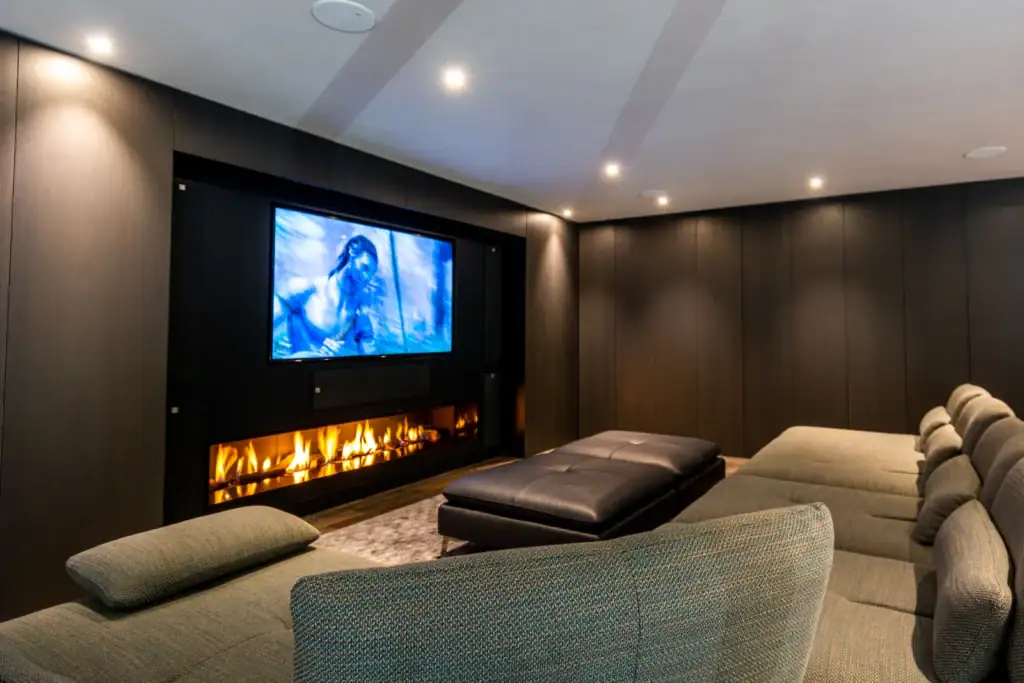
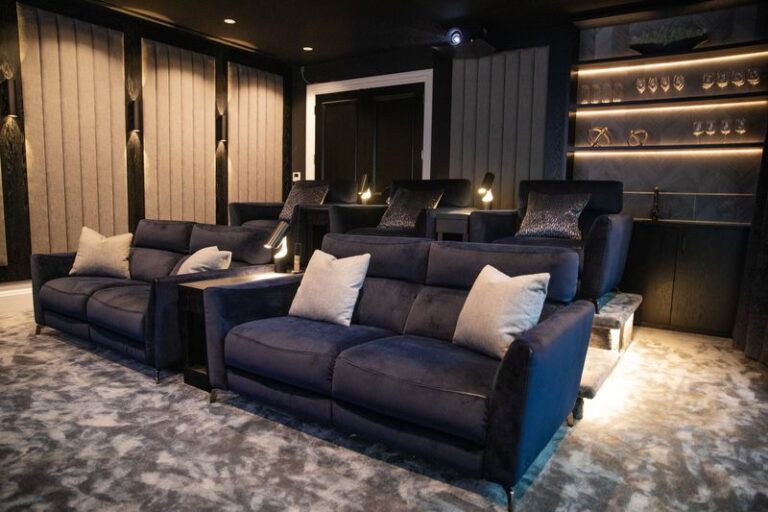
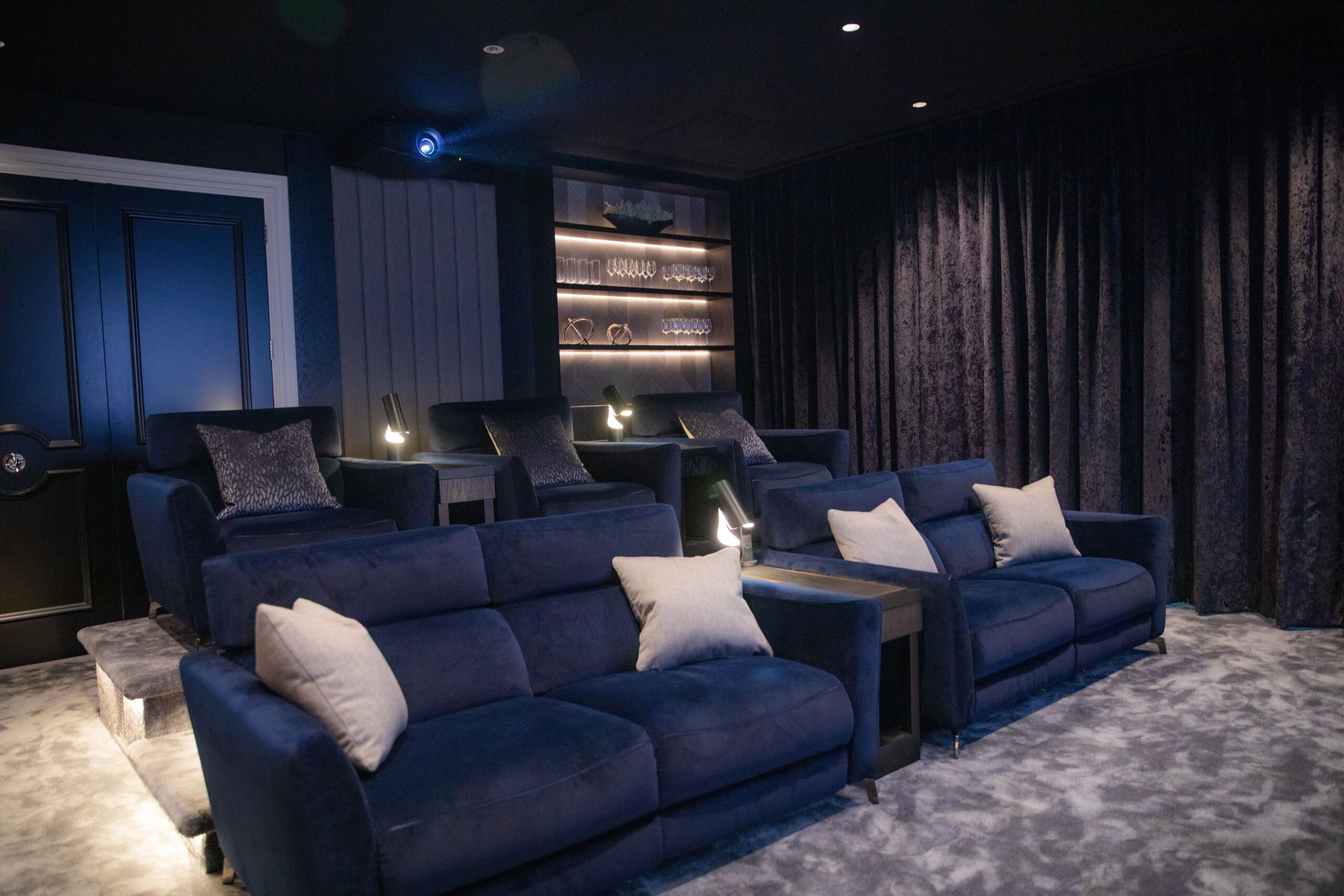
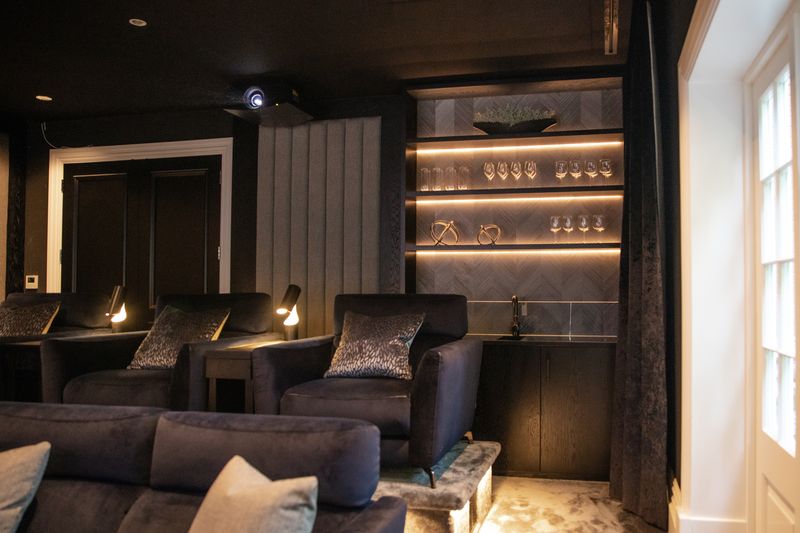
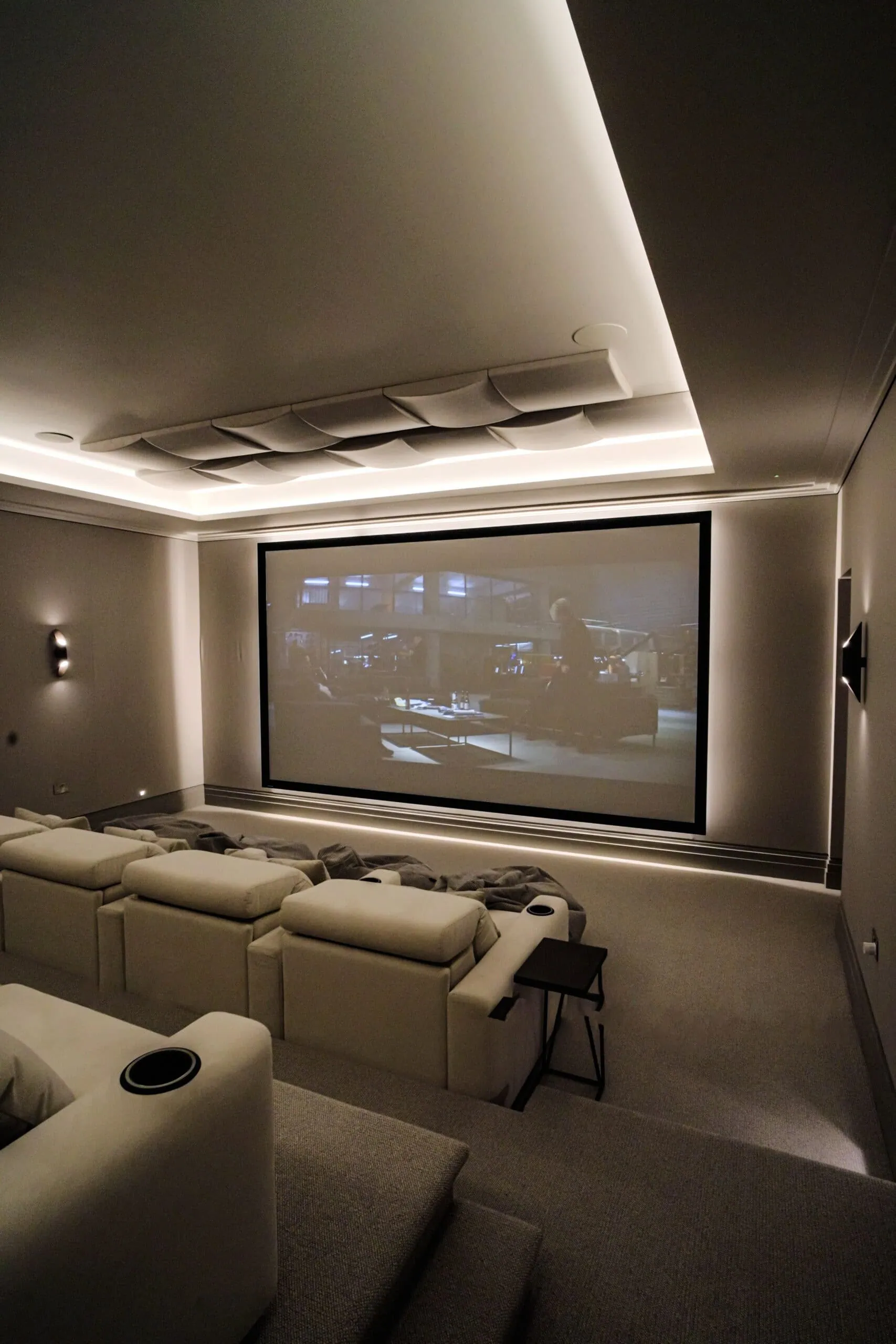
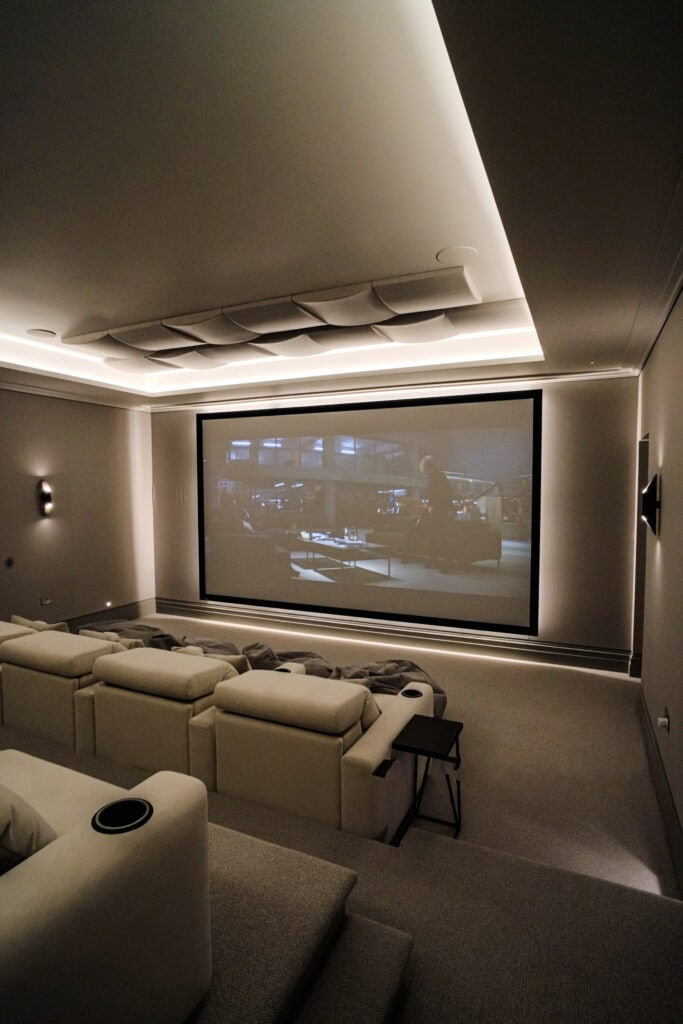
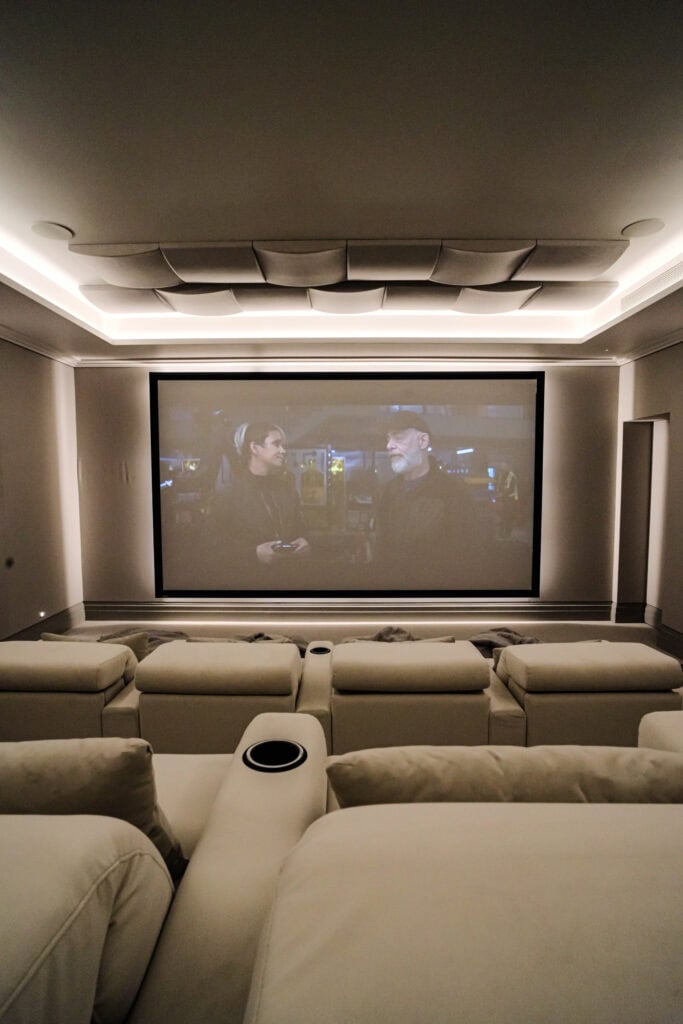
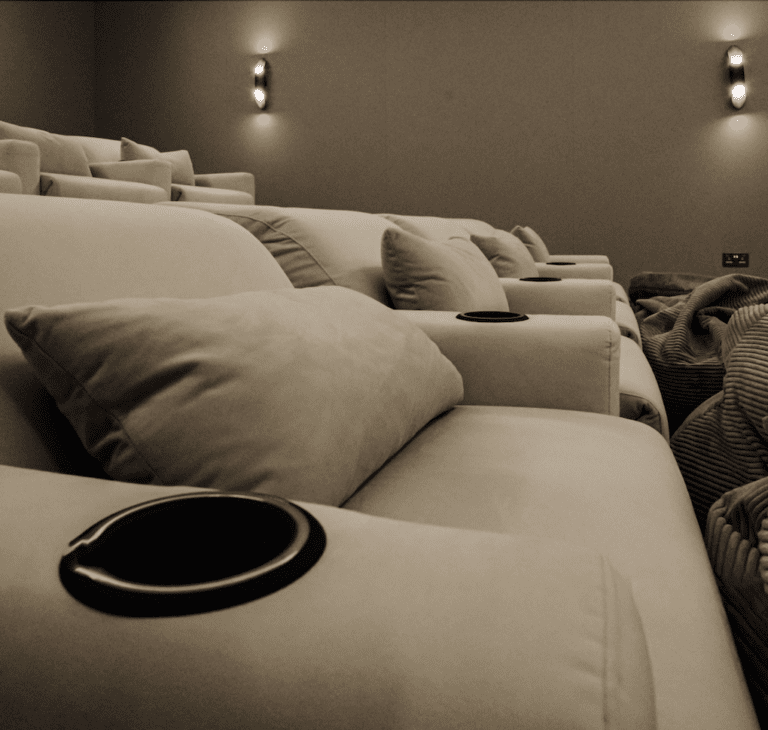
Our published London project is a basement cinema at Roehampton Gate. The family, a couple with five children and a love of film, asked us to turn a 7 by 8 metre basement into the main entertainment room of the house, with every seat getting proper picture and sound. We delivered it turnkey:
- A Dolby Atmos 9.4 system: nine ear-level speakers, four overhead Atmos channels and four subwoofers, driven by Anthem MRX processing and amplification.
- Subwoofers positioned and tuned with room-analysis software, so the bass is even from the front row to the back.
- A JVC laser projector throwing a 4K image onto a high-gain acoustically transparent screen, with the front speakers hidden behind it.
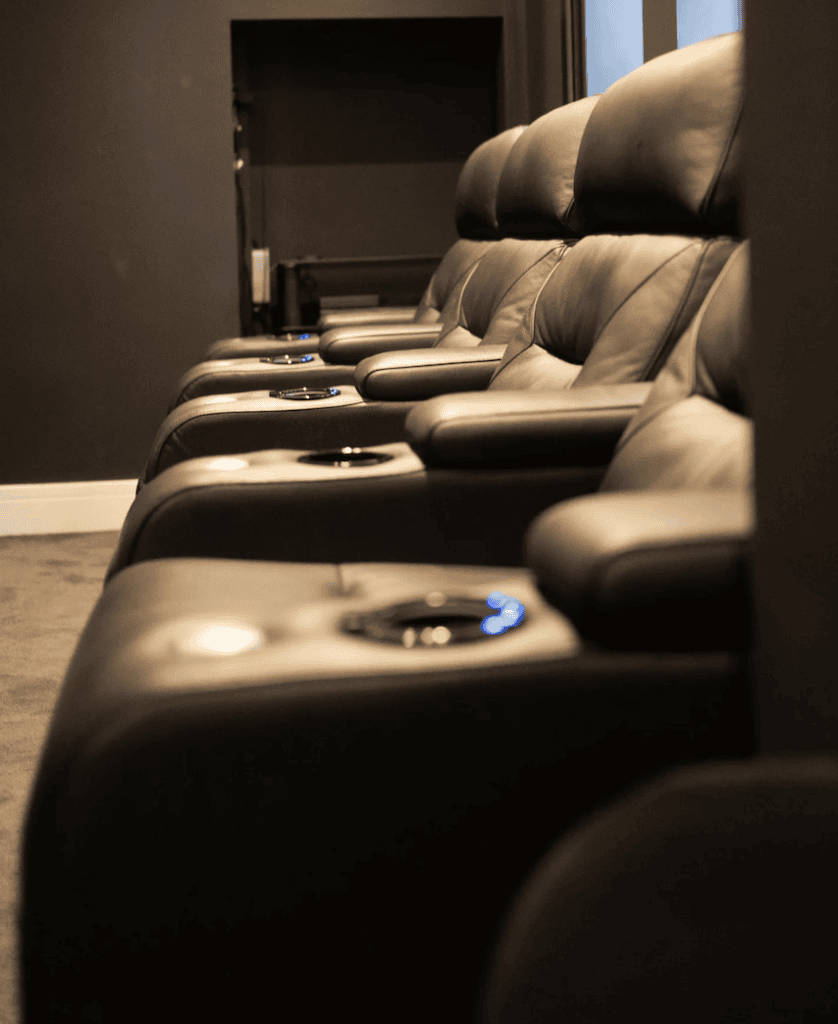
- Bespoke Moovia seating in a soft neutral fabric, and a fabric-panel wall system that hides speakers, cabling and acoustic treatment.
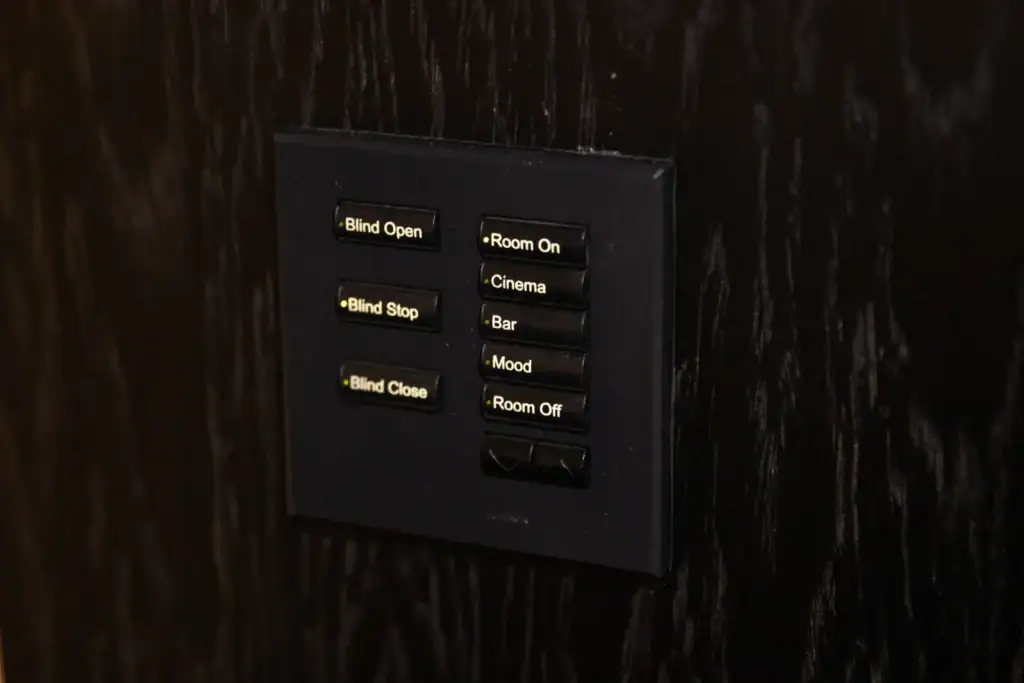
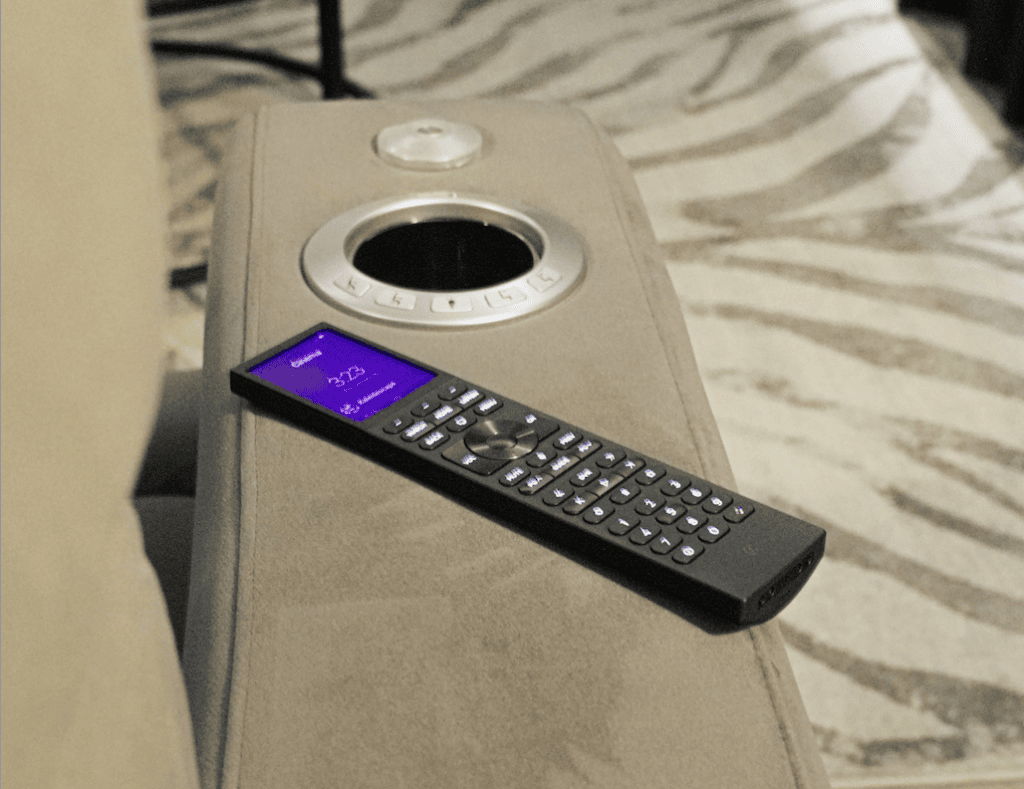
- Lutron lighting and Control4 automation, so the whole room runs from one remote.
You can read the full Roehampton Gate cinema project, and we have designed and installed systems for other homes across Putney and Roehampton too.
From our Roehampton Gate projectIs a basement cinema allowed in Putney or Roehampton?
Often, within limits. Wandsworth's Local Plan, adopted in 2023, sets them out in policy LP6. In summary, a new or extended basement should be no more than one storey, and for homes it should extend under no more than half of the existing rear garden. Lightwells in conservation areas must keep at least two metres or half of the original front garden depth, whichever is greater. Schemes must respect the building and any heritage assets, show they will not make flood risk worse, include at least a metre of soil over any part of the basement under a garden, and fit a pumped device against sewer flooding. Not every basement needs planning permission, so check your own scheme with Wandsworth Council's planning team early. Your architect and structural engineer lead that part; we work alongside them on cable routes, riser dimensions and acoustic allowances, all far easier to settle at drawing stage than once the walls are finished.
From our Roehampton Gate projectHow do Putney's homes differ from Roehampton's?
Putney grew from the river. Wandsworth Council's appraisal of the Putney Embankment conservation area traces the first settlement to the old ferry crossing by today's Putney Bridge, and describes a character that is mainly late Victorian and Edwardian, with Ruvigny Gardens, mansion flats and the boathouses that have lined the Embankment since the mid-19th century. The Boat Race has run over the course from Putney to Mortlake every year since 1856, apart from enforced breaks. Up the hill, the West Putney conservation area is largely Victorian to the north and east and overwhelmingly Edwardian in the centre, south and west.
Roehampton has conservation areas of its own, Roehampton Village and Alton, while the Putney Heath conservation area takes in houses and mansion flats around the heath. Across the whole area, Wandsworth has 46 conservation areas, so if your home sits in one, check any change to the outside with the council first.
From our Roehampton Gate projectWhat else can we do in a Putney home?
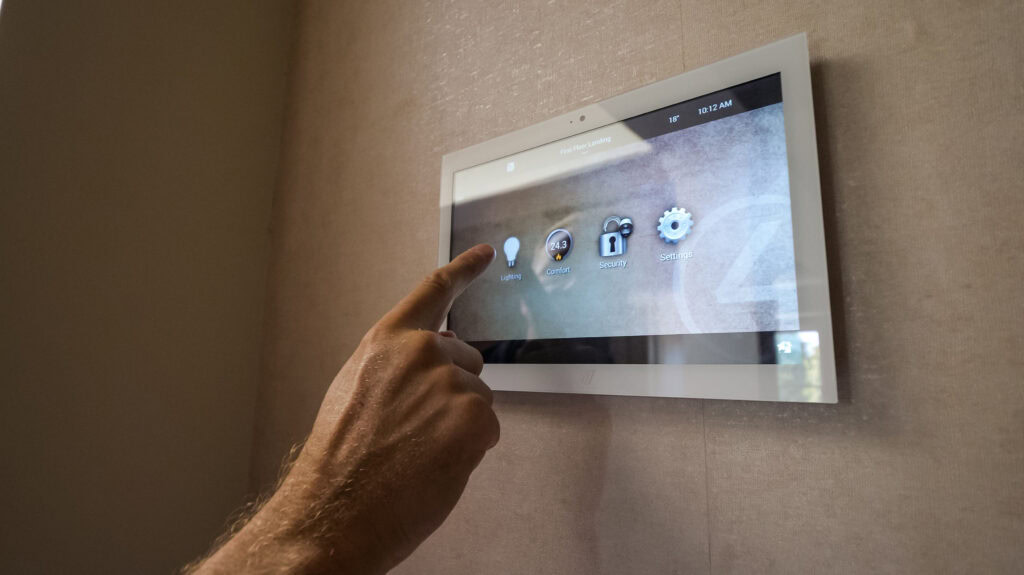
Beyond the basement cinema, whole-house control and lighting make the biggest everyday difference in a Victorian or Edwardian house. A Control4 smart home runs lighting, heating, audio, video, blinds, cameras and door entry from keypads, touchscreens, a remote or the app. Lutron lighting control handles the lighting and shading, retrofitting wirelessly where an Edwardian house should not be chased. Our London home cinema installation page covers the wider process.
Our demonstration cinema in Walton-on-ThamesHow far away are you, and what does it cost?
Putney is about 9 miles from our Walton-on-Thames showroom and Roehampton about 8, so a demonstration is an easy trip. Small cinema rooms start from our published £15,000 to £25,000, fully installed. A basement at the scale of Roehampton Gate, seating seven, is a larger project, priced after survey. Book a showroom visit to hear a calibrated Atmos room, or book a free design consultation and bring your architect's drawings.