


Motorised blinds and curtains, designed and installed
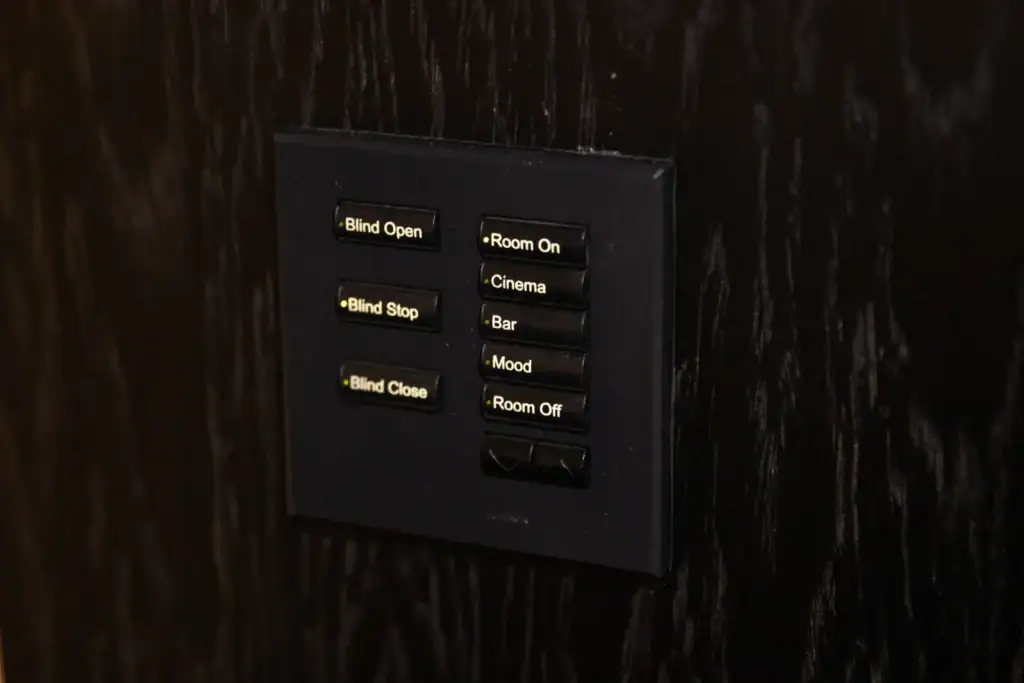
We design and install motorised blinds, curtains and Lutron shading across Surrey and London, usually as part of a Lutron lighting or Control4 smart home system. Your blinds and curtains share the same keypads, app and scenes as your lighting, so one press can dim the lights and close the blinds together, and the blinds can rise at a set time each morning without anyone touching them.
The cost depends on the number and size of windows, the fabric, whether the motors are wired or wireless, and how the blinds are controlled. We survey every window and give you a figure room by room at design stage, after a free consultation.
Blackout blinds for cinemas and media rooms
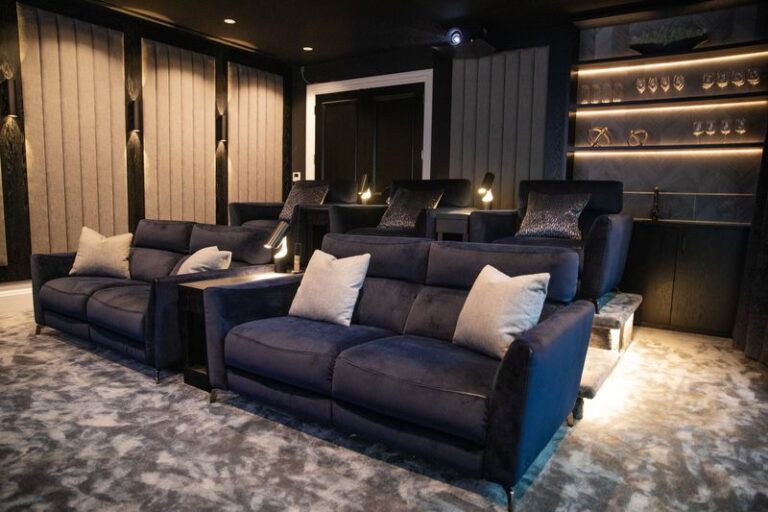
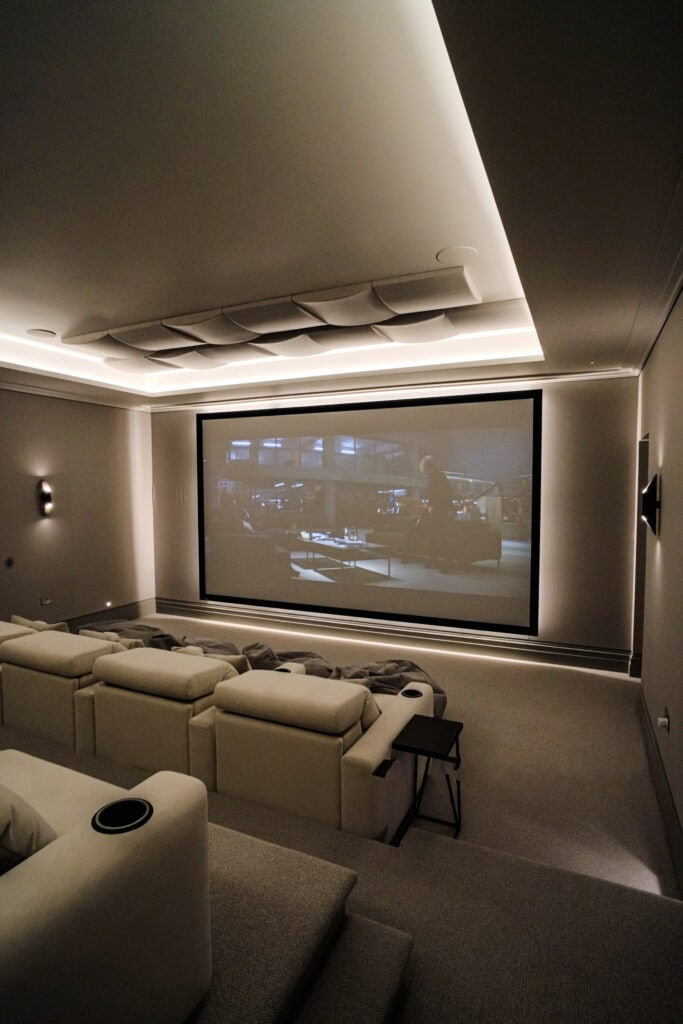
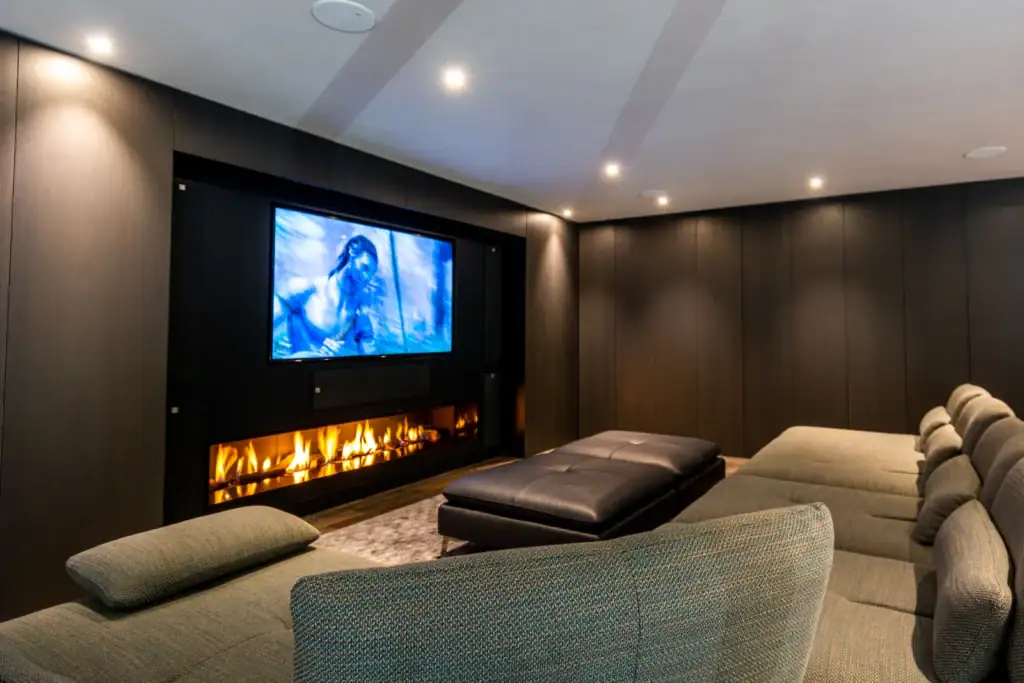
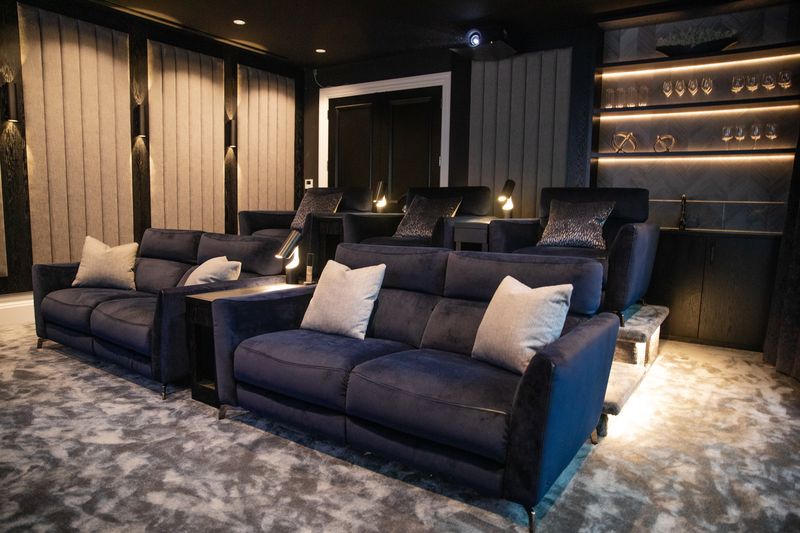
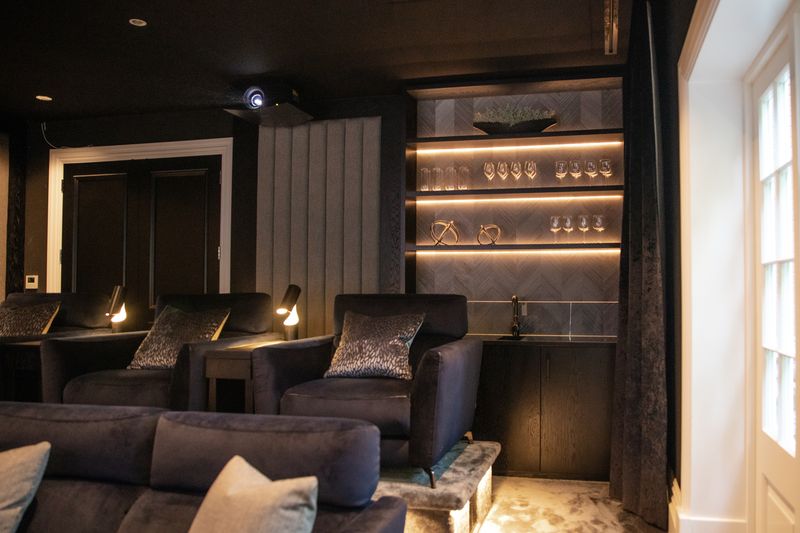
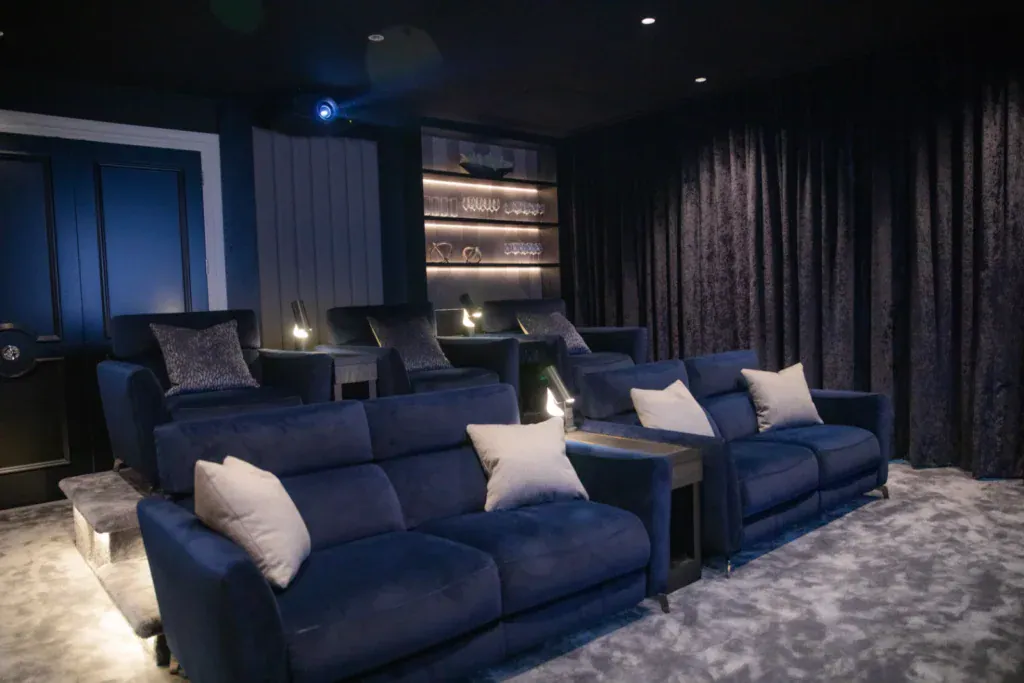
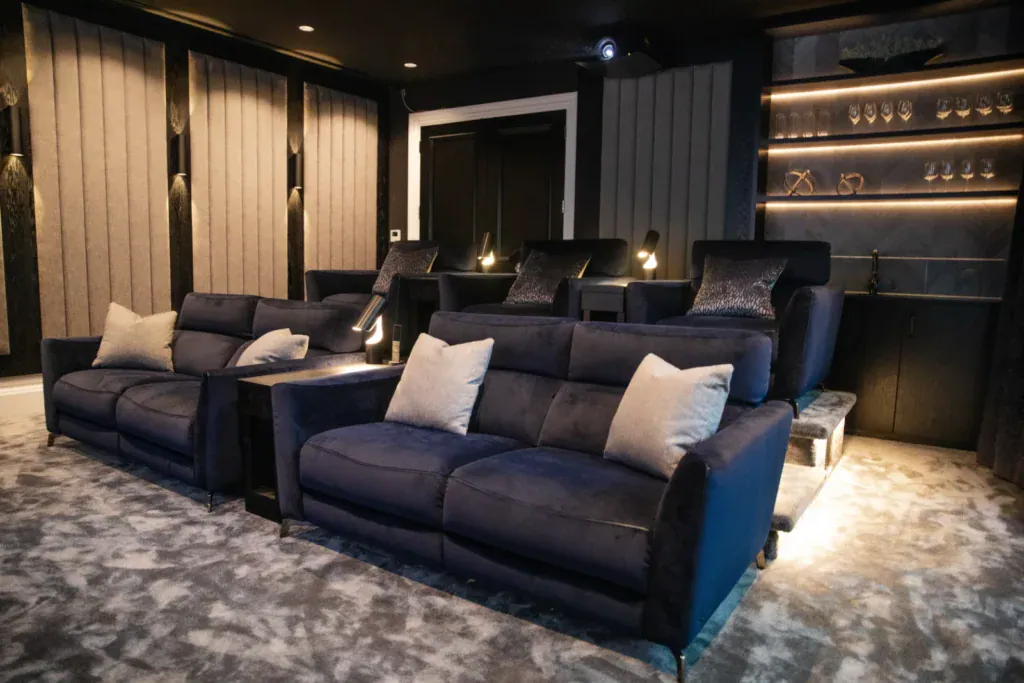
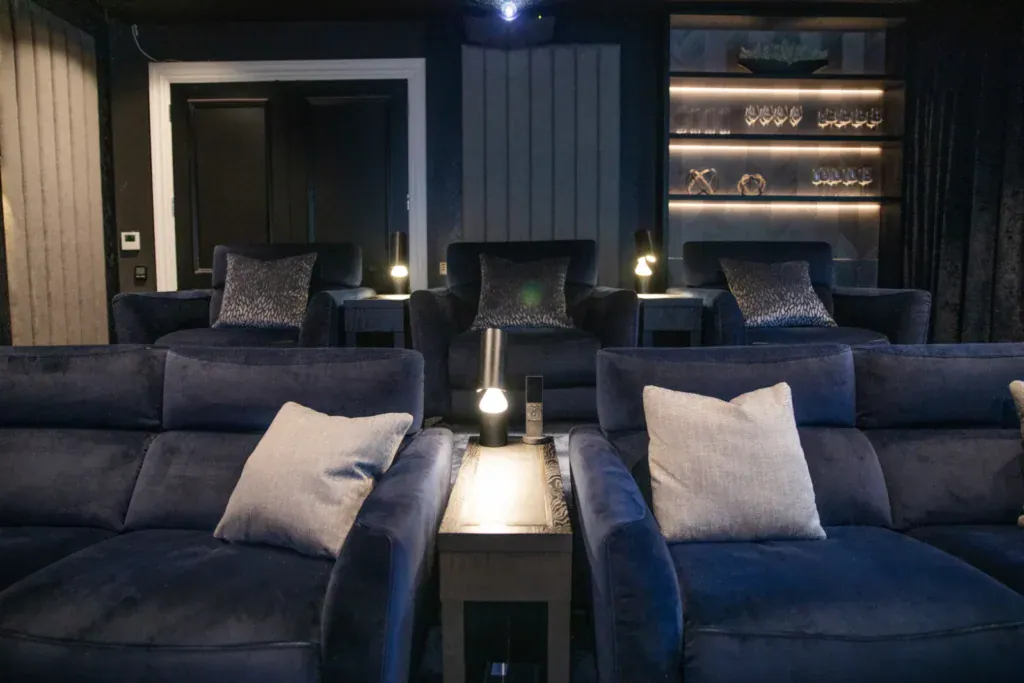
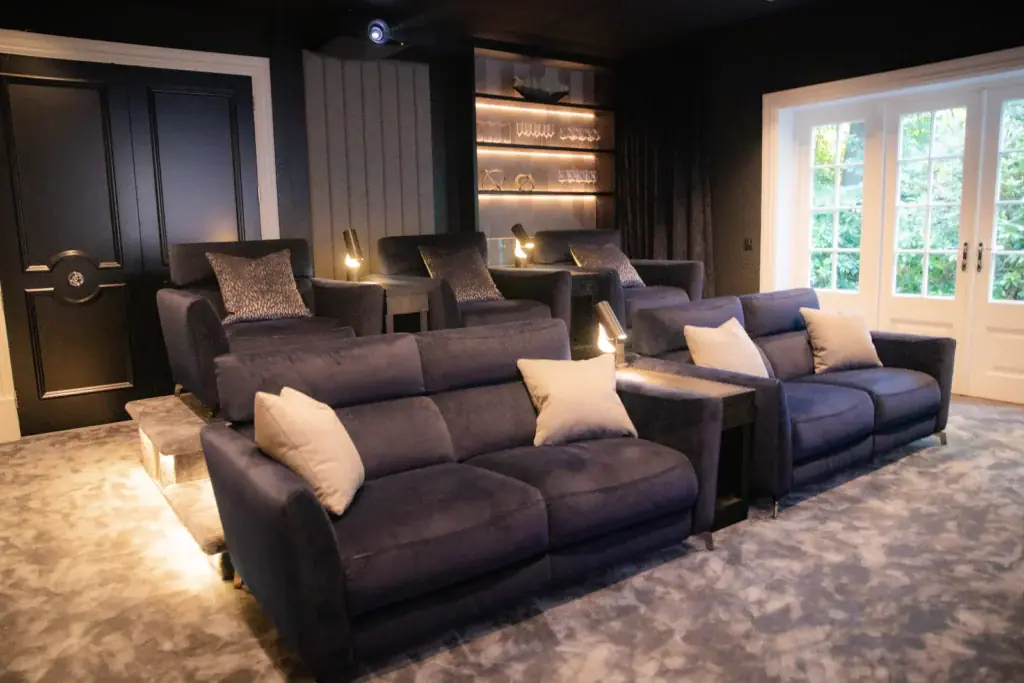
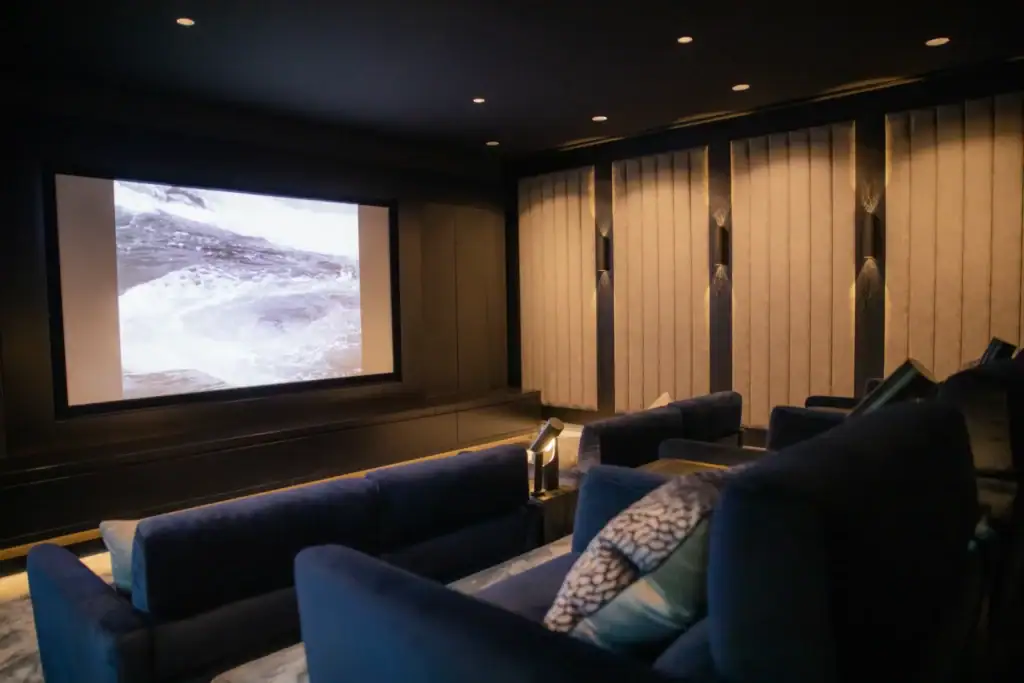
Light control makes or breaks a film night. A projector or a large screen looks its best in a dark room, and automated blackout blinds give you that at the press of a button, then bring the daylight back when the film ends.
In our Walton-on-Thames media room, Silent Gliss blackout blinds work alongside Lutron HomeWorks lighting and Control4 automation. In Epsom, we fitted QMotion automated blackout blinds with a Lutron RA2 lighting system, and the family adjust the blinds, the lighting and the AV from the same control pad. As they put it:
“The picture quality is outstanding, the sound is immersive, and the entire system is incredibly intuitive to use.”
Homeowner, Epsom
Lutron blinds and shading
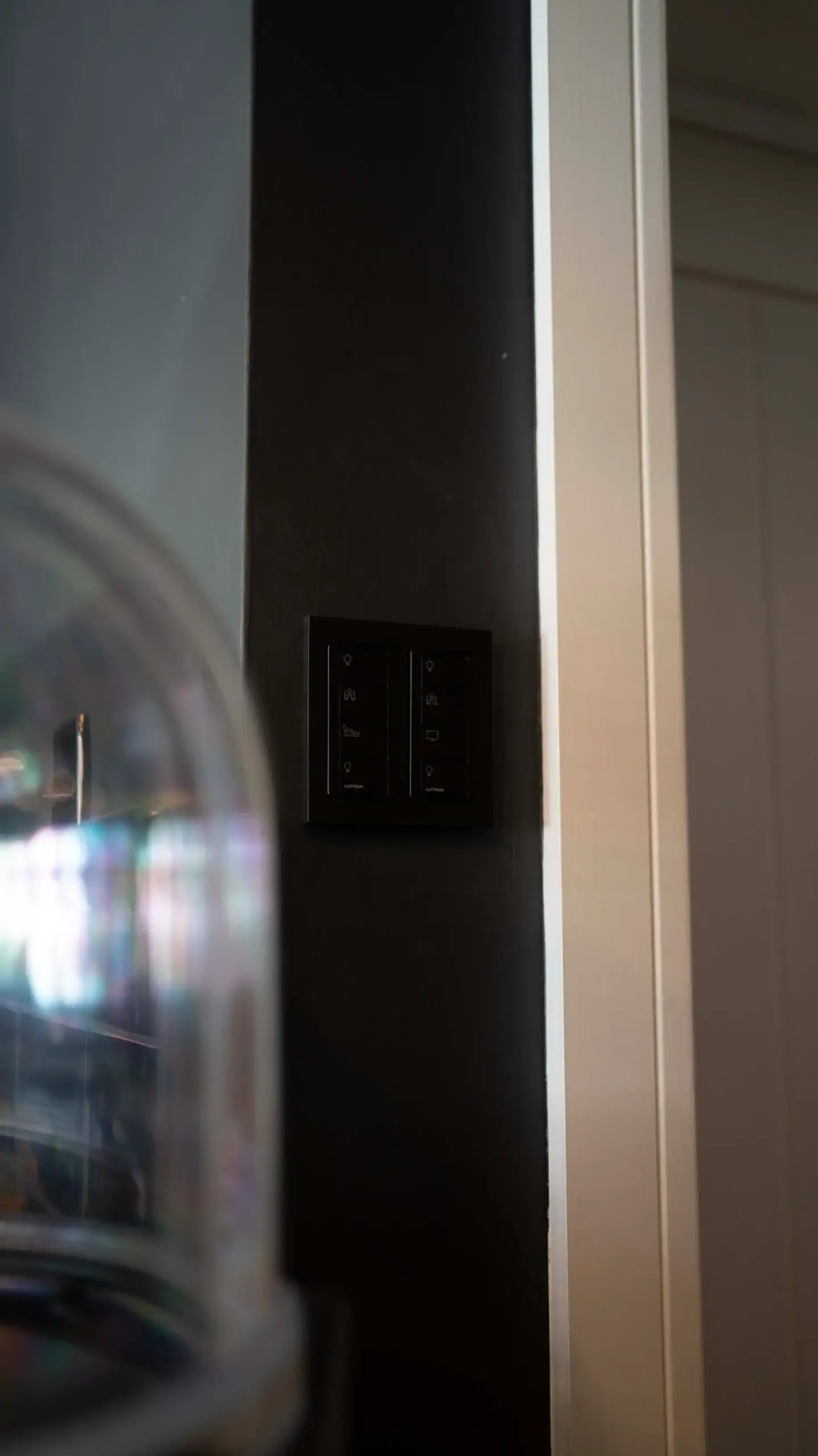
Lutron makes shading as well as lighting control. Its own Sivoia and Triathlon roller blinds and curtains can run on Lutron RadioRA 3, and Lutron HomeWorks is built to work natively with its full range of lighting, window treatments and keypads. In practice, that means your blinds sit on the same keypads as your lights, in the same finish, rather than on a separate remote.
Which Lutron system suits you depends on the house. RadioRA 3 is wireless and suits finished homes; HomeWorks suits larger homes and full renovations, and can be wired, wireless or both. Our guide to Lutron HomeWorks, RadioRA 3 and Caseta explains the differences. We also install Silent Gliss and QMotion shading where they suit the window or the project better.
One keypad for light and shade
Scenes are where motorised shading earns its place. A few we programme often:
- Morning: bedroom blinds rise at a set time
- Film night: the lights dim and the blackout blinds close together
- Goodnight: blinds and curtains close and the lights go off downstairs
- Away: lights go on and off and shades open and close at key times, so the house looks lived in
With Control4, the blinds also join your audio, video, heating and security. You control them from wall keypads, the app on your phone, or by voice through Amazon Alexa or Google Home.
Existing homes, period houses and London flats
Motorised shading is not only for new builds. Where cables can be run, wired motors are the tidiest option; where the building demands it, wireless control avoids chasing walls in a finished room. In listed and period homes, new fixings and cable routes may need listed building consent, so we agree them with you and your architect or conservation officer first. Our guide to smart lighting in listed and period homes covers consent in more detail. In a London mansion flat, we also check what your lease and managing agent allow before any cabling. See our smart home installation in London page for more on London homes.
How shading fits with your lighting
Shading is one part of how a room handles light. If you are planning the lighting as well, our smart lighting page covers lighting design room by room, and Lutron lighting control covers the Lutron platform itself. Most projects combine all three, and we design them as one system so the blinds, the lights and the rest of the house work together from day one.
Motorised and electric curtains
Electric curtains, often called motorised curtains, hang from a powered track instead of being drawn by hand or with a wand. They make most sense where curtains are part of the interior design: long runs across a bay or a wall of glazing, heavy interlined fabric that is tiring to pull, and windows above a staircase or behind a bath that nobody can comfortably reach.
For curtains we usually specify Silent Gliss. It makes two ranges of electric track, the SG 5100 and the bigger SG 5600, which is the one Silent Gliss points at long, heavy curtains, so the weight of the fabric and the length of the run decide between them. Both need power at the head of the window, so the track goes into the first-fix plan alongside the lighting circuits. Silent Gliss Smart motors connect to Control4 or Rako through a gateway, so the curtains join the same scenes as the lights and any smart home blinds in the room.
Many rooms need two layers: a sheer or dim-out blind against the glass for daytime, with curtains in front for warmth and privacy in the evening. Each layer can have its own motor and its own stop positions, so a single press can close the blind fully and draw the curtains halfway. QMotion, the other brand on our Silent Gliss and QMotion page, makes motorised roller blinds rather than curtains, including battery versions for rooms where no new cable can be run. That page sets out how we choose between the two.
Motorised blinds in London homes
London housing throws up its own window problems, and most of them come down to where a blind can physically go. A tall sash window in a Victorian or Edwardian terrace often sits in a deep recess, sometimes with working shutters folded into the reveal. Fitting the blind inside the recess keeps the lines of the window clean and leaves the shutters free; fitting it outside the recess covers more of the frame and lets less light round the edges. We measure each window both ways and decide with you before anything is ordered.
Mansion flats tend to have generous bays and several windows to a room, which is where grouping matters: one button for the whole bay rather than a control for each blind. Where walls are solid or already decorated, battery blinds avoid running new cable to the window. QMotion quotes a battery life of up to three years, so each headrail has to stay within reach, and we plan pelmets and boxes around that.
Blackout is the hardest brief, and in London it often comes from a front reception room or a basement being turned into a home cinema. Even a sliver of light at the edge of a blind shows up on a projection screen, so every window gets checked along its head, both sides and the sill. Silent Gliss dim-out blinds help because the fabric is zipped into side channels instead of hanging free. Where a sash window has deep reveals, a blind in side channels with a curtain on an electric track in front gives the darkest result.