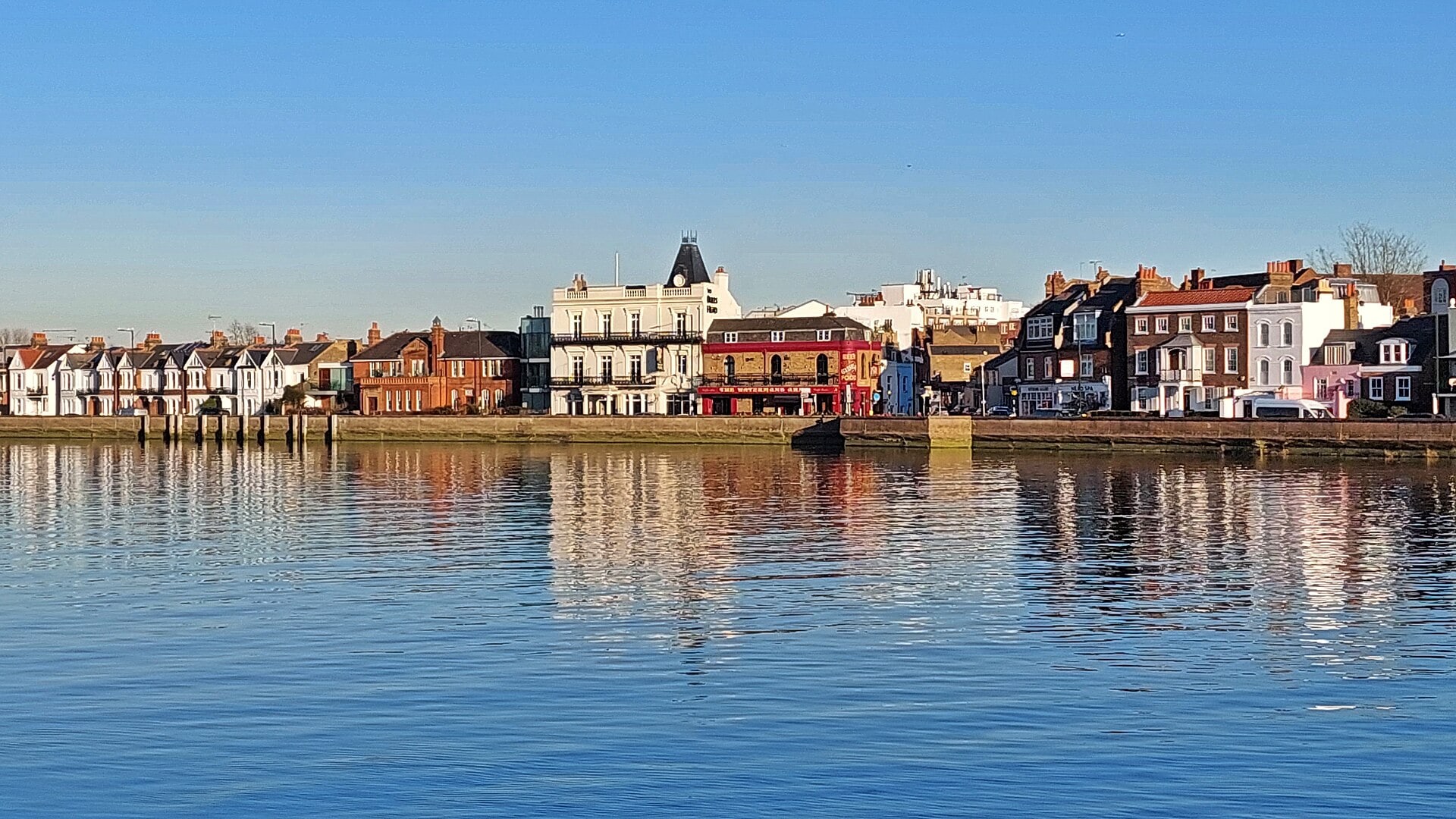


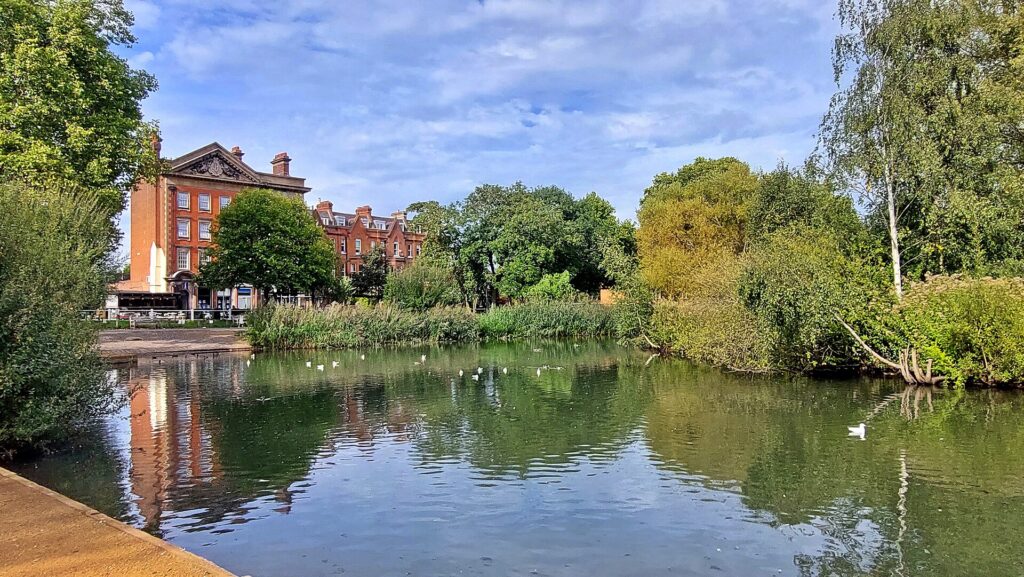
 Barnes Pond, with houses on the far side of the green. Photo: Mark Percy, CC BY-SA 2.0
Can a cinema be hidden in a Barnes period house?
Yes, and in a house like this that is often the whole brief. This is an old village: it appears in the Domesday Survey of 1086, and its oldest complete buildings date from the 18th century. Richmond Council protects much of it through conservation areas including Barnes Green, Castelnau, Barnes Common and Mill Hill. Along The Terrace, facing the river, the council notes 18th and 19th century buildings of exceptional quality, and around the Green the houses run from four-storey mansion blocks to two-storey Victorian villas, with Edwardian semi-detached houses and interwar Arts and Crafts homes on Grange Road and Kitson Road.
Houses like these reward a light touch. Most owners want the cornices, shutters, fireplaces and joinery left alone, and the technology to appear only when it is wanted. We have designed and installed systems for homes in Barnes, and our London work lists Barnes among the areas we serve.
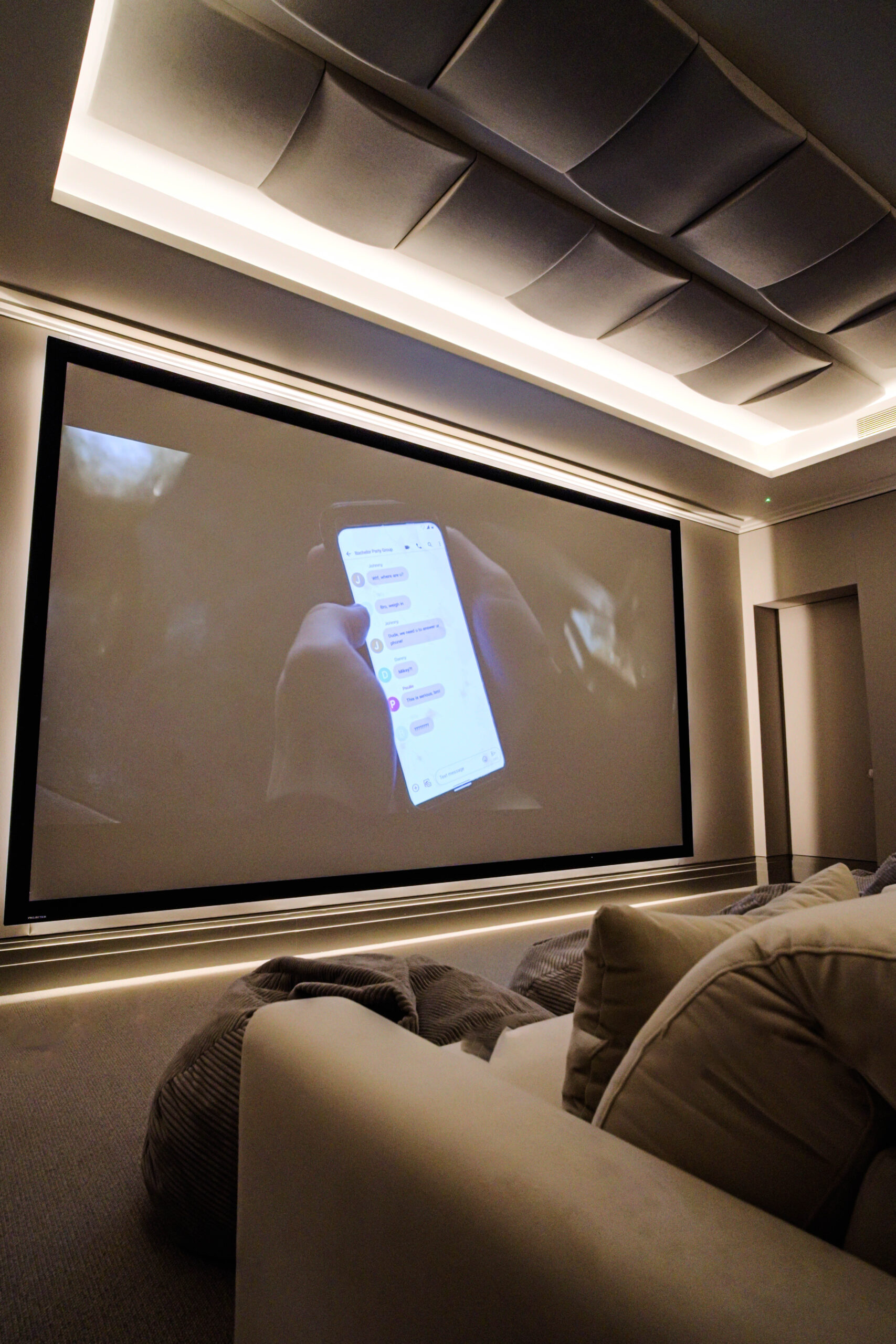
From our Roehampton Gate projectWhat does Castelnau's architecture mean for the design?
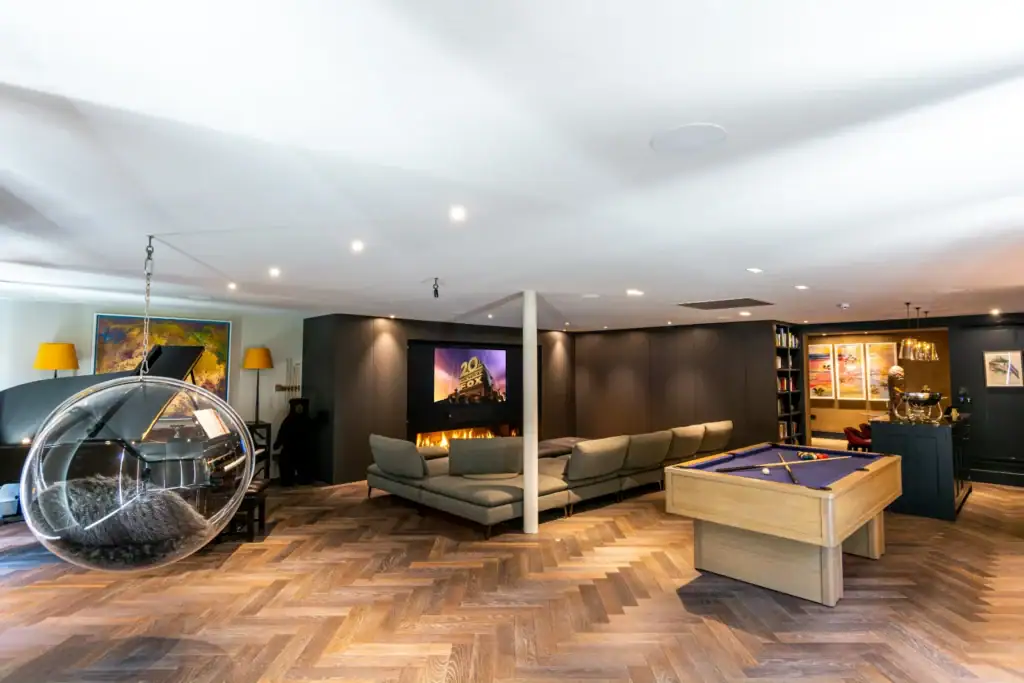
Castelnau is a useful example. The road was laid out after Hammersmith's toll bridge opened in the 1820s, and its best-known houses are the pairs of villas of 1842: identical semi-detached houses in yellow stock brick with stucco Ionic pilasters, two storeys high with basements. That lower ground floor matters. An existing basement room already has the light control a cinema needs, and turning it into a cinema is a very different project from digging a new one.
In rooms like that, the design work is mostly about concealment:
- Front speakers behind an acoustically transparent screen, which lets sound pass straight through it, so nothing sits in front of original walls.
- Surround and Dolby Atmos height speakers in the ceiling or behind fabric wall panels. Dolby Atmos adds overhead sound, so rain and aircraft seem to come from above you.
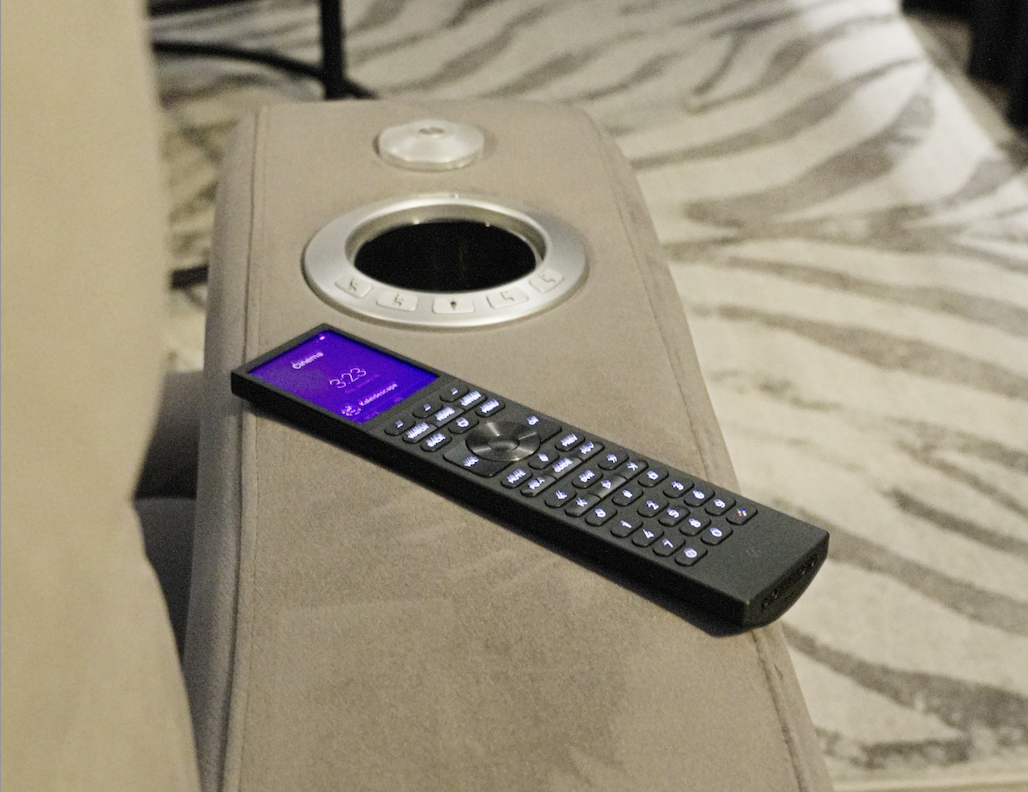
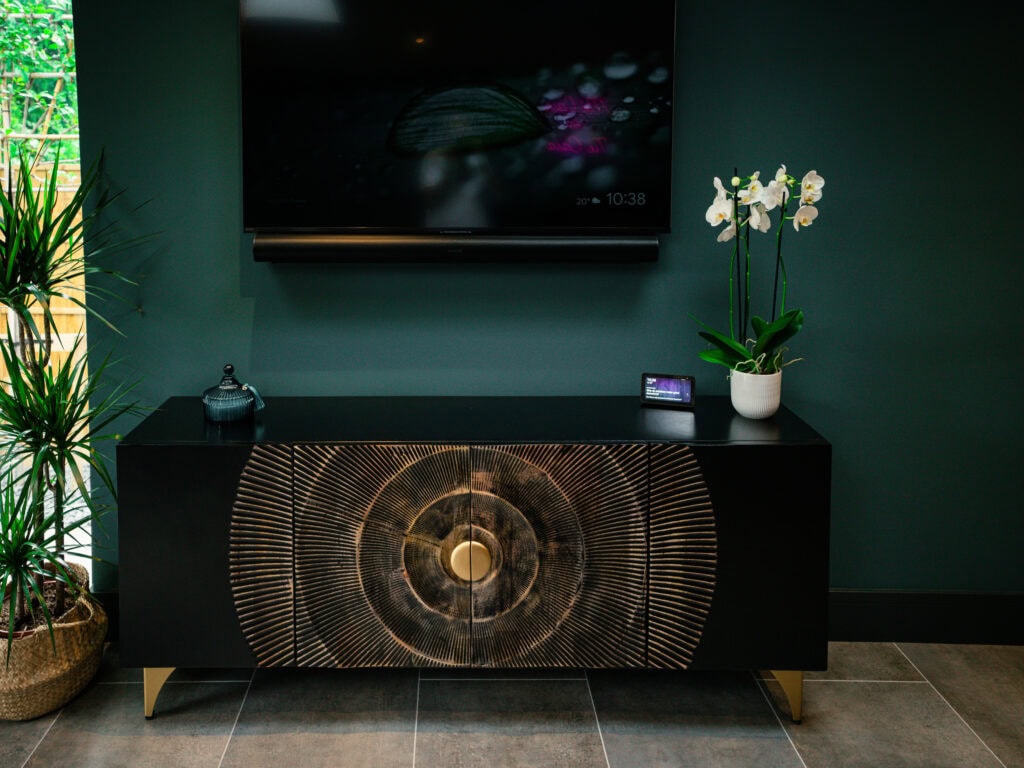
- Equipment racked in a cupboard or under the stairs, with one remote and one app for everything.
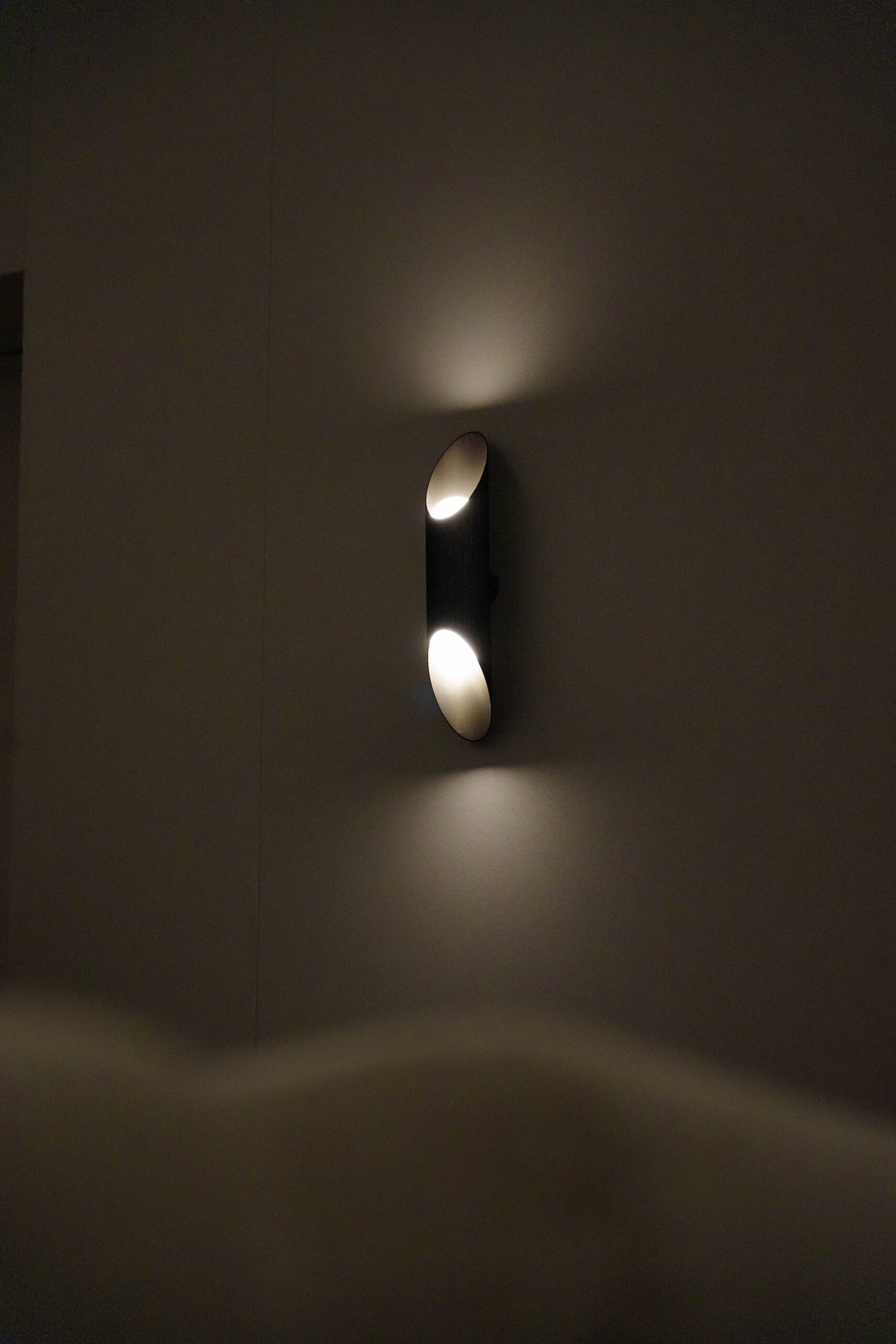
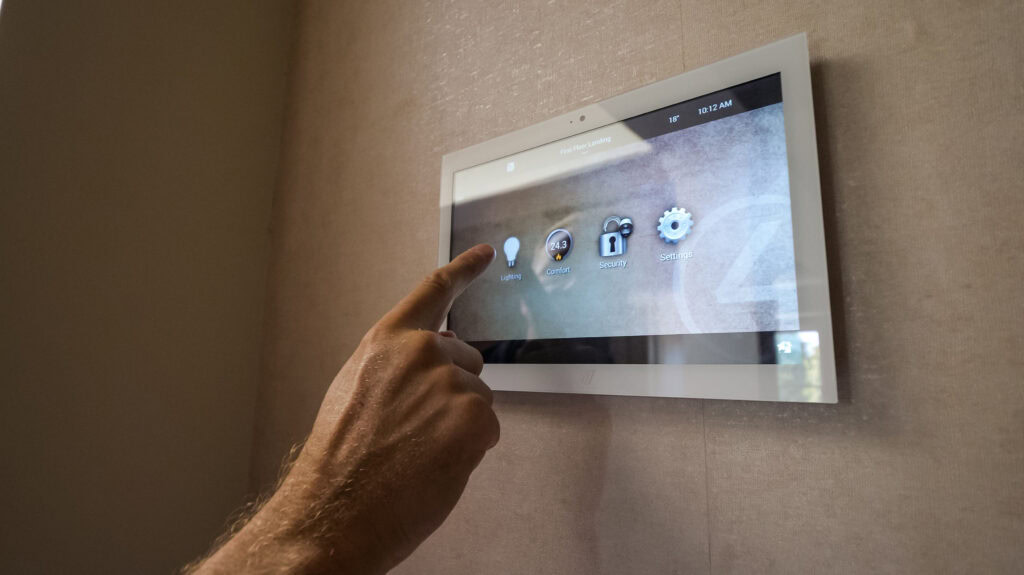
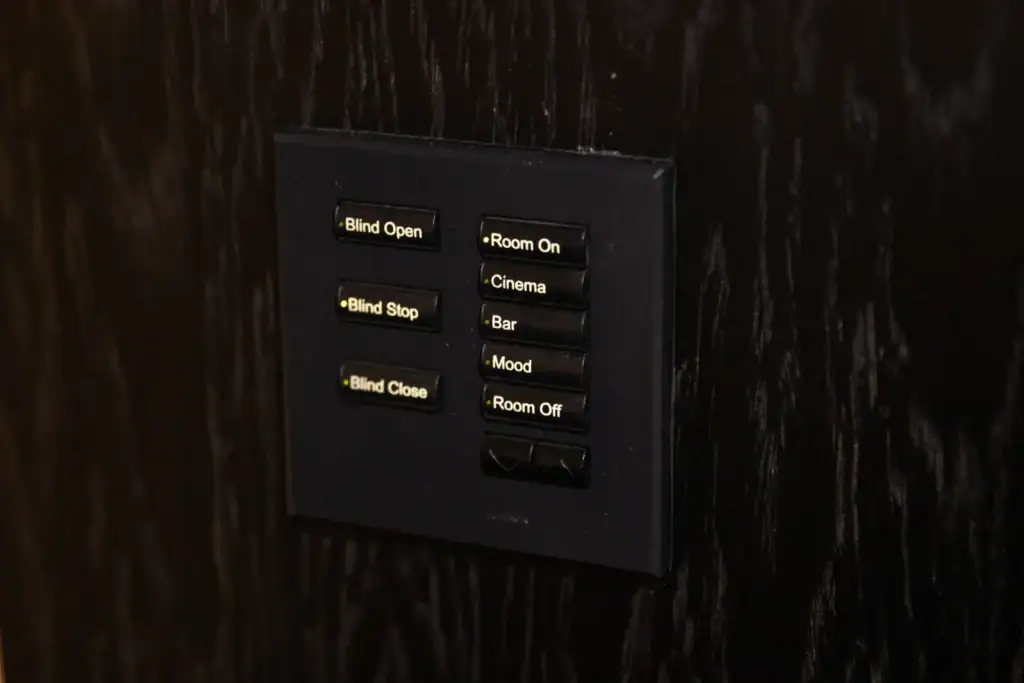
- Lutron lighting control with keypads in finishes chosen to suit the room, and scenes that dim the lights and close the blinds together.
Our luxury home cinema and London home cinema installation pages explain the full process, from survey and 3D visuals to calibration.
From our Roehampton Gate projectWhat do planning rules and the river mean here?
Barnes lies on the tidal Thames, and Richmond is careful about both conservation and basements. Article 4 directions in force since 1 April 2018 mean basement developments anywhere in the borough need planning permission, and in conservation areas some external changes need permission that would not be needed elsewhere. For a listed house, remember that listed building consent can apply to internal work, not just the facade. Please check your plans with Richmond Council before work starts. On flooding, the sound starting point is the government's long-term flood risk service for your address, followed by your architect's advice; we will not guess about a particular house.
Our demonstration cinema in Walton-on-ThamesWhat do clients say about hidden cinemas?
Fraser Robson brought us in for the renovation of a period property in West London, where the key requirement was a discreet cinema. The Google review picks out the process as much as the result: "They took the time to understand how we wanted to use the space and ensured everything was intuitive and simple to control." That is how we approach a Barnes house too.
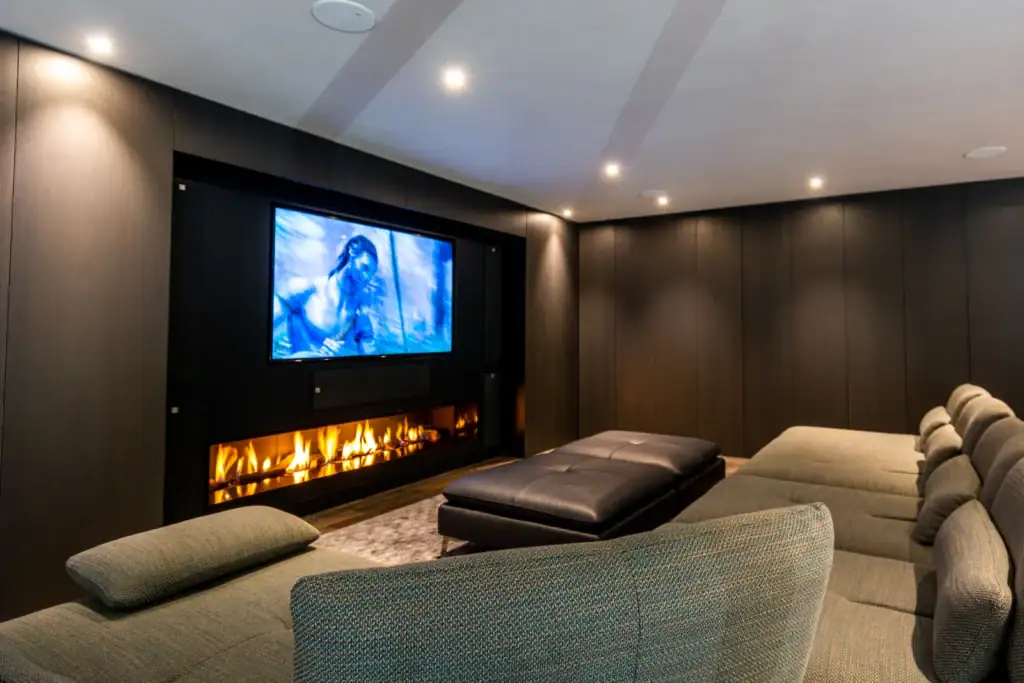
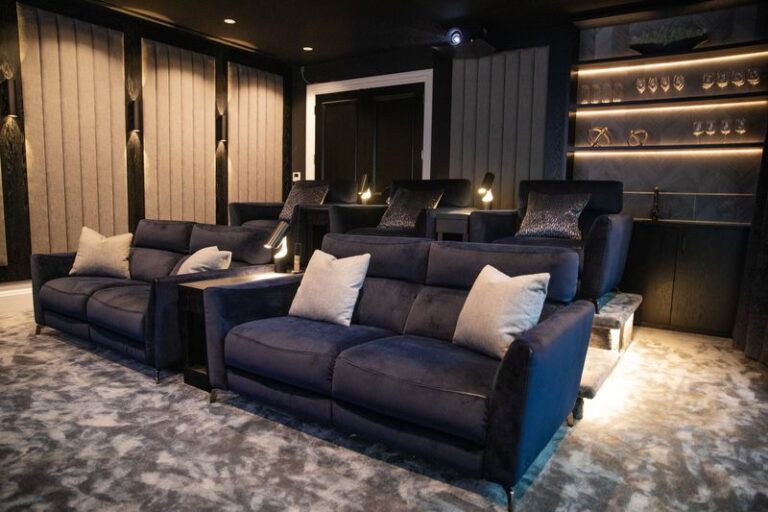
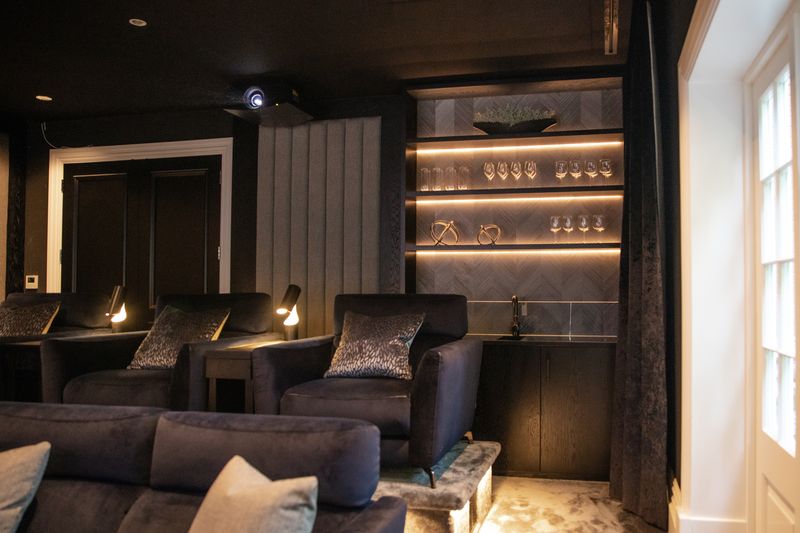
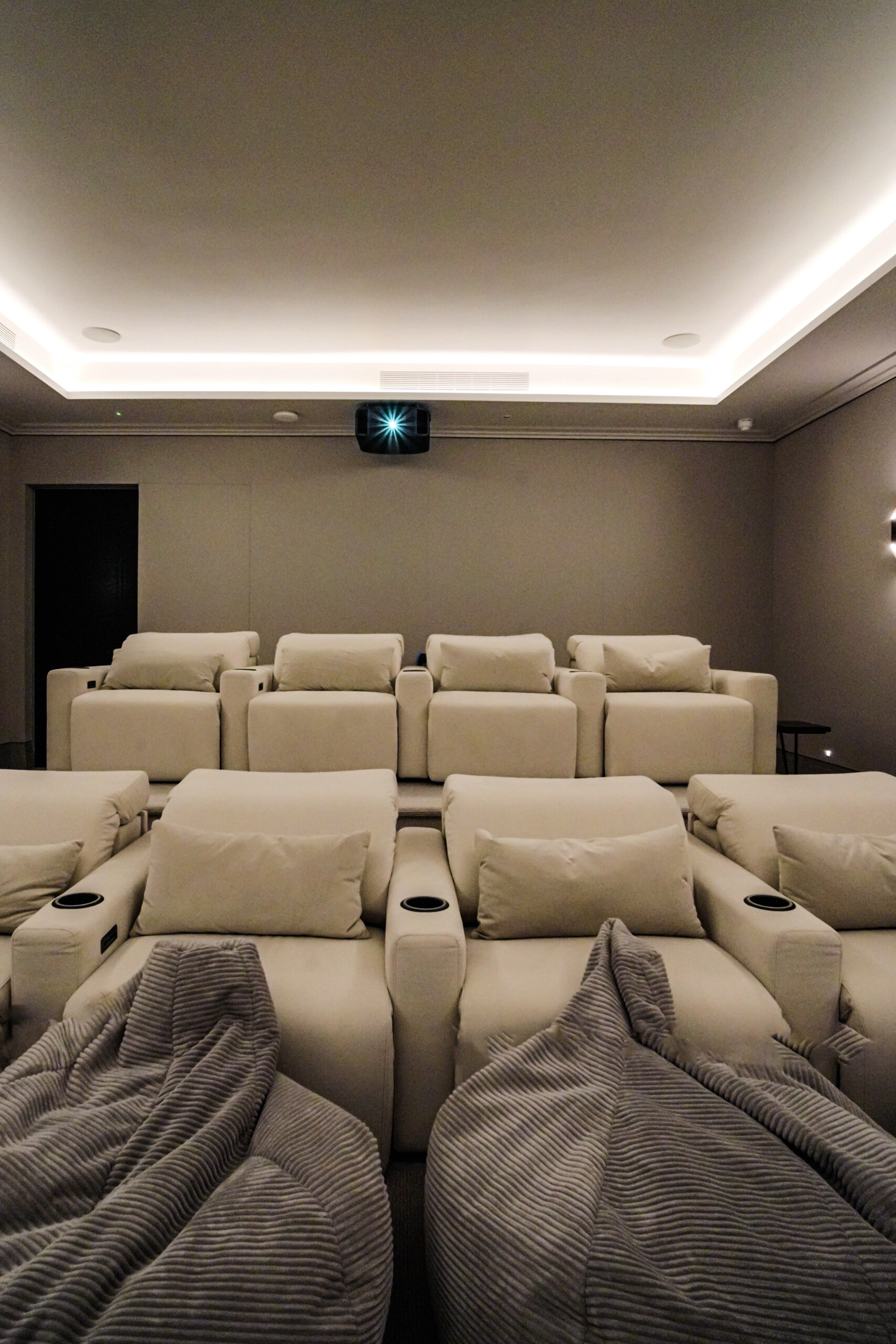
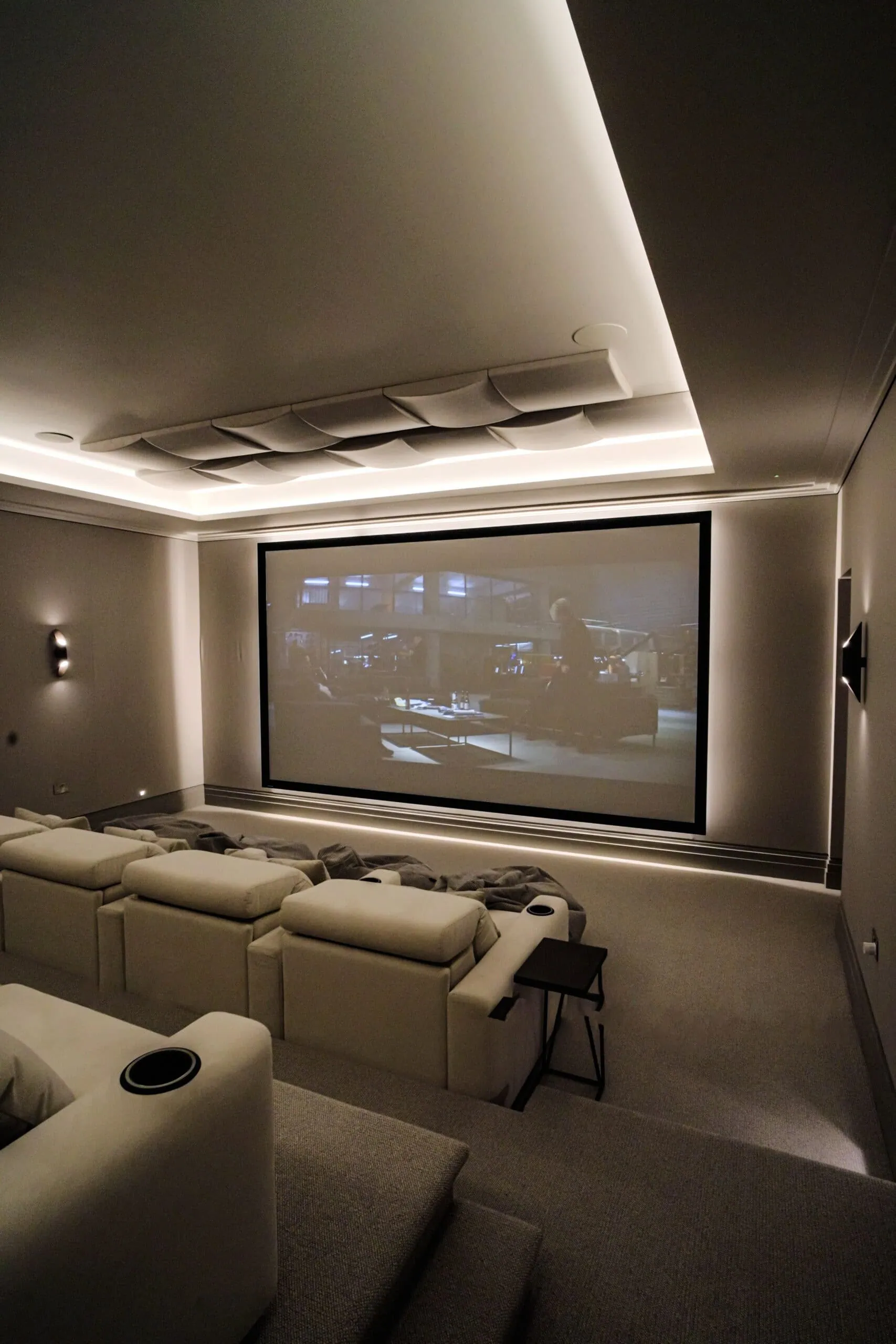
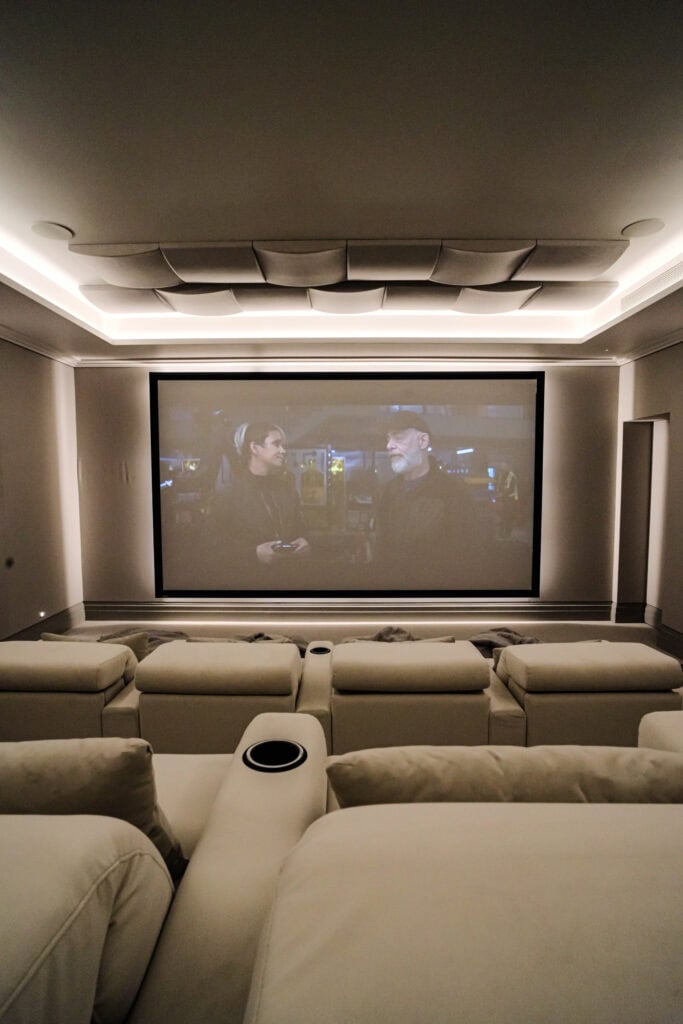
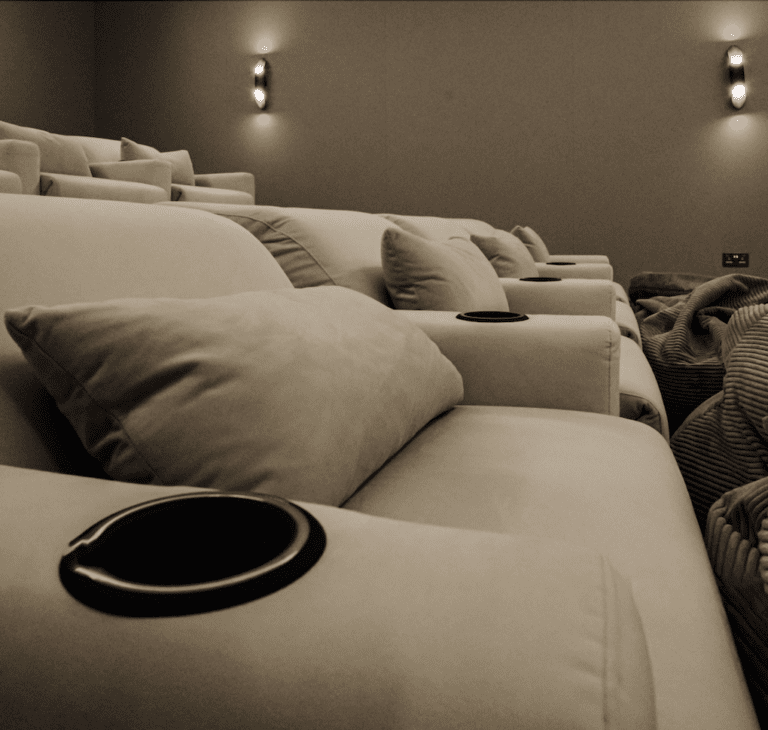
The Roehampton Gate basement, our published London project, has a 9.4 Dolby Atmos system with four subwoofers, a JVC laser projector, Moovia seating, Lutron lighting and Control4, behind a bespoke fabric-panel wall system that hides the speakers and cabling.
Barnes is about 9 miles from our Walton-on-Thames showroom. Hidden cinemas in period rooms, with fabric walls and concealed screens, cost more than the £15,000 to £25,000 band for a professionally designed small room, and we price them line by line after a survey. Book a showroom visit to hear what a well-hidden system sounds like, or arrange a free design consultation in your own home.