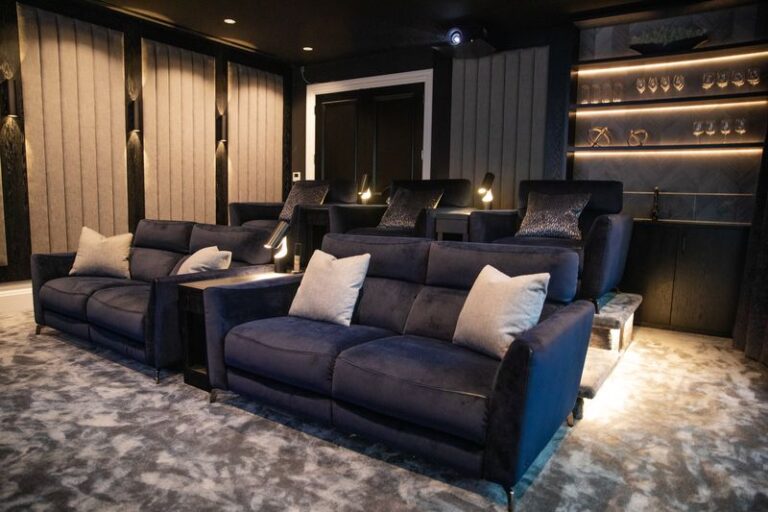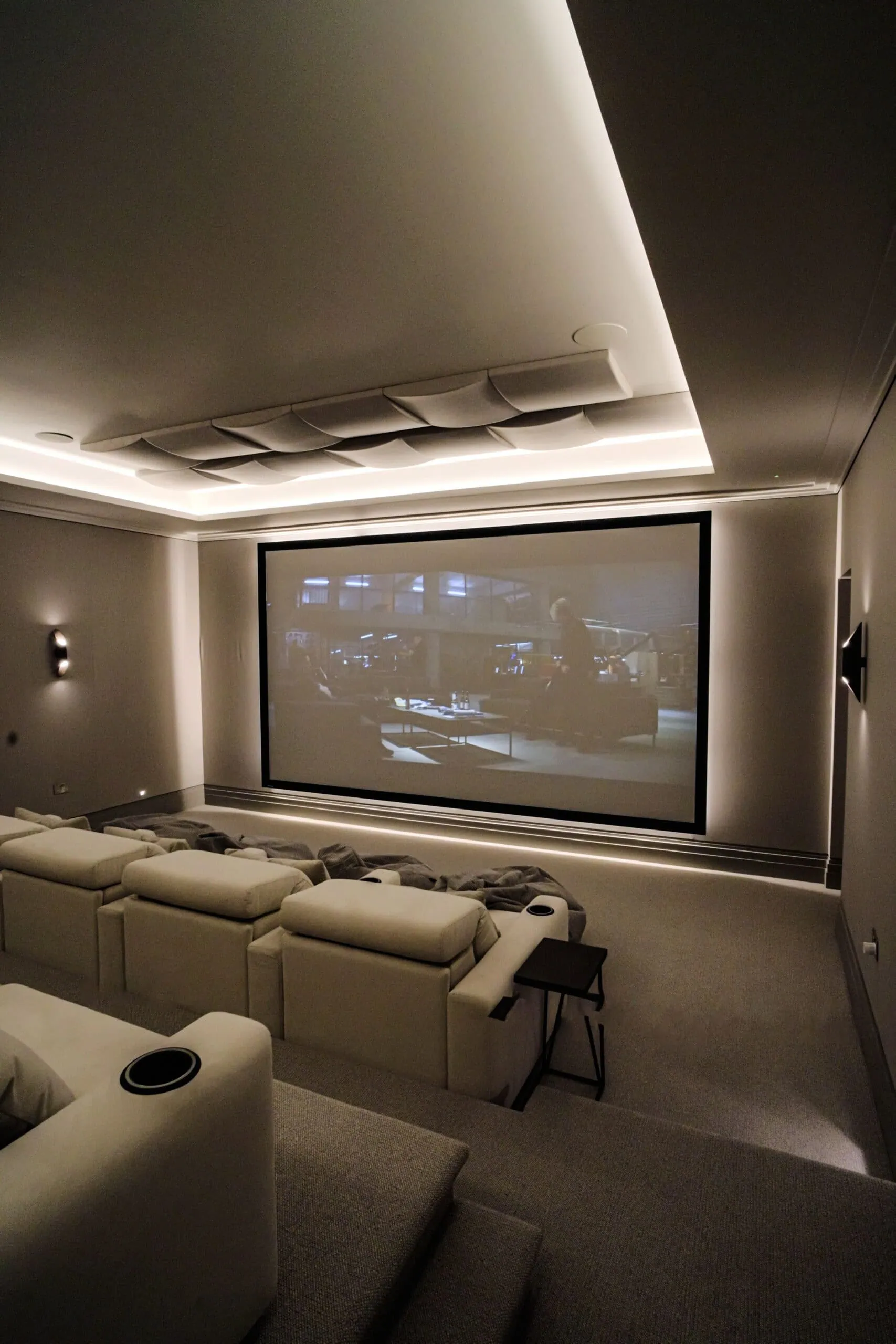

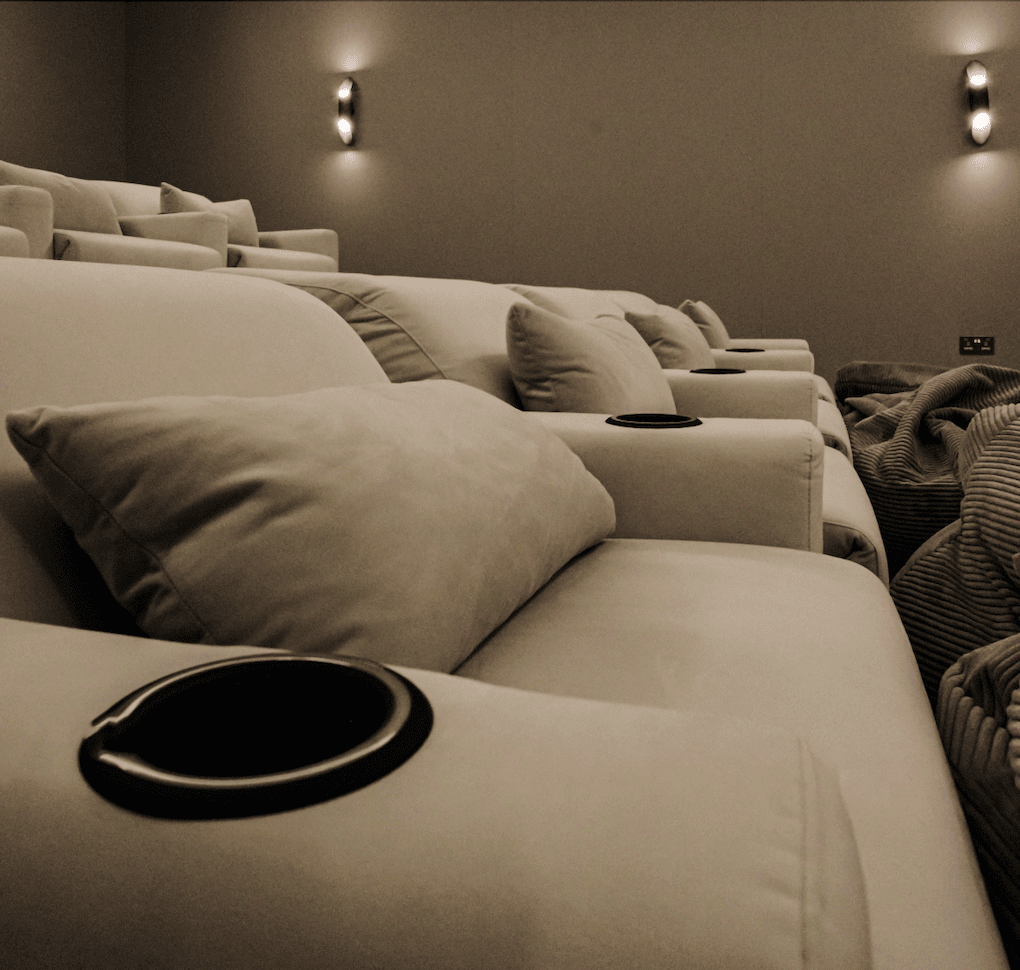
Who owns JVC? JVC is owned by JVCKENWOOD Corporation, the Japanese group formed when Victor Company of Japan and Kenwood set up a joint holding company in 2008 and merged fully in 2011. JVC dates back to 1927, launched the first VHS recorder in 1976, and today makes D-ILA home cinema projectors.
Last reviewed: 20 October 2026
How did JVC go from VHS to home cinema projectors?
JVC began in 1927 as the Victor Talking Machine Company of Japan, and its group history lists the HR-3300, the first VHS recorder, in 1976.
The projector story started later. JVC dates its first D-ILA device to 1997, and in late 2006 it announced the DLA-HD1, a full HD home projector that it said reached 15,000:1 native contrast without an iris. Native contrast has been JVC’s calling card ever since. In 2018 JVC developed a refined native 4K device, and JVC says combining it with e-shift gave the company a world first in 8K home projection.
The corporate side changed in the same period. In October 2008 JVC and Kenwood set up the joint holding company JVC KENWOOD Holdings, which became JVCKENWOOD Corporation in 2011 and absorbed both companies. JVCKENWOOD’s 2021 integrated report lists its Kurihama business centre in Japan as the site for D-ILA devices. For how we plan a JVC cinema, see our JVC home cinema projector page.
What is JVC known for today?
Deep blacks. JVC’s current UK projector range, listed on uk.jvc.com (checked 14 October 2026), is the DLA-NZ900, NZ800, NZ700 and NZ500. JVC quotes 100,000:1 native contrast for the DLA-NZ800 and calls the DLA-NZ500 the world’s smallest native 4K projector.
The NZ800 and NZ900 add 8K/e-shiftX, nudging every pixel half a pixel four ways so that native 4K chips can show an 8K picture. What Hi-Fi gave the NZ800 five stars in July 2024, praising its rich and three-dimensional contrast and detailed 8K performance, and said it was quiet in use. JVC’s UK site also notes awards for each model from AVForums, Trusted Reviews and Home Cinema Choice.
Why do clients choose JVC?
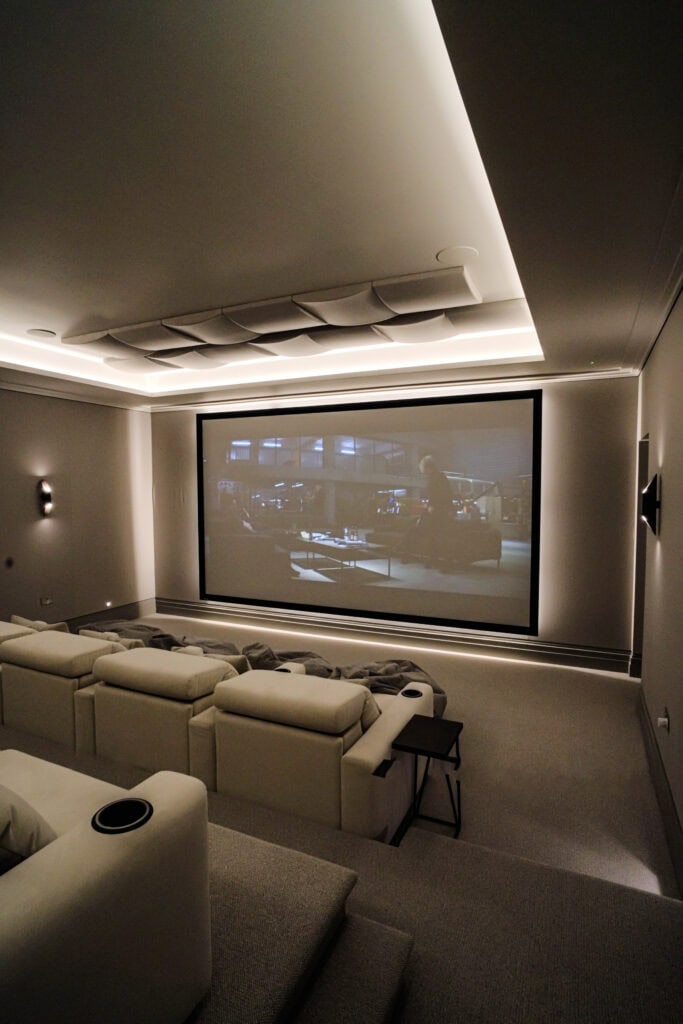
Because of the room they are building. A JVC shines when the screen is the only light in the room, which is why it so often ends up in a basement. At Roehampton Gate, a couple with five children wanted their 7 by 8 metre basement to become the family’s main entertainment space: warm but luxurious, with a cinema-quality picture and sound from every seat.
Laser projection from JVC was their choice, picked for clarity, contrast and HDR. It throws onto a high-gain screen that lets sound pass through, with 9.4 Dolby Atmos around the seating, bespoke Moovia chairs and fabric-covered walls that conceal the speakers and acoustic treatment. That is the setting a JVC is designed for.
What are the pros and cons of a JVC projector?
Pros
- Very high native contrast, which JVC quotes at 100,000:1 on the NZ800 and 40,000:1 on the NZ500.
- Native 4K D-ILA chips, with 8K/e-shiftX on the NZ800 and NZ900.
- HDR10+ support, which the NZ500 specification lists along with HLG.
- 3D still works on the NZ800, including frame-packed discs.
- Control4 SDDP is listed in the specifications, which lets Control4 discover the projector automatically.
- A laser light source rated at 20,000 hours on the NZ800.
Cons
- Price. What Hi-Fi lists the NZ800 as expensive and up against a tough competitor.
- Size and weight. JVC gives the NZ800 as 23.1kg, and What Hi-Fi says it is broad and heavy enough to need a sturdy mount.
- 8K is not native. The 8K image is built by e-shiftX from 4K chips, which is clever but not the same as an 8K panel.
- Fewer connections on the smallest model. The NZ500 lists LAN but no RS-232C port, so it relies on network control.
- It needs the right room. Pale walls, a white ceiling or uncontrolled daylight wash out the very contrast you are paying for.
Who suits a JVC projector, and who does not?
JVC suits a dedicated cinema: a basement, a converted garage or a room where the lights can go fully off and stay off. It suits film lovers who notice black levels in space scenes and night shots, and anyone with a shelf of 3D discs, because the NZ800 still plays them. Read our guide to basement cinema rooms for the construction side.
It suits less well if the room is a bright family space used in the daytime, if the ceiling cannot take a heavy projector, or if the budget would do more good on seating and acoustics.
How does a JVC projector fit a Control4 and Lutron home?
Comfortably. The NZ500 and NZ800 specifications list Control4 SDDP and a LAN connection, and the NZ800 adds RS-232C. The Roehampton Gate room is automated with Control4 and lit through a Lutron system. As a Platinum Control4 dealer, we set rooms like this up so that starting a film warms the projector while the lights fade, and the room comes back up gently at the end.
For owners, the result is that nobody needs to know how the projector works. In London we do much of this through our home cinema installation in London work, and if you want to talk through a JVC for your own room, get in touch or visit our Surrey showroom to see a finished cinema first.

Frequently asked questions
Is JVC a Japanese company?
Yes. JVC is a brand of JVCKENWOOD Corporation, whose head office is in Yokohama, Japan. JVCKENWOOD’s 2021 report lists its Kurihama site in Japan for D-ILA devices.
Are JVC and Kenwood the same company?
They have been since 2011, when JVC KENWOOD Holdings became JVCKENWOOD Corporation and merged Victor Company of Japan and Kenwood into one company.
Does JVC still make home cinema projectors?
Yes. JVC’s UK site lists the DLA-NZ900, NZ800, NZ700 and NZ500 as current D-ILA models (checked 14 October 2026), along with accessories such as replacement lamps for older projectors.
Is JVCKENWOOD a listed company?
JVCKENWOOD’s shares were listed on the First Section of the Tokyo Stock Exchange when the holding company was formed in 2008, according to its 2021 integrated report.
Did JVC invent VHS?
JVC launched the HR-3300 in 1976, which its parent company’s history describes as the first VHS recorder.