Smart lighting can work very well in a listed or period home, because wireless lighting control needs far less cutting into walls and ceilings. But if your home is listed, works that affect its special character need listed building consent, and that can include internal work. Check with your local planning authority before anything starts.
This article is general information, not legal advice. It draws on published guidance for England from Historic England and the government. Rules and bodies differ elsewhere in the UK, and your local planning authority always has the final word.
Do you need listed building consent for smart lighting?
You may. The government’s planning guidance on the historic environment says works that alter a listed building in a way that affects its character as a building of special architectural or historic interest need listed building consent. It also says that, unless the list entry says otherwise, listing covers the entire building, inside and out, and may cover objects fixed to it.
Historic England’s page on installing services is reassuring on the other side: you can usually change and upgrade most building services without affecting what is special about a building, and in that case consent is not needed. The difficulty is knowing which side of the line your plans fall on. That is not a judgement for us, or for you, to make alone.
Historic England’s advice on listed building consent is to check first with your local authority’s conservation officer, who can say whether consent is needed and what is likely to be acceptable. There is no fee for an application. If you want formal confirmation that proposed works do not need consent, the government guidance describes a certificate of lawfulness of proposed works, which must be obtained before work begins.
Why does getting this wrong matter?
The government guidance is clear that carrying out works that need consent without it is a criminal offence under section 9 of the Planning (Listed Buildings and Conservation Areas) Act 1990. Historic England adds that a planning authority can insist that unauthorised work is reversed, and that an owner may have trouble selling a property with work that lacks consent. The Planning Portal says it is often helpful to discuss your proposal with your local authority before you apply.
What does Historic England advise about wiring and switches?
Historic England’s pages on services and internal lighting give practical principles that shape any lighting design in an old house:
- Survey first and reuse existing cable routes and ducts wherever possible, sharing common routes.
- Avoid chasing into historic surfaces. Use voids under floors, above ceilings, and features such as skirtings and mouldings.
- Consider wireless systems to replace cabling, including for light switches.
- Place switches and sockets discreetly, and fix into sacrificial material such as mortar joints rather than drilling historic fabric.
- Avoid recessed downlights where historic ceilings survive. Historic England suggests them only where the original ceiling has been replaced.
- Use qualified electricians registered with the ECA or NICEIC and experienced in heritage buildings, working to BS 7671.
- Record what you remove, with notes and photographs, so future owners know what was there.
It also warns that the cumulative effect of many small changes can be significant. A good design keeps the list of changes short.
How can wireless lighting control help?
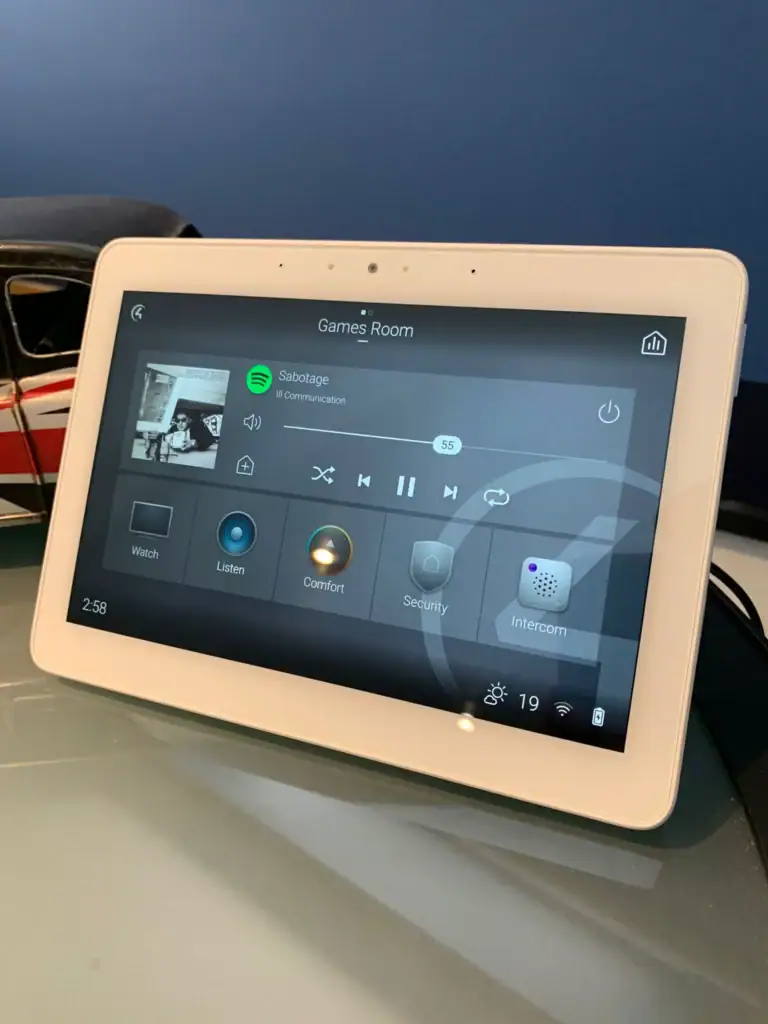
Wireless control is one of the most useful tools in an older house. Lutron’s RadioRA 3 communicates over its own Clear Connect radio rather than Wi-Fi, and Lutron designed it so it can be retrofitted without opening walls or pulling new wires. The dimmers still connect to your lighting circuits, but the keypads, remotes and processor talk to each other by radio rather than over new control cables between rooms.
A few details make a real difference:
- Pico remotes are wire-free, so a control can sit on a table where a new switch position would mean cutting into plaster.
- Lamps instead of new ceiling lights. Historic England notes that lamps on ordinary sockets can only be controlled at the lamp, and suggests dedicated lighting outlets. Lutron’s UK controls page also lists a wireless lamp dimmer for table and floor lamps.
- Keeping period fittings. Historic England lists the retention and re-commissioning of historic fittings as part of a lighting brief, and reminds you that LED lamps and dimmers must be compatible.
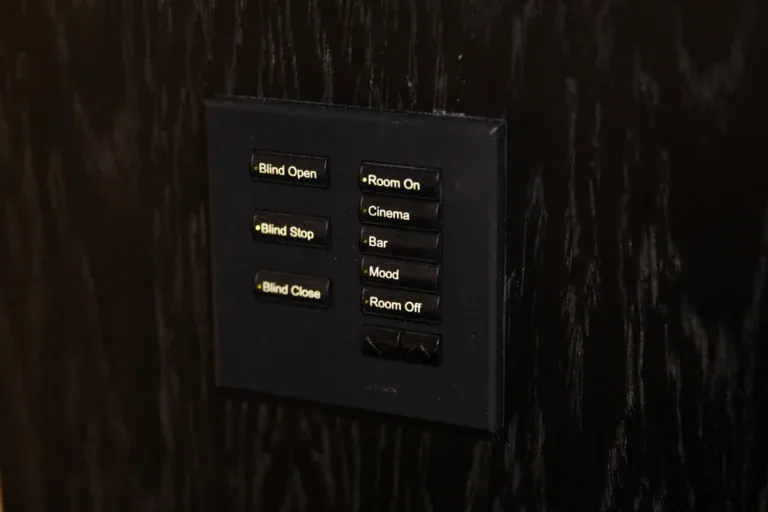
- Keypads that suit the house. Lutron’s Aviena is a solid brass toggle inspired by heritage designs, and Alisse is solid brass finished by hand. Both are HomeWorks keypads. Our guide to Lutron keypads compares the ranges.

What have we learned in period homes?
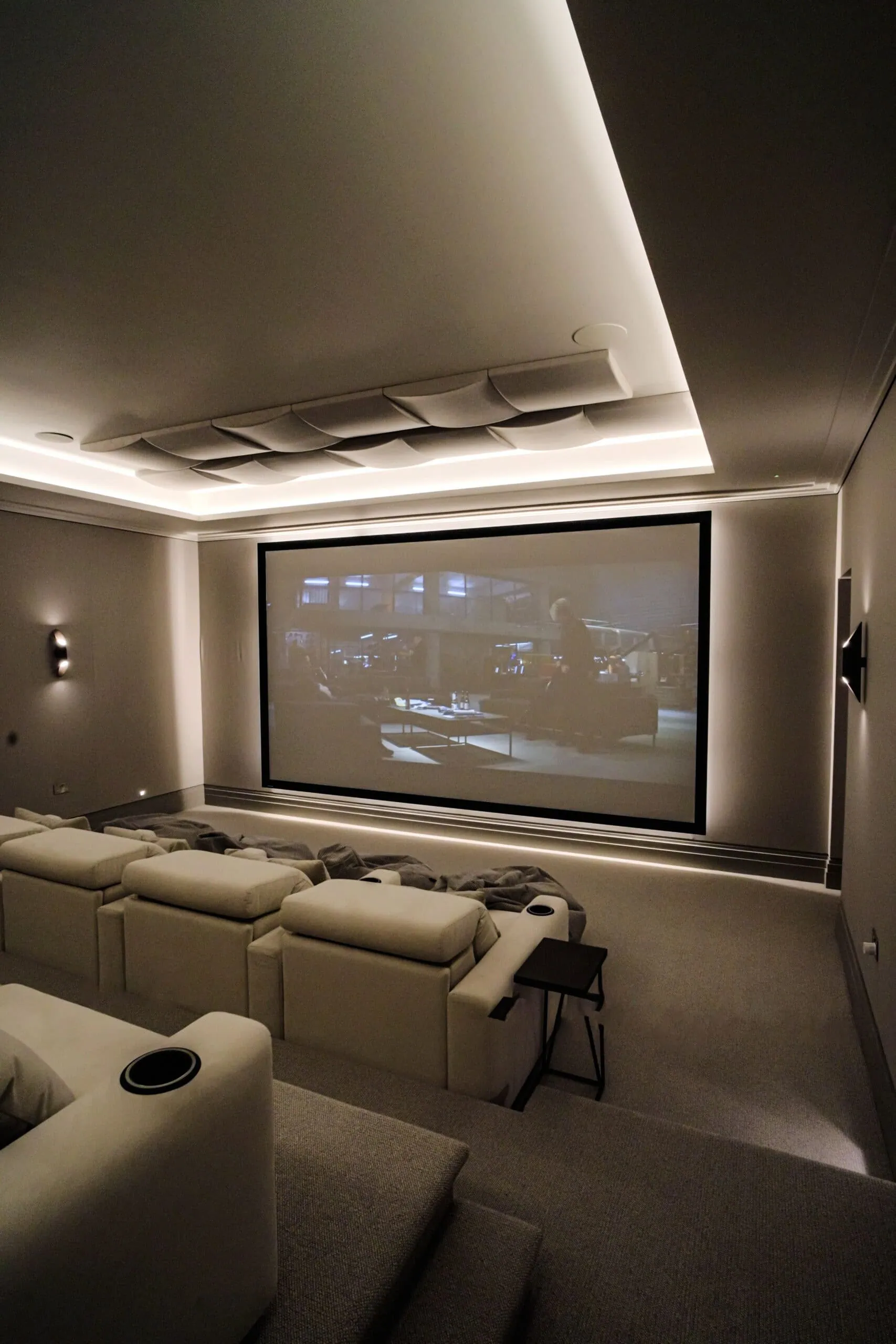
In a West London period property we hid a full cinema within the original features. Our client, Fraser Robson, wrote in a Google review: “A key requirement was a discreet, high-performance cinema arrangement that would blend seamlessly with the original character of the house, and they delivered exactly that.” The review adds that “the cinema set-up is beautifully hidden within the period features, yet performs to an exceptional standard.”
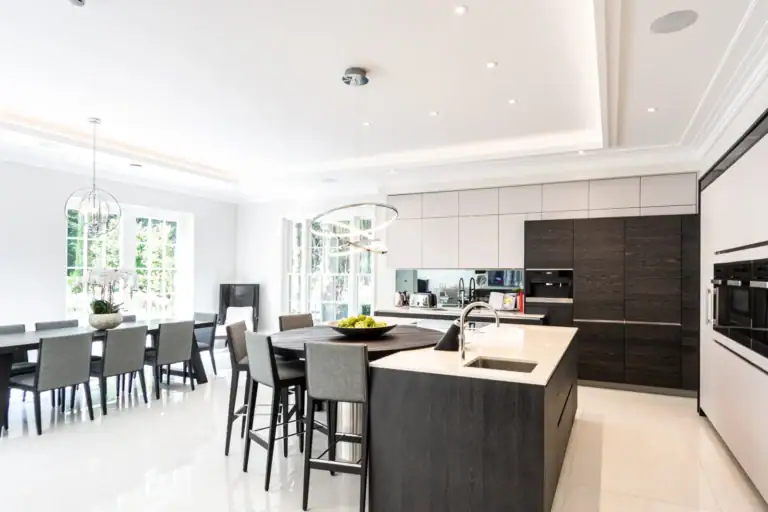
The lesson carries over to lighting. The technology should defer to the house. Fewer, better-placed keypads, scenes built around lamps and existing fittings, and no new holes where an old ceiling survives. Our guide to planning lighting scenes shows how to get a lot from a small number of circuits.
What should you ask before you start?
- Is the house listed, and what does the list entry on the National Heritage List for England describe?
- Have you spoken to your local planning authority’s conservation officer about the proposed works?
- Which rooms have surviving historic ceilings, plaster or panelling that must not be cut?
- Can existing cable routes, voids and conduits be reused?
- Which controls can be wireless, and which keypad finishes suit each room?
- Who is the electrical contractor, and are they registered with the ECA or NICEIC?
A clear written specification of what goes where makes that conversation with the conservation officer much easier. For how we approach Lutron design more widely, see our Lutron lighting control page.
Start with a conversation
Every old house is different, and so is every conservation officer’s view of it. Book a free design consultation and we will talk through what your home needs, and what questions to take to your local planning authority before any work begins.
Frequently asked questions
Do I need listed building consent to install smart lighting?
You may. Government guidance says works that affect a listed building’s special character need consent, and listing usually covers the interior, so ask your local planning authority before work starts.
Is it a crime to alter a listed building without consent?
Yes, where the works needed consent. Carrying them out without it is a criminal offence under section 9 of the Planning (Listed Buildings and Conservation Areas) Act 1990, and the planning authority can insist the work is reversed.
Is there a fee for listed building consent?
No. Historic England and the Planning Portal both say there is no fee for a listed building consent application.
Is wireless lighting control better for a listed building?
Often, yes. Historic England suggests considering wireless systems to replace cabling for things like light switches, and Lutron designed RadioRA 3 to be retrofitted without opening walls or pulling new wires.
Is this article legal advice?
No. It is general information based on published guidance for England, and your local planning authority decides whether your works need consent.