

Our Lyngdorf review in short: Lyngdorf Audio and its sister line, Steinway Lyngdorf, make some of the most capable room-correcting electronics you can put in a home cinema or music room. The drawbacks are a design aimed at custom installation, processors that need separate amplifiers and, for Steinway Lyngdorf systems, being tied to one maker’s speakers.
Last reviewed: 21 October 2026
Who is Peter Lyngdorf, and how did the company start?
The company is the work of one Danish entrepreneur. Peter Lyngdorf started as a distributor of hi-fi components in 1975, set up the HiFi Klubben retail chain in 1980 and launched the DALI loudspeaker brand in 1983. He also owned Snell Acoustics from 1989 to 1996 and NAD Electronics from 1991 to 1997, so for several years he held both, and Snell’s founder showed an early room correction system at a trade show in 1992.
In 1997 he invested in a small Danish start-up behind a fully digital amplification technology. The result was the Millennium amplifier, which the company’s own history dates to 1999. Lyngdorf Audio followed in 2005, the first company under his own name, and RoomPerfect room correction arrived in 2006. In 2007 Steinway & Sons gave the company exclusive rights to make audio systems under the Steinway Lyngdorf name, starting with the Model D loudspeaker system.
Today both lines belong to Steinway Lyngdorf (SL Audio A/S), which sits within Peter Lyngdorf’s holding company, and products are developed at the group headquarters in Skive, Denmark. For the practical side of designing a room around either line, see our Steinway Lyngdorf and Lyngdorf Audio page.
What is Lyngdorf known for?
Two things above all: digital amplification and room correction. The company credits the Millennium as the world’s first fully digital amplifier, and RoomPerfect has been built into its amplifiers and processors ever since. In home cinema, the flagship is the Lyngdorf MP-60 2.1 processor, which decodes up to 16 native channels and was developed alongside its Steinway Lyngdorf counterpart, the P300 (both on Lyngdorf’s MP-60 page, checked 14 October 2026).
The reviews have been strong. When Home Cinema Choice reviewed the MP-60 in May 2020, it rated the processor five out of five, and its reviewer called it the best home cinema processor he had heard. He also found it easy to set up for something so complex. It also found the processor effectively silent in the room, because it relies on basic ventilation rather than noisy fans.
Why do clients choose Lyngdorf?
The clients who ask for Lyngdorf tend to play music as often as they watch films, and they want one system that does both well. A cinema calibration that makes a piano recording sound thin is a poor trade for them.
RoomPerfect is aimed squarely at that problem. Lyngdorf says it keeps the loudspeaker’s own character while correcting what the room does to the sound, and that it works with any speaker in any room. Lyngdorf Audio electronics can also be combined with other brands, so an owner can keep speakers they love. Steinway Lyngdorf goes the other way: the processor, amplifiers and Steinway & Sons speakers are designed and programmed as one system, which appeals to people who want one maker responsible for the result.
What are the pros and cons of Lyngdorf?
Pros
- RoomPerfect correction that measures across the room, not just at one seat, as described on Lyngdorf’s RoomPerfect page.
- A five out of five verdict for the MP-60 from Home Cinema Choice.
- Quiet in the room, with no noisy cooling fans.
- Lyngdorf Audio works with other makers’ speakers and sources.
- A Control4 driver is listed among the MP-60 downloads (checked 14 October 2026).
Cons
- Separate amplification. The MP processors are processors only, so a cinema needs power amplifiers as well, which means more rack space and more heat to plan for.
- Built for installers. Home Cinema Choice said the MP-60 is designed mainly with installers in mind. A keen owner can set it up, but most will want help.
- No Wi-Fi. The MP-60 Home Cinema Choice tested had no Wi-Fi, so it needs a wired Ethernet connection.
- Small irritations. The same review noted the remote has no backlight, which matters in a dark room.
- Less speaker freedom with Steinway Lyngdorf. Those systems use Steinway & Sons speakers programmed into the processor, so you are choosing a complete package.
- Correction is not a cure. Room correction changes the sound at the seats; it does nothing about noise escaping to the rest of the house, which is a building job. Our treatment versus soundproofing guide sets out the difference.
Who suits Lyngdorf, and who does not?
Lyngdorf suits a music lover who also wants a proper cinema, a living space where the speakers have to sit wherever the furniture allows, or anyone who has heard a room transformed by good correction and wants that every day. It also suits people who enjoy the engineering, because there is a lot of depth to explore. Our home cinema design service usually starts with the room for exactly this reason.
It is less suitable for someone who wants a single box with built-in amplifiers and wireless streaming that they can set up alone on a Saturday afternoon. If the room is mostly used for television and the occasional film, the depth of the system will go largely unused.
How does Lyngdorf fit a Control4 and Lutron home?
Well, because it was designed for this kind of house. Home Cinema Choice noted the MP-60 supports control systems such as Control4 and has a full web interface, so set-up and RoomPerfect can be managed remotely. As a Platinum Control4 dealer, we use the Lyngdorf driver so the processor follows the room’s scenes: choosing a film or a playlist sets the source and listening level while the Lutron lighting changes with it. The volume buttons on the Control4 remote drive the processor directly.
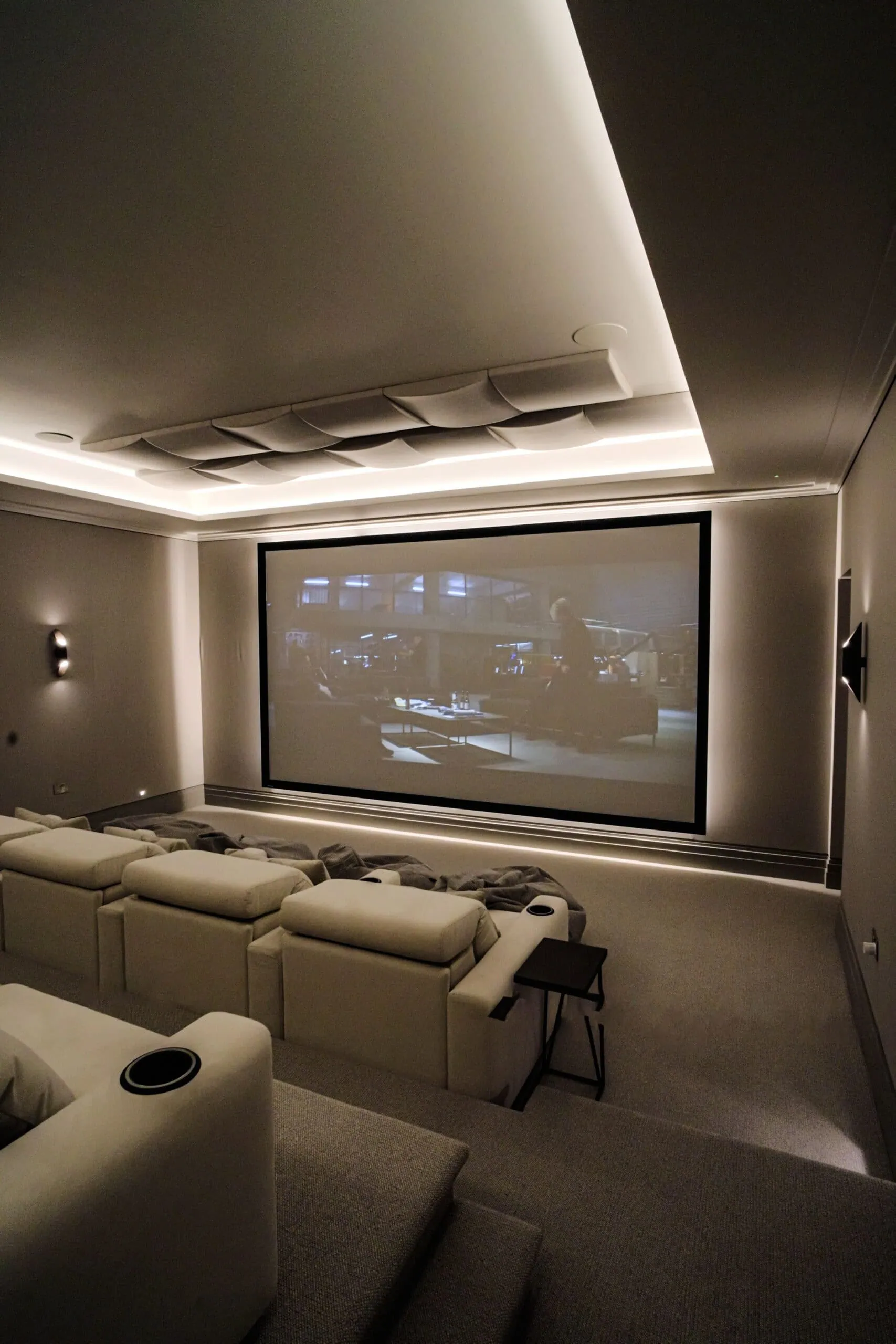
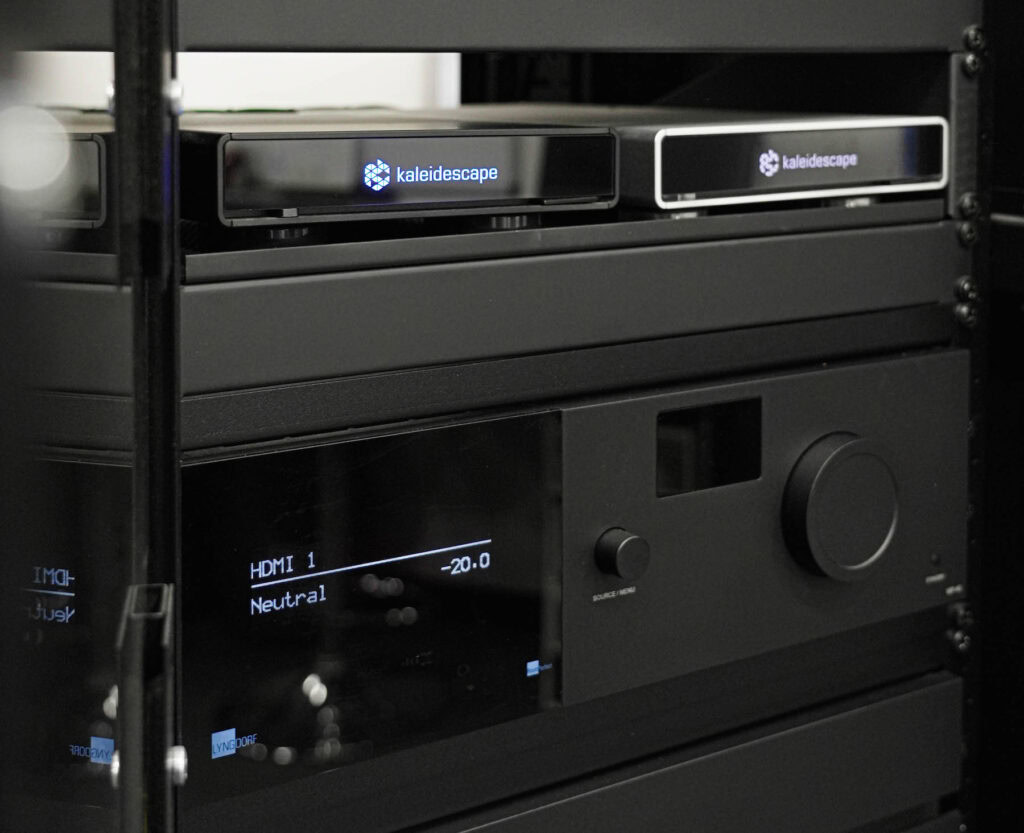
You can hear this in our Walton-on-Thames showroom, where the sound comes from Lyngdorf Audio in a 7.2.2 layout, with two Kaleidescape players in the same rack, and the cinema runs from one handheld remote. Bring a film and an album you know, and play both through the same system. Visits are by appointment through our Surrey showroom page.

Frequently asked questions
Who owns Lyngdorf?
Lyngdorf Audio and Steinway Lyngdorf are both product lines of SL Audio A/S, the Danish company founded by Peter Lyngdorf. The company says SL Audio sits within his holding company, which also has development facilities and factories in Denmark and China.
Is Lyngdorf connected to DALI?
They share a founder. Peter Lyngdorf launched the DALI loudspeaker brand in 1983, more than 20 years before he founded Lyngdorf Audio in 2005.
Where are Lyngdorf products developed?
In Denmark. Lyngdorf says the MP-60 2.1 and the Steinway Lyngdorf P300 are developed at the group headquarters in Skive, and its company history for 2026 notes a new facility for making and lacquering speaker cabinets in-house.
Does the Lyngdorf MP-60 have Wi-Fi?
The MP-60 Home Cinema Choice reviewed in 2020 had no Wi-Fi and used a wired Ethernet connection. In a cinema we would wire it anyway, because a fixed connection is more reliable for control and updates.