Concealment designed and installed by Art of Integration

Future Automation TV lifts and projector lifts for Surrey and London homes

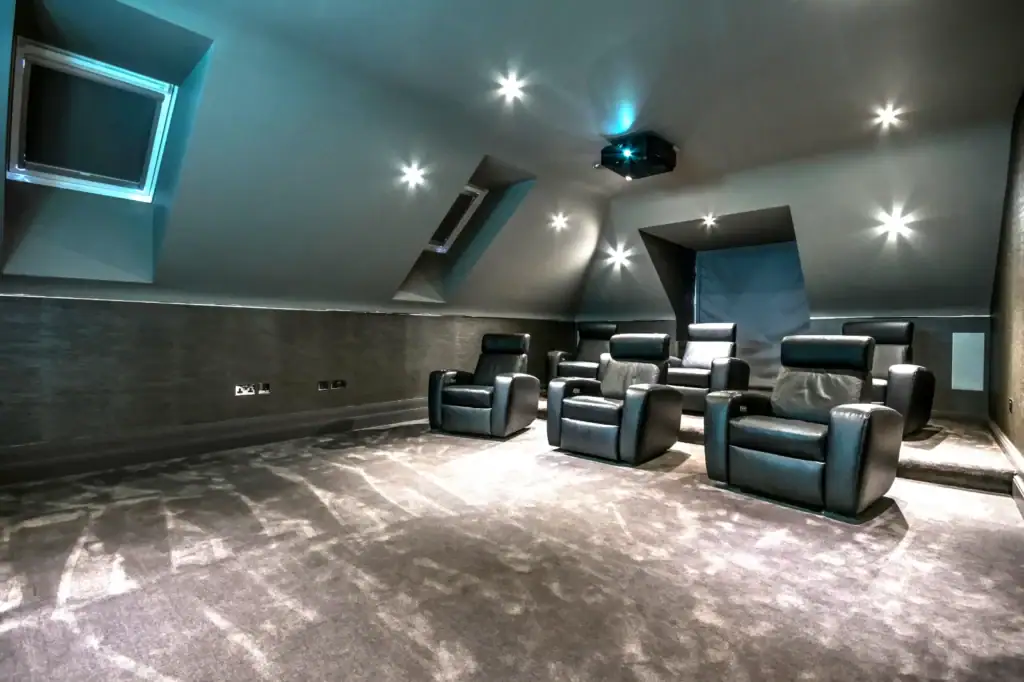
Future Automation is an engineering company based in Britain and North America that has designed and made motorised mechanisms for hiding TVs and projectors since 1998. We design and install its lifts, hinges and moving panels in media rooms and multi-purpose cinemas across Surrey and London, including the concealed projector lift in Esher.

Since 2012Showroom in Walton-on-Thames★ 5.0 on Google
Best for

Multi-purpose rooms and designer interiors where the TV or projector must disappear when not in use

Works with

Control4 through RS-232, contact closure or IR; motorised drop-down screens; lighting scenes

Where to see it

Our Esher cinema and entertainment room

Our experience

A concealed projector lift working with a Draper 120 inch motorised screen and an 85 inch TV in Esher

Official website: Future Automation (opens in a new tab)

future automation tv liftfuture automation tv liftfuture automation tv lift
Overview
future automation tv lift
01

What does Future Automation make?

Future Automation designs and manufactures the mechanisms that move screens out of sight. Its TV range covers lifts that raise a screen out of cabinetry or the floor, including hinged and swivelling versions, manual and motorised wall mounts, ceiling lifts, ceiling hinges that fold a TV down from above, and sliding panel systems that close across a screen to hide it completely. For projectors there are ceiling lifts, a hinge that hides the projector in a wall when the ceiling has no depth, mirror-based concealment for dedicated cinemas, port glass for projection rooms and service mounts that make maintenance easier.

All its motorised mechanisms are made to order and assembled and tested by hand, and the company offers a bespoke design service when no standard product fits. That matters in the homes we work in, where the ceiling heights, joinery and finishes are rarely standard.

future automation tv liftPhoto: Derek Jensen (Tysto), Public domain, via Wikimedia Commons
02

Why hide the TV or projector at all?

A large black rectangle is hard to design around. Interior designers working on a drawing room, a library or a principal bedroom often want the television out of sight when it is off, and in a multi-purpose room the same wall may need to read as panelling or joinery by day and carry a 120 inch picture at night. Concealment lets the room keep its proportions and finishes while still offering a proper cinema image.

There is a practical reason too. A projector that only comes down when it is needed is out of the way of guests, children and cleaners the rest of the time, and a screen that drops in front of a TV means the family does not have to choose between an everyday television and a big cinema picture. Our guide to choosing a projector or a TV explains why many of the rooms we design end up with both.

future automation tv lift
03

Planning a hidden projector with architects, joiners and interior designers

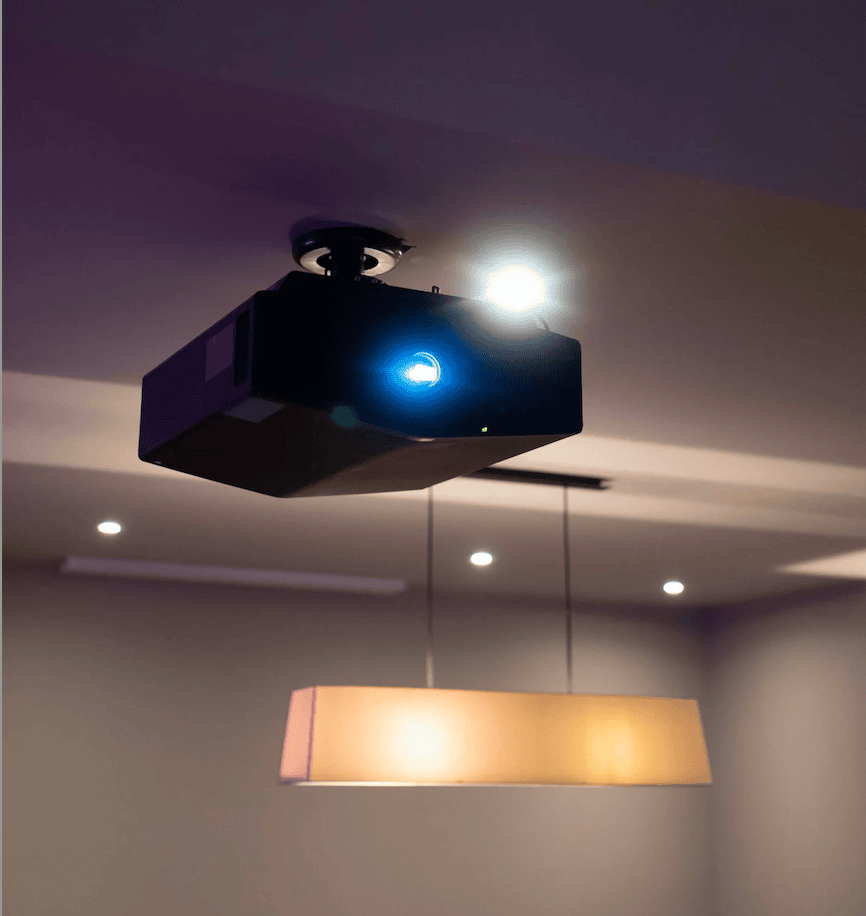
Concealment succeeds or fails at drawing stage, long before the mechanism arrives. For a ceiling projector lift we need the void depth confirmed early. Future Automation's PDR residential lift needs 263 mm within the finished ceiling in its PDR2 version, which carries up to 15 kg, and 295 mm for the PDR3, which carries up to 45 kg. That depth has to be clear of joists, ductwork and downlights, so we talk to the architect and the mechanical and electrical engineer before the ceiling is set out.

The order of work matters as well. The PDR's in-ceiling frame can be fitted before the mechanism, so the plasterer finishes around it and the motor stays clean. The lid takes matching trim panels that can be painted to the ceiling finish, leaving a 3 mm shadow gap when closed. For a TV lift in a cabinet or a sliding panel in wall joinery, we give the joiner the mechanism's dimensions and clearances before the carcass is built, and agree who supplies the facing panel, the ventilation and a removable access panel for servicing.

Power, a control cable and a network point all need to reach the mechanism, and the screen size should be fixed before any of this, using our screen size and viewing distance guide. Our home cinema design service brings the drawings for all these trades together in one set.
Our work

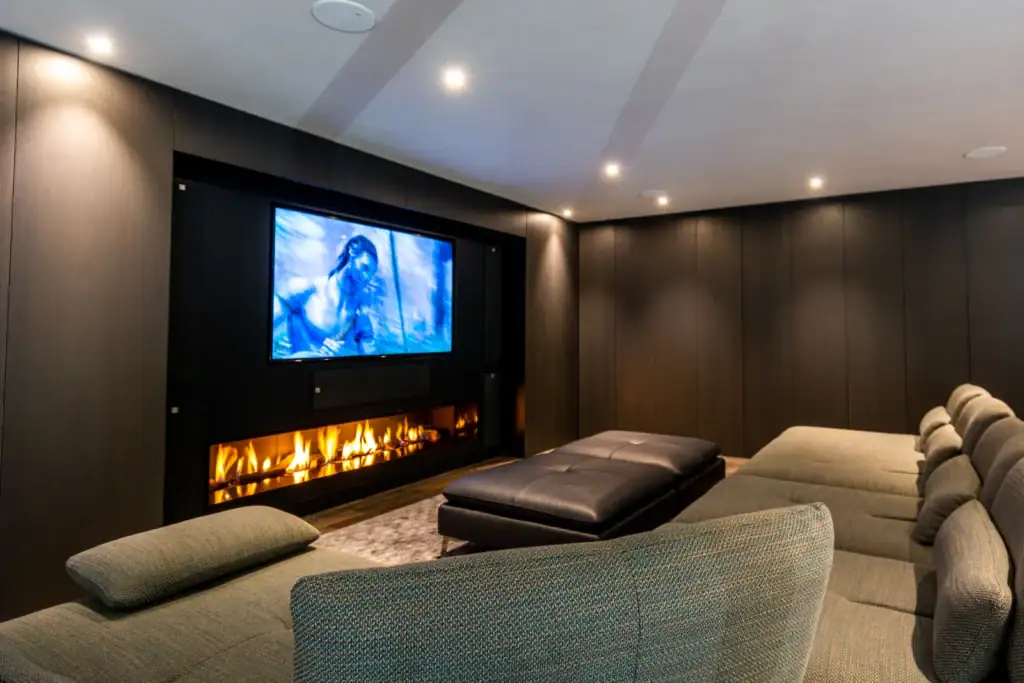
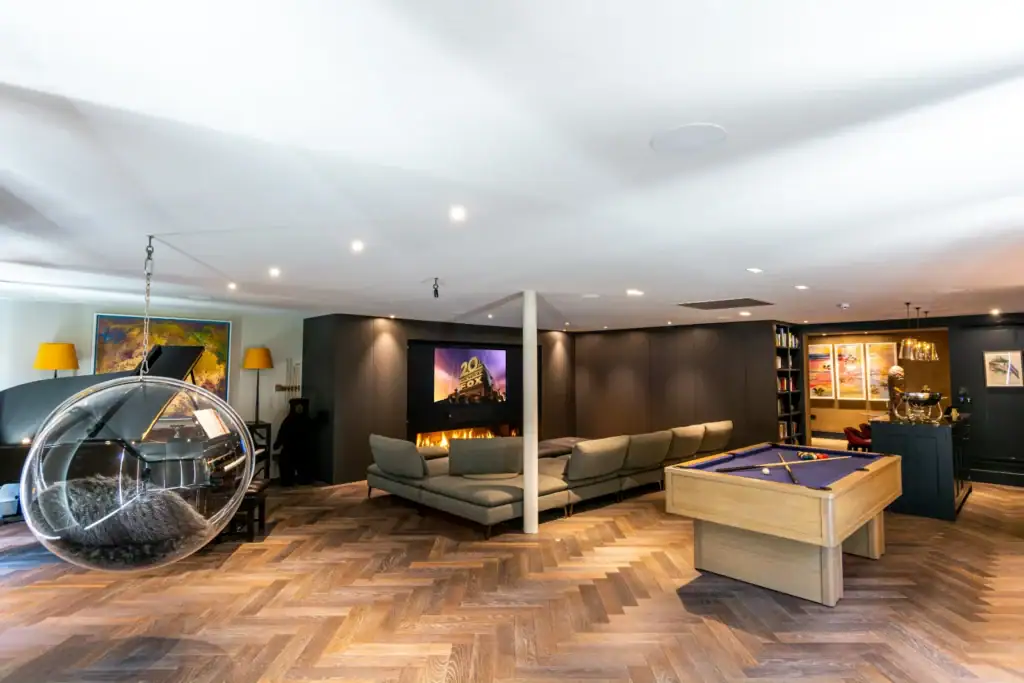
The concealed projector lift in our Esher project

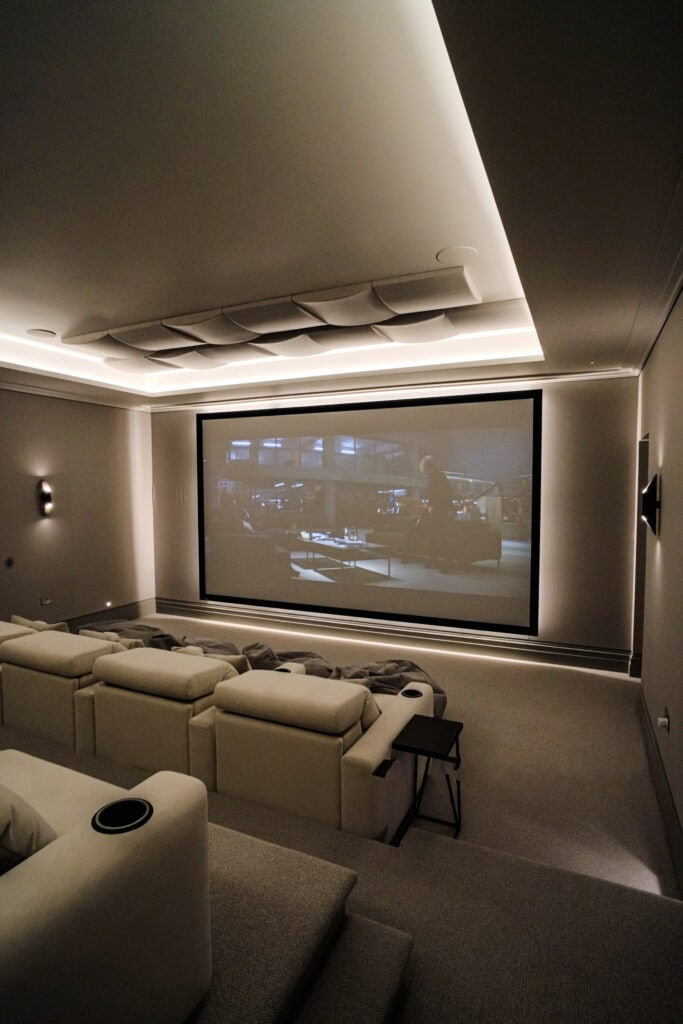
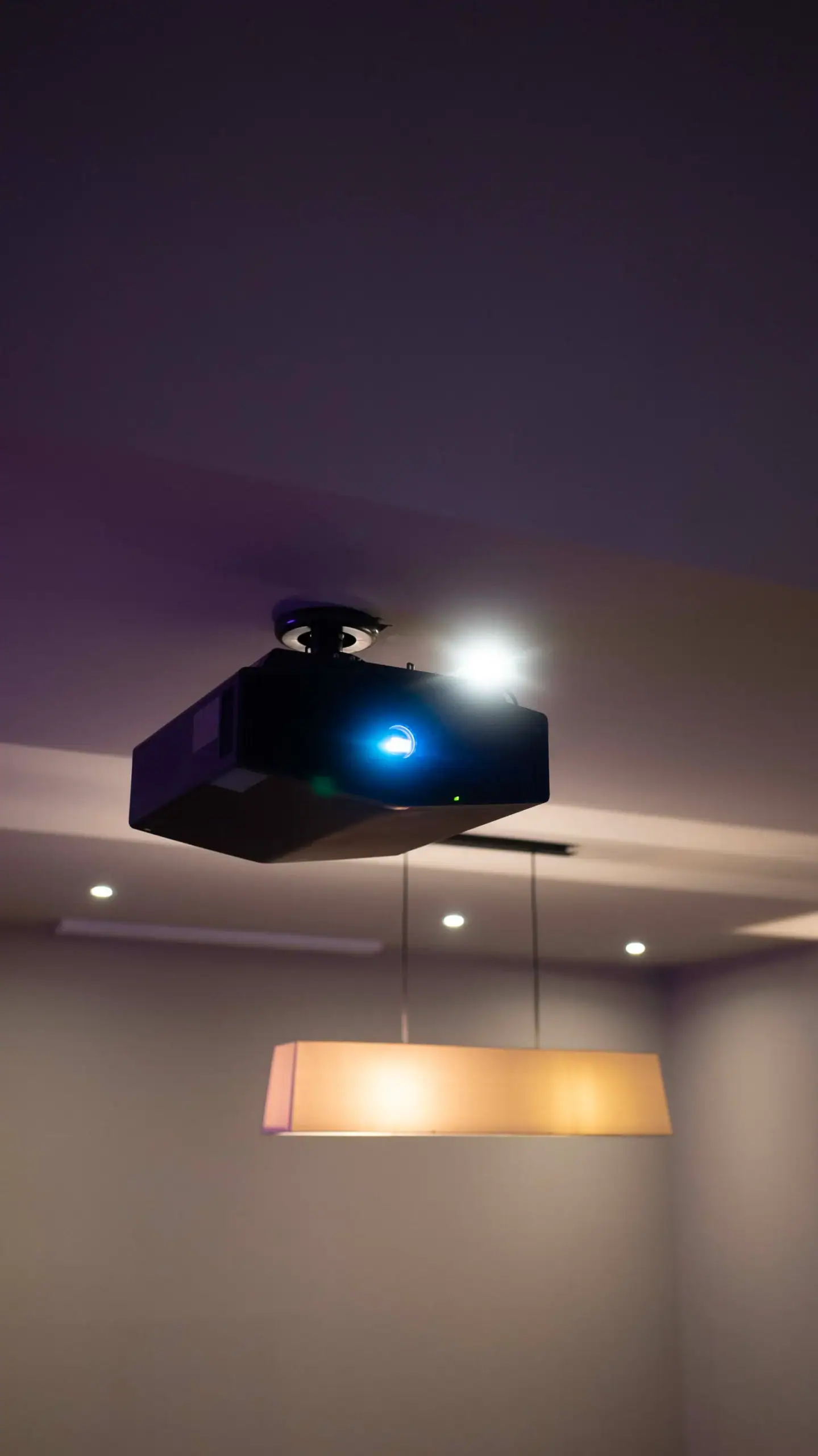
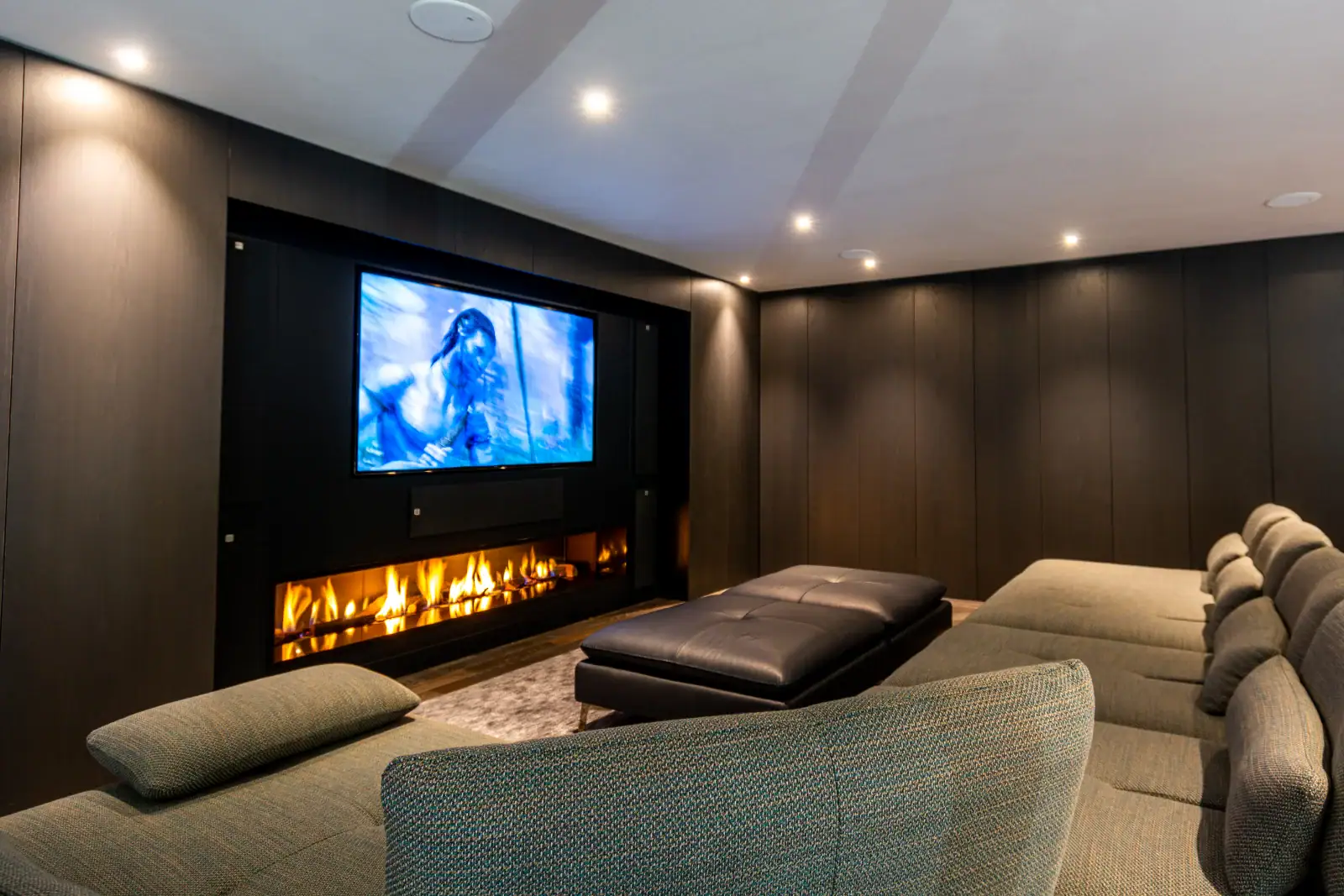
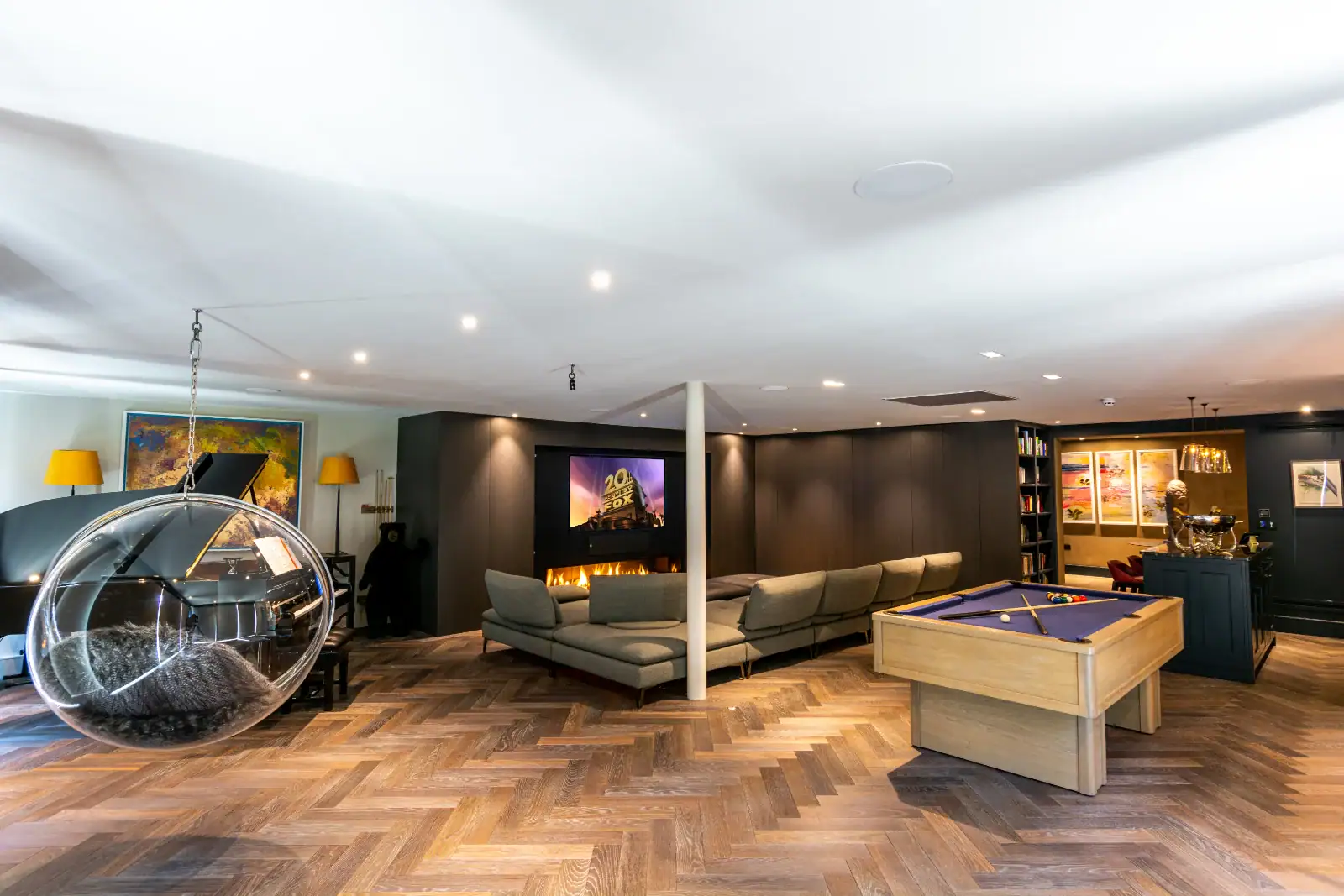
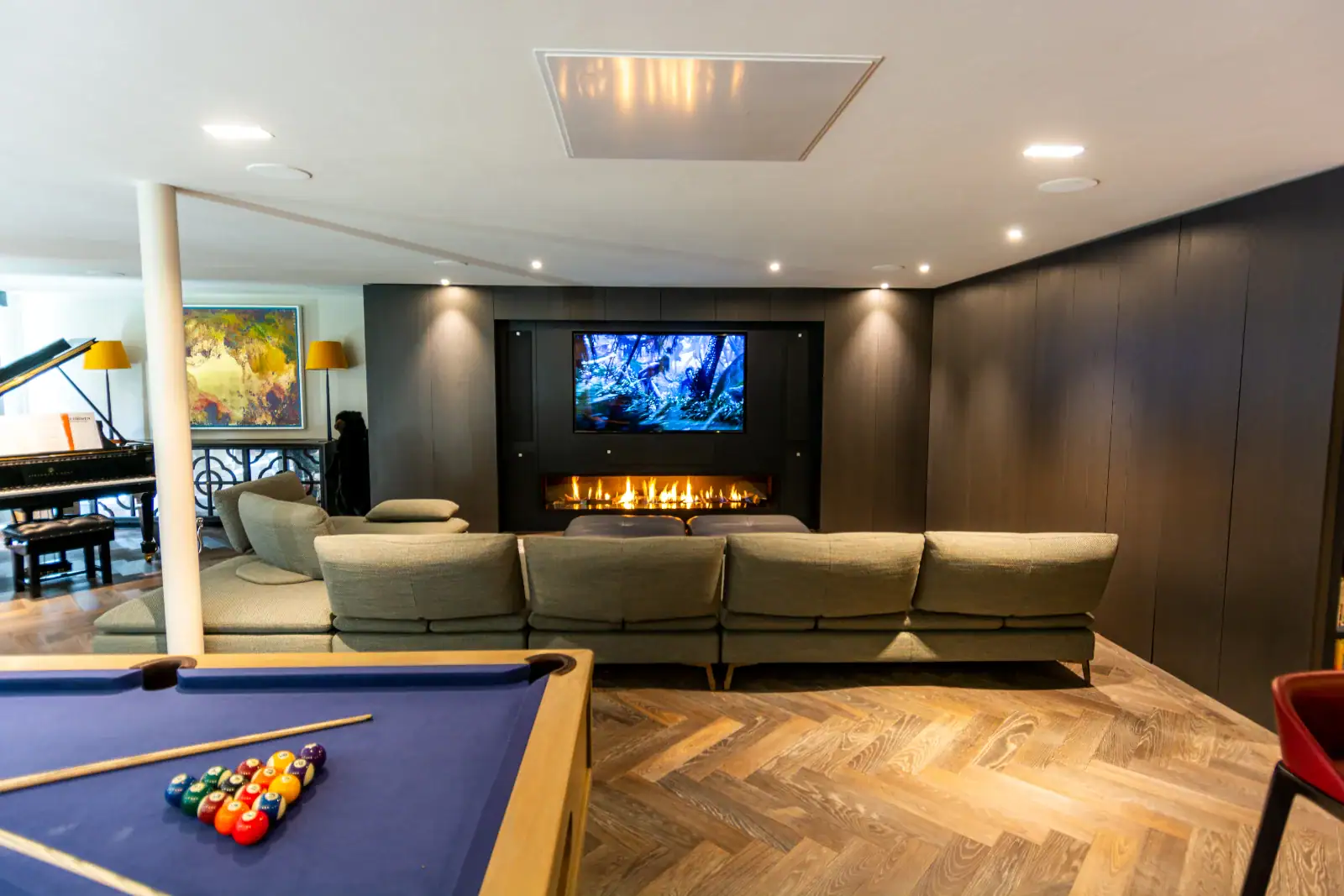
The Esher cinema and entertainment room is one open-plan space with a bar, a pool table and a media area, and the brief was that nothing technical could be on show. A Samsung 85 inch 4K TV handles everyday viewing. When the family switch to cinema mode, a Future Automation lift lowers the projector from the ceiling and a Draper motorised 120 inch screen drops in front of the TV.

When the film ends, both return to the ceiling and the room goes back to being a lounge, with no projector, screen or cabling in view. Sound comes from a KEF THX 5.2.2 package with two KEF 8 inch subwoofers, run by a Marantz processor and power amplifier, and acoustic treatment was designed into the room to control the open volume. The whole room is set up for one-touch operation through Control4, so changing from party lighting to cinema mode is a single press.

future automation tv lift
Integration

How a Future Automation lift becomes part of a Control4 scene

A lift with its own remote is one more thing to find down the side of the sofa. We connect it to Control4 so it moves as part of a scene instead. Future Automation's PDR projector lift accepts RS-232, contact closure or IR control, and a Control4 CORE 5 controller has serial ports, relays and IR outputs, so we can use whichever connection suits the mechanism and the rack.

Pressing Cinema then runs a sequence: the TV switches off, the projector lift lowers, the screen comes down, the processor changes input and the lights fade. Pressing Lounge reverses it. We time the steps so the projector is in standby before the lift rises and so the screen and lift never move into each other's path. Where the home has Lutron lighting control, the same button sets the Lutron scene, so the lights, blinds and hidden kit all change together.

Already own Future Automation?

Already have a Future Automation lift or panel?

If you have a Future Automation lift, hinge or sliding panel that runs from its own remote, we can connect it to a new or existing Control4 system so it moves with your scenes. We can also re-sequence it after a change of TV, projector or screen, check that a new display suits the mechanism's size and weight limits, and troubleshoot control problems such as a lift that no longer responds to the system. If you are moving the cinema to another room, we will plan whether the mechanism can move with it and what the new ceiling or joinery needs. For parts or mechanical repairs to the unit itself, we will put you in touch with Future Automation.

Ask about your system Call 020 3397 9888

We also look after systems installed by other companies. See takeover and maintenance.

Compare

A Future Automation lift or a fixed mount?

A fixed ceiling bracket has no moving parts and is the right answer in a dedicated cinema where the projector can stay on show, ideally in a rear wall or bulkhead. A lift earns its place in a multi-purpose room like Esher's, or wherever an interior designer has asked for an uninterrupted ceiling. Within the Future Automation range, a hinge suits rooms without enough ceiling depth, and a sliding panel suits a TV that lives in joinery. For rooms that serve more than one purpose, see our media room service.

future automation tv lift
Our showroom

See and hear it before you decide

Visit our demonstration cinema and smart home showroom in Walton-on-Thames and try the technology for yourself.

“Fantastic service from Andy and Adrian, who installed a cinema room and full Sonos sound integration throughout my home. I would definitely recommend them! Their communication and professionalism were excellent from start to finish, and the cinema room they created was outstanding.”

C
Chris KiplingGoogle review

“We engaged AOI for the renovation of our period property in West London. A key requirement was a discreet, high-performance cinema arrangement that would blend seamlessly with the original character of the house, and they delivered exactly that.”

F
Fraser RobsonWest London

“We've worked with the team at Art of Integration on several high-end residential projects, where they've delivered Control4 smart home systems. From the initial design through to client handover and ongoing support, their attention to detail and level of service has been outstanding.”

A
Amanda HollisTrade partner
Questions

Future Automation: your questions answered

Anything else, call us on 020 3397 9888.

Is Future Automation a UK company?

Future Automation describes itself as an engineering company based in Britain and North America, with UK contact details, and says it has designed and manufactured AV and architectural mechanisms since 1998. Its motorised mechanisms are made to order and assembled and tested by hand. We design and install its products in homes across Surrey and London, and specify them alongside the rest of the cinema or media room.

How much ceiling depth does a projector lift need?

It depends on the model. Future Automation's PDR residential projector lift needs 263 mm within the finished ceiling for the PDR2, which carries up to 15 kg, and 295 mm for the PDR3, which carries up to 45 kg. The space must be clear of joists, ducts and downlights. Where the ceiling is too shallow, a wall hinge or a different position for the projector may work better.

Can a Future Automation TV lift be controlled by Control4?

Yes, through its wired control inputs. The LSM cabinet TV lift and the PDR projector lift both accept RS-232, contact closure or IR, and Control4 controllers have serial ports, relays and IR outputs. We program the lift into scenes, so one button can lower the projector, bring down the screen, switch inputs and dim the lights, then put everything away again when the film ends.

Can you hide a TV in joinery or behind a moving panel?

Yes. Future Automation makes TV lifts that rise out of cabinetry or the floor, ceiling hinges that fold a screen down, and sliding panel systems that close across a screen. The joinery has to be designed around the mechanism, so we give the joiner dimensions, clearances and ventilation needs before the carcass is made, and agree how the facing panel and access panel will be supplied.

Will a projector lift work with a drop-down screen in front of a TV?

Yes, and it is how our Esher room works. A Samsung 85 inch TV is used every day, and in cinema mode the Future Automation lift lowers the projector while a Draper 120 inch motorised screen drops in front of the TV. We sequence the lift and screen in Control4 so they move in the right order and never interfere with each other.

Can you fit a Future Automation lift in an existing room?

Often, but it depends on the ceiling or wall. A ceiling lift needs a clear void of the right depth and a section of ceiling opened up and made good, and a TV lift needs cabinetry built around it. We survey the room first, check what is above the ceiling and tell you whether a lift, a hinge, a sliding panel or a fixed mount is the sensible option.

Get in touch

Talk to us about Future Automation

Planning a new room, or need help with a Future Automation system you already have? Tell us a little about it and a designer will come back to you.

  1. We call you backA quick conversation about your home, the room and your timings.
  2. Design consultationAt your home or in our Walton-on-Thames showroom, where you can see and hear the technology.
  3. Design and proposalA tailored design, with 3D visuals before you commit.

Request a free consultation

It takes less than a minute.

We will get back to you as soon as possible. We use your details to reply to your enquiry and keep them as described in our Privacy Policy.

Future Automation is a trademark of its owner. This page describes how we design with and install these products. Project photos are our own. Other images: Photo: Derek Jensen (Tysto), Public domain, via Wikimedia Commons.