
KEF in-wall and in-ceiling speakers: the Ci range
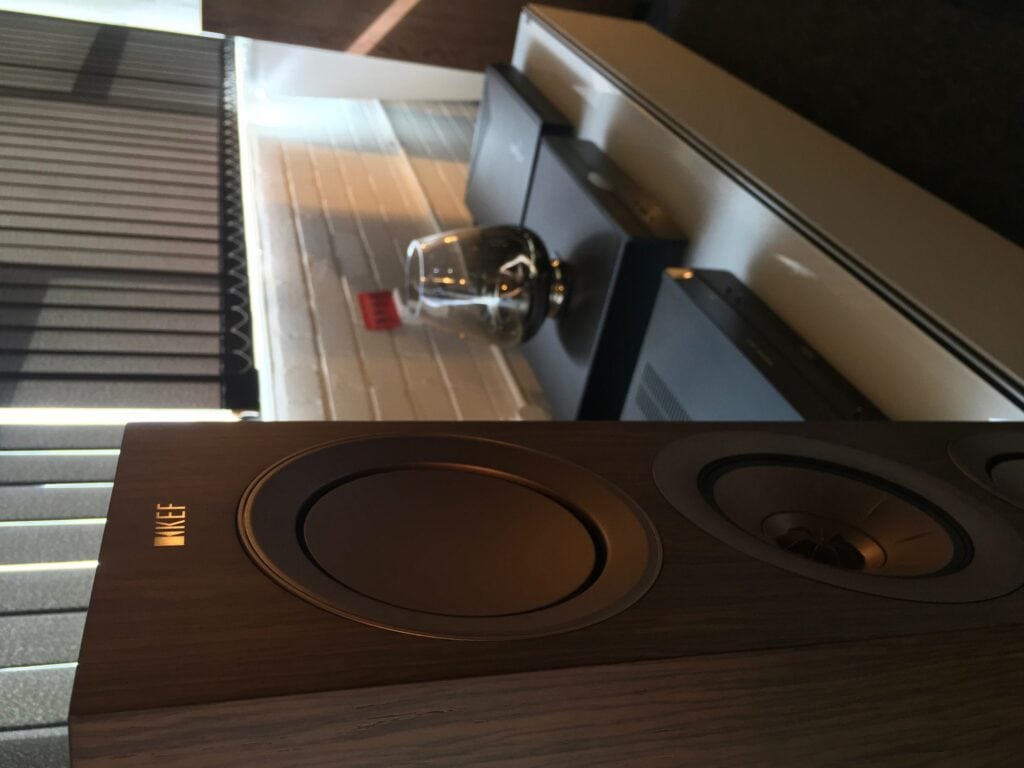
KEF has created its speakers from a UK home since 1961. Founder Raymond Cooke started out in a Nissen hut on the site of Kent Engineering and Foundry in Maidstone, which gave the company its initials. Its best-known invention is Uni-Q, patented in 1988. Rather than stacking a tweeter above a woofer, KEF nests the tweeter inside the larger cone, so treble and midrange leave the speaker from the same spot and the sweet spot stretches well beyond the middle seat.
KEF sells its built-in speakers under the Ci name. The current UK range covers:
- Ci Q Series and Ci R Series in-wall and in-ceiling models, with several R Series models carrying THX in their names;
- Ci Reference, the flagship custom-install range;
- Ci-T Series, a low-profile range needing only 36mm of mounting depth;
- Flush Mount models designed to sit level with the wall or ceiling, plus Dual Stereo units for small rooms;
- installed subwoofers and the IP65-rated Ventura outdoor series.
Why KEF suits a Dolby Atmos cinema room
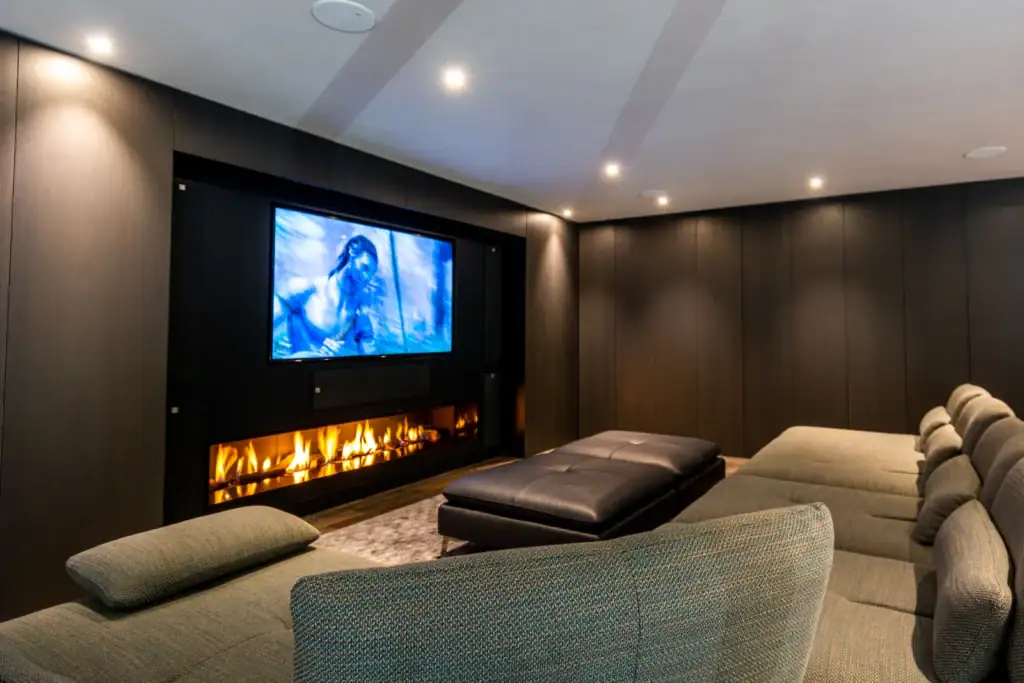
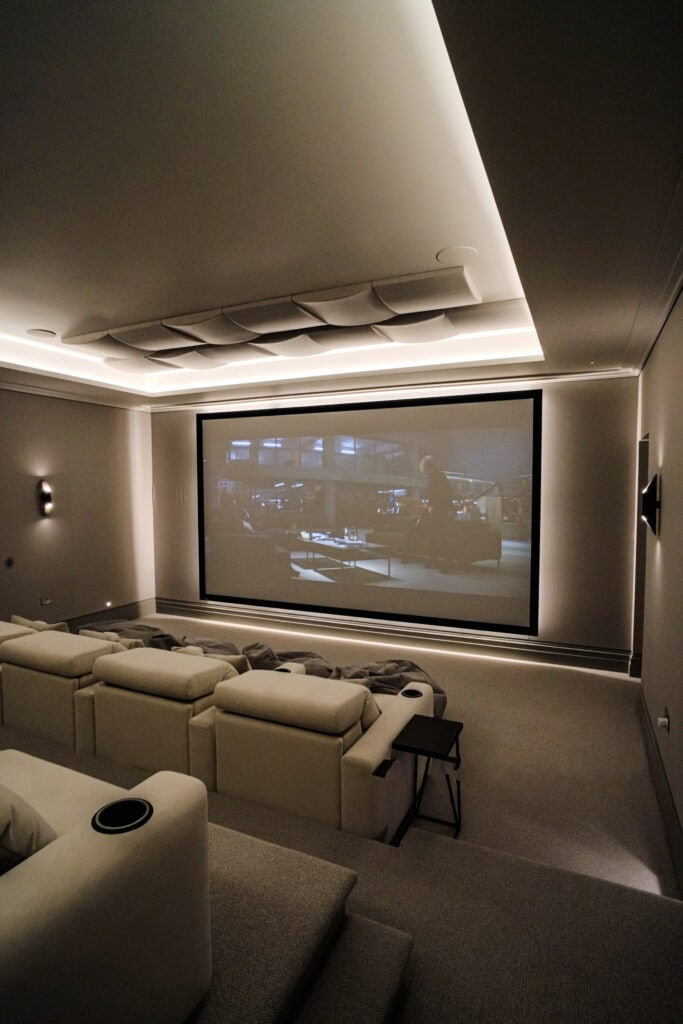
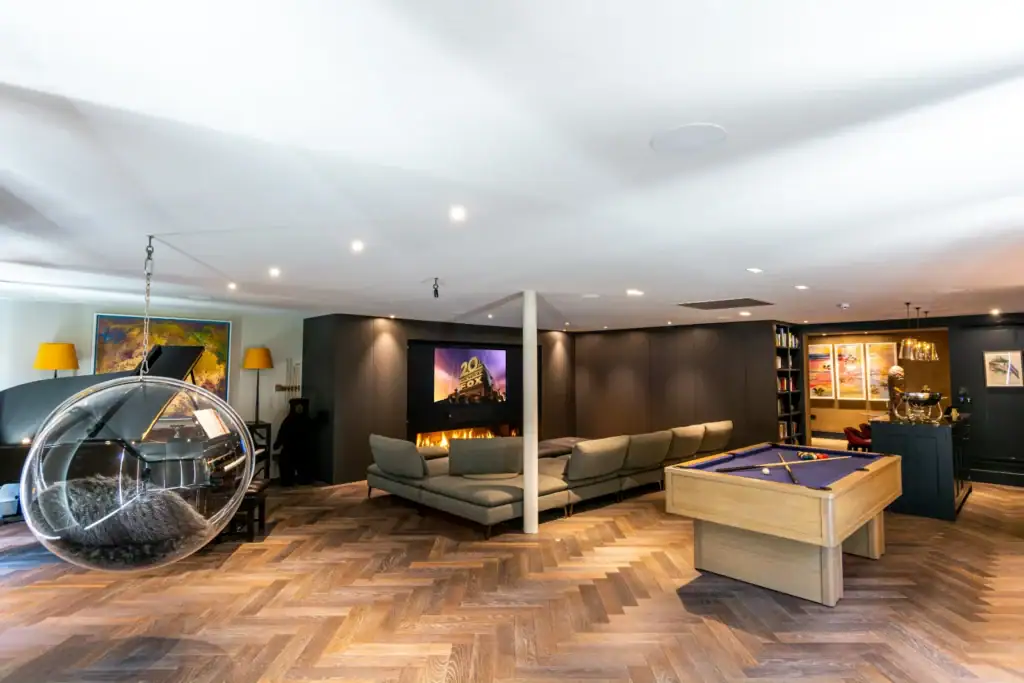
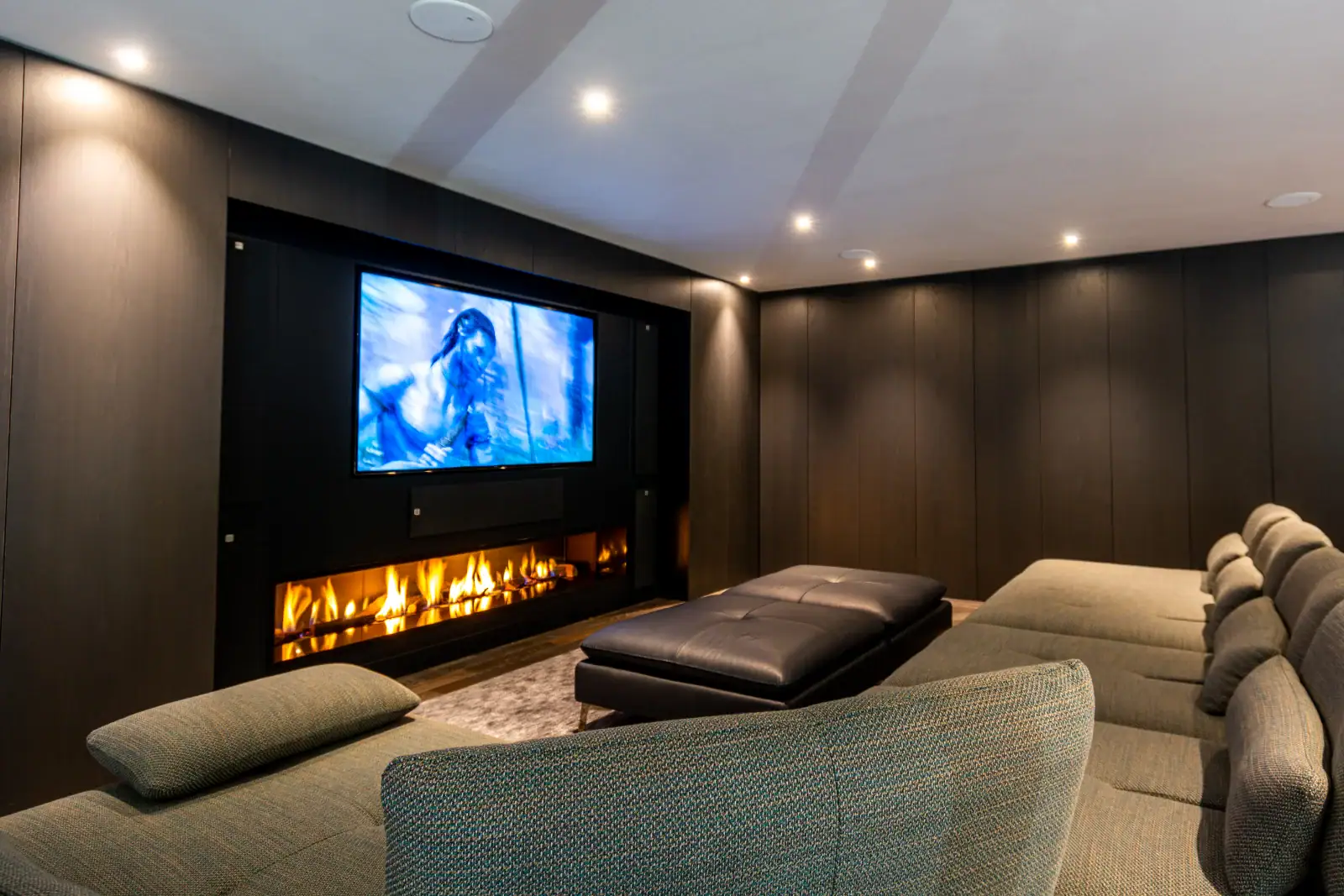
Built-in speakers usually trade some sound quality for tidiness. KEF's answer has been to put its larger Ci models through THX certification. Its UK site describes the Extreme Home Theatre system as THX certified in the Dominus and Ultra performance classes, and both the Oxshott and Esher rooms we installed use KEF THX packages.
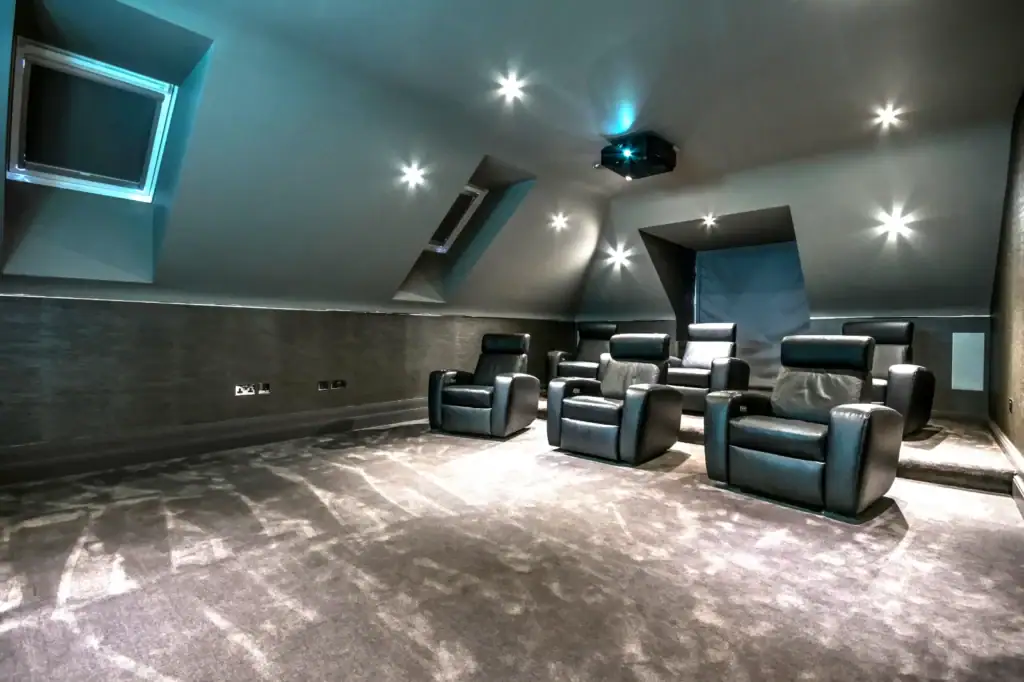
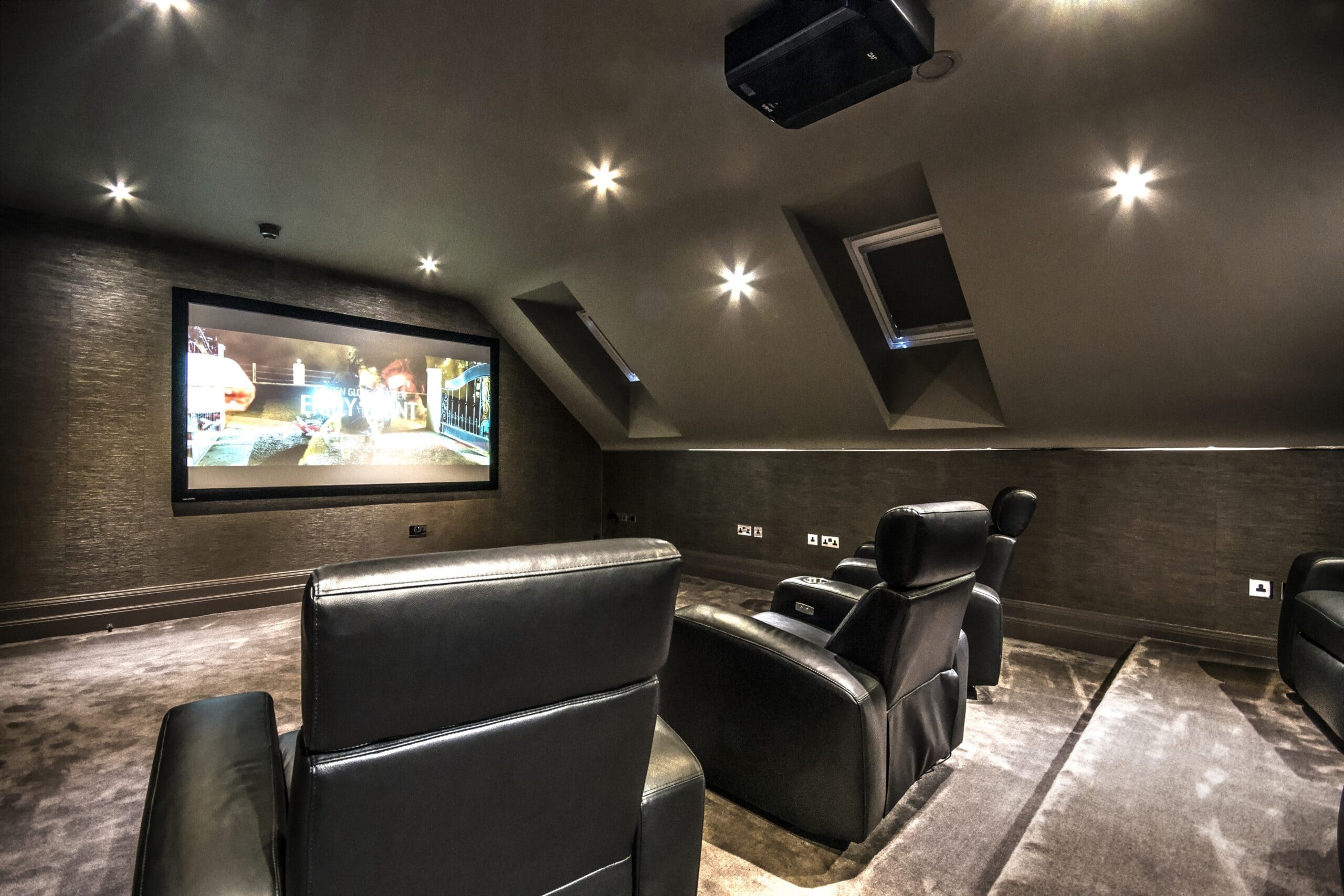
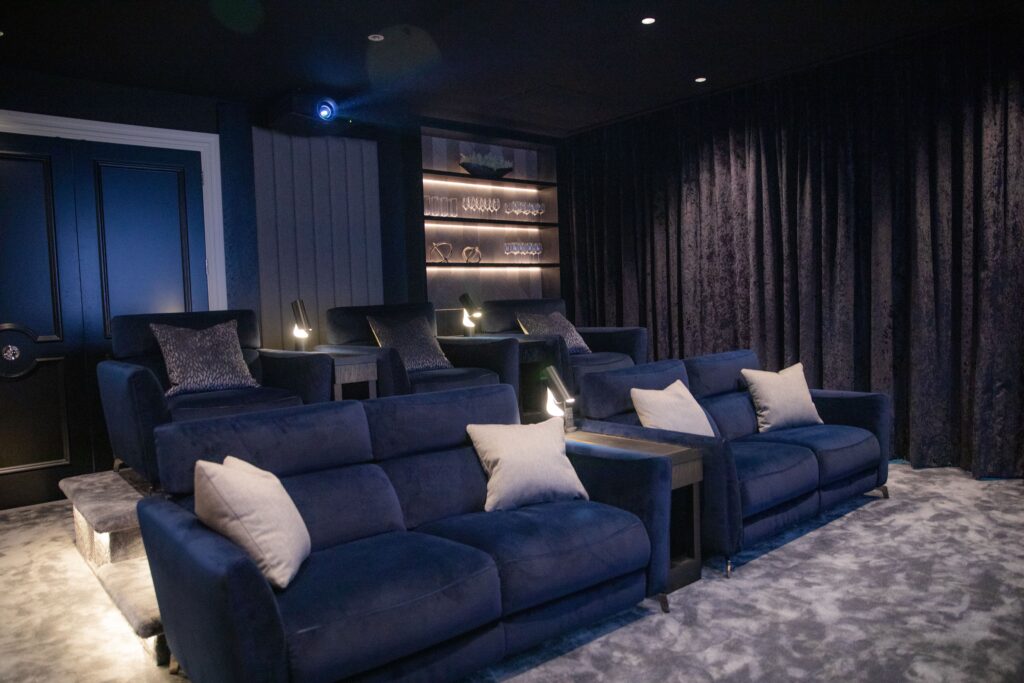
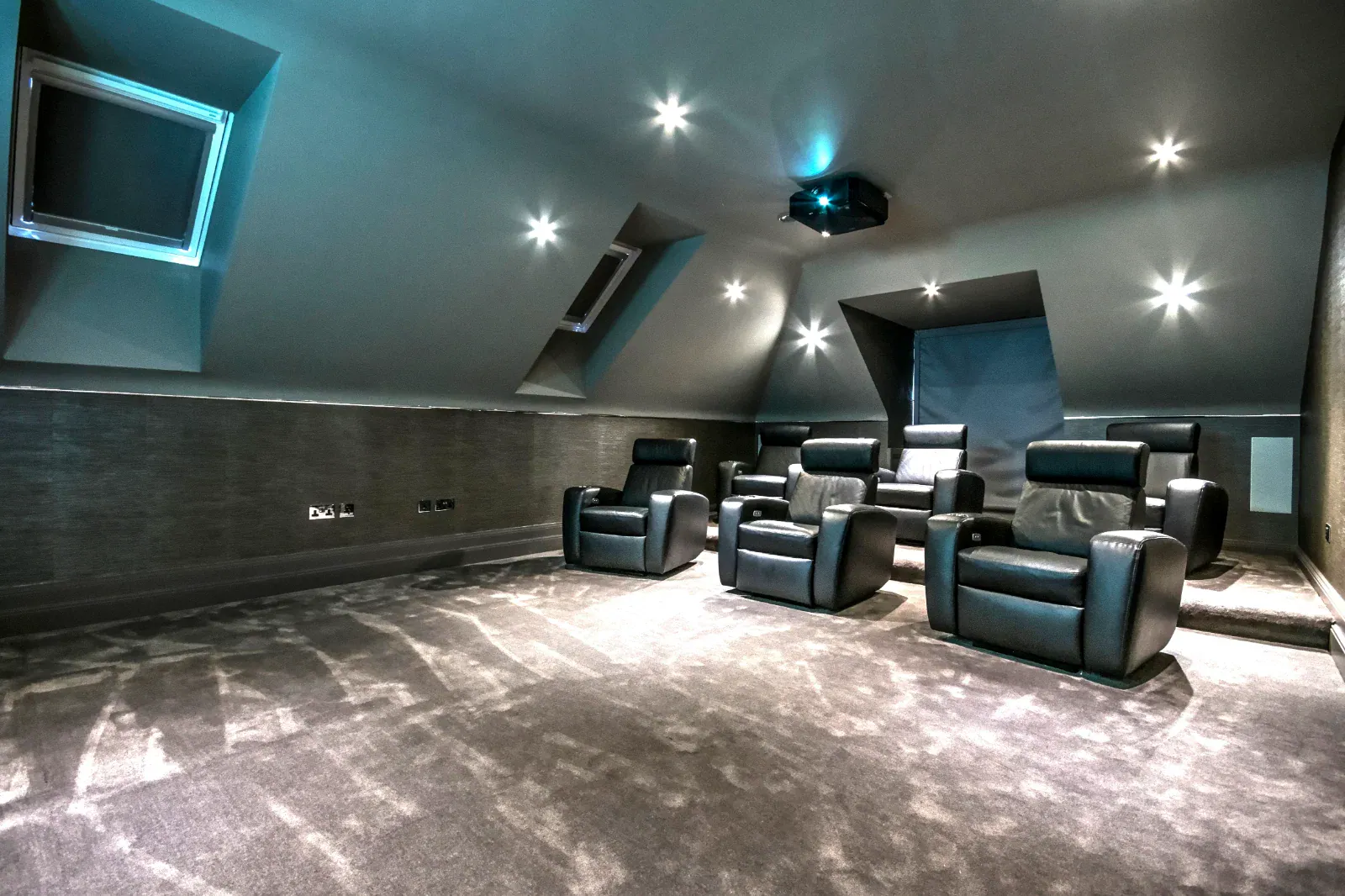
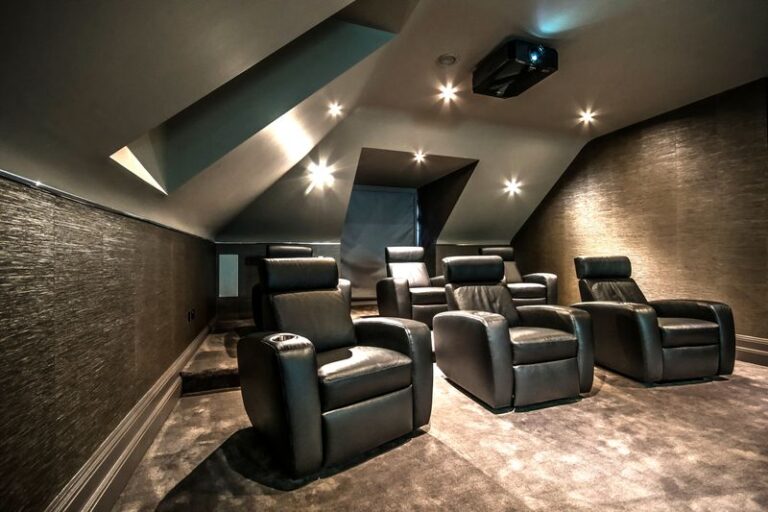
Uni-Q earns its keep overhead. A Dolby Atmos ceiling speaker reaches the audience at an angle, and a driver that behaves as one point source keeps its tone steadier along a row of seats than a separate tweeter and woofer. That makes KEF in-ceiling speakers a strong choice where there are two rows of seating, as in the Oxshott cinema with its six recliners in two rows.
For clients who already own KEF hi-fi, a KEF cinema also keeps one driver philosophy throughout the house, from the stereo in the drawing room to the height channels downstairs.
Sizing a KEF Dolby Atmos layout to the room
KEF's Ci range is broad enough that the real work is matching speaker size and channel count to the room, not choosing the brand.
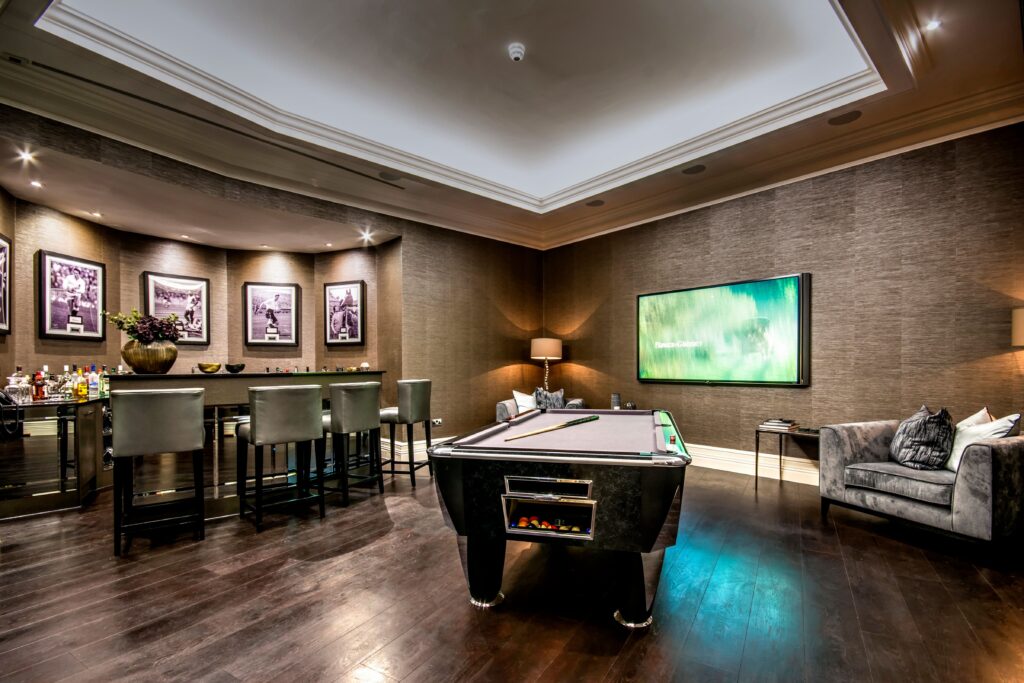
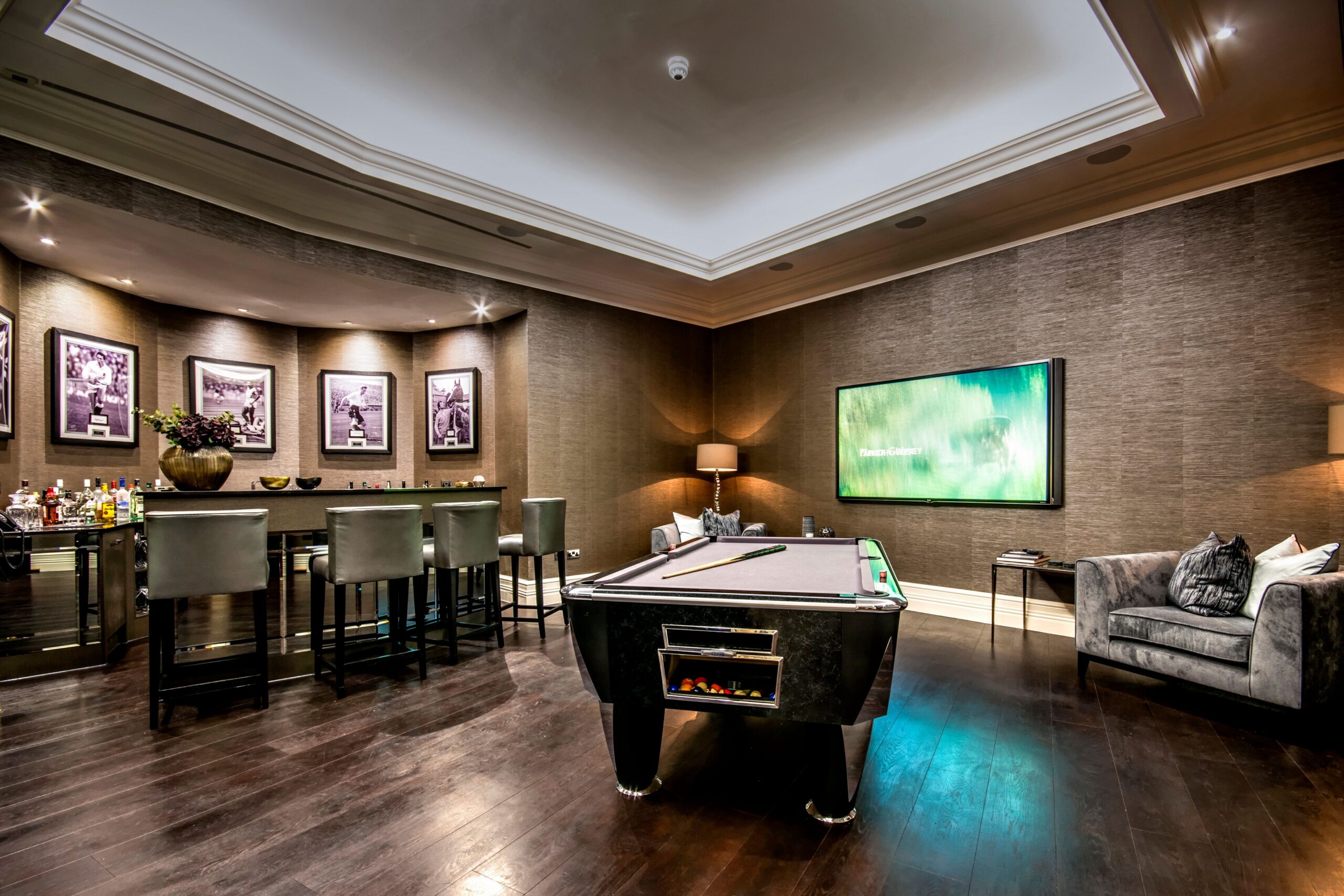
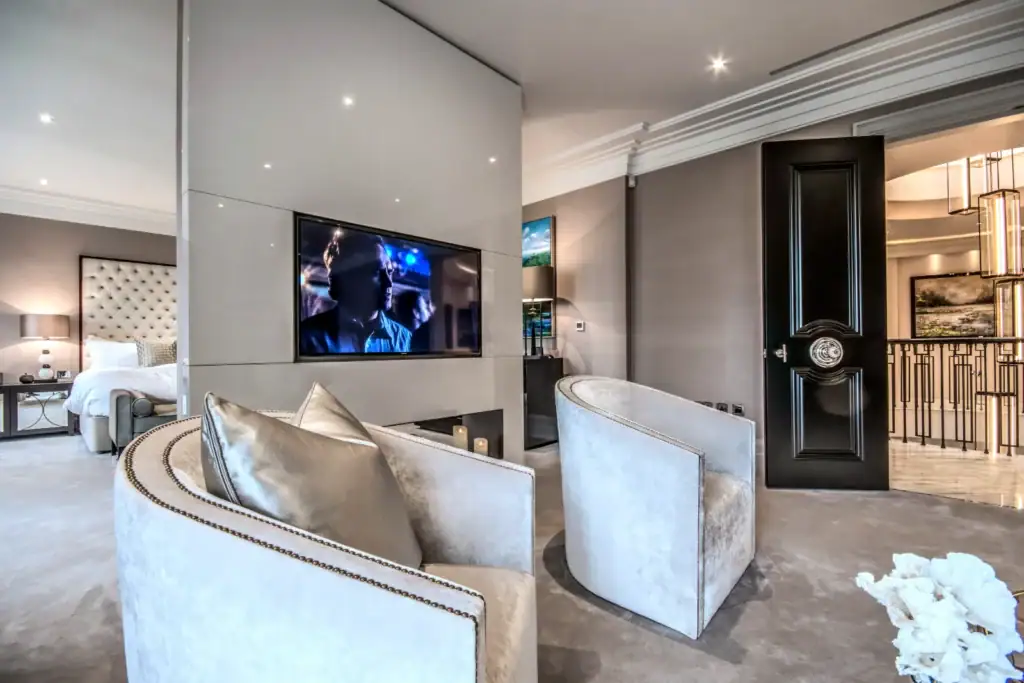
- Start with how the room is used. A multi-use space can be served well by 5.2.2, as in the Esher entertainment room, where the cinema shares the floor with a bar and snooker table. A dedicated cinema with two rows of recliners, as at Oxshott, justifies rear surrounds as well as sides, which is where a 7.2.2 layout earns its place.
- Count the heights from the ceiling, not the brochure. Two height speakers suit a modest room, and larger rooms with deeper seating move to four. A sloped ceiling like Oxshott's limits where heights and the projector can go, so we plan positions from the ceiling line before any cutting.
- Decide whether THX matters to you. KEF puts THX certification on specific Ci models and packages rather than the whole range, so choosing a THX package narrows the list of models early. Both Oxshott and Esher went that way.
- Check the wall depth. Basements and older houses often have shallow or solid walls. The Ci-T Series needs just 36mm, and Flush Mount models suit walls that will be skimmed smooth.
- Keep Uni-Q where the seats are spread out. The wider the seating, the more a coincident driver helps, so KEF Uni-Q models make most sense overhead and at the sides of a broad room.
What each number in 7.2.2 or 5.2.2 stands for is set out in our Dolby Atmos layouts guide.