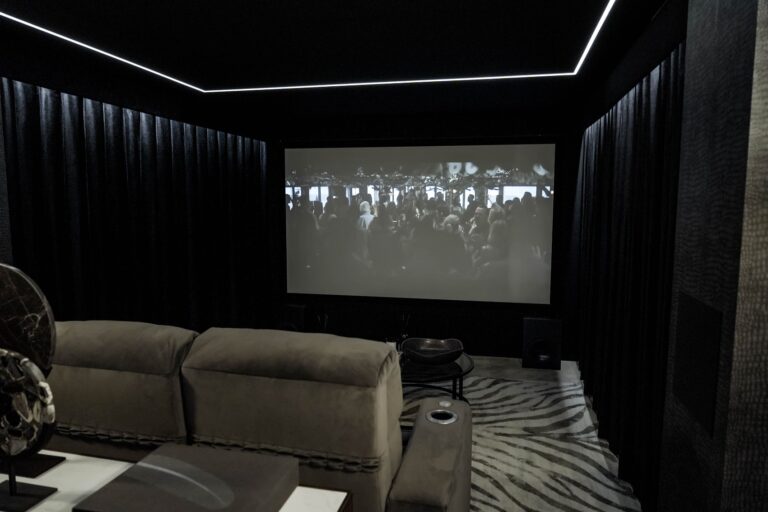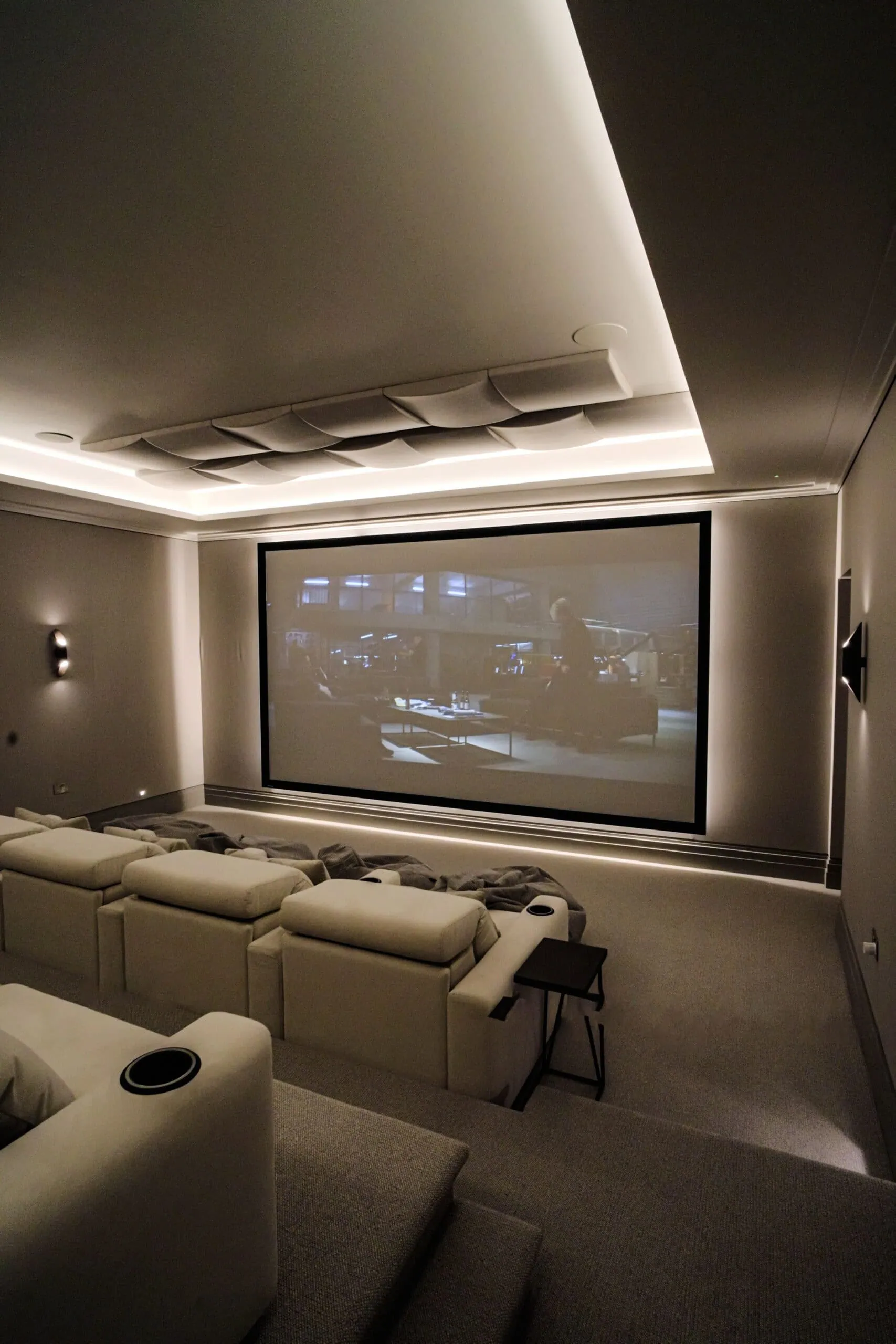


For most homes, warm white of around 2,700K suits living rooms, bedrooms and dining rooms, while a slightly cooler 3,000K to 4,000K helps in kitchens, bathrooms, utility rooms and studies, where you need to see detail. Keep one colour temperature per room, and use warm dimming or tunable white where a room does more than one job.
That is the short answer. The rest of this guide explains what the numbers mean, the starting points we suggest room by room, and the mistakes that make an expensive lighting scheme look wrong.
What does colour temperature actually mean?
Colour temperature describes how warm or cool a white light looks, and it is measured in kelvin (K). Lower numbers look amber and cosy; higher numbers look crisp and blue-white. Lutron’s guide to colour temperature groups white light into warm (1,400K to 2,700K), cool (3,000K to 4,500K) and very cool (5,000K to 6,500K and above).
On a lamp box in the UK you will usually see these described as warm white, neutral or natural white, and cool white or daylight. The names are not standardised between manufacturers, so always check the kelvin figure rather than the label.
Colour temperature is only half the story. The other half is colour rendering, which is how faithfully a light shows the true colour of skin, timber, fabric and food. We come back to that below.
What colour temperature should each room have?
There is no regulation that sets these numbers, and published guides vary. These are the starting points we would suggest for a typical British home, which you can then adjust to your finishes and taste.
| Room | Suggested starting point | Why |
|---|---|---|
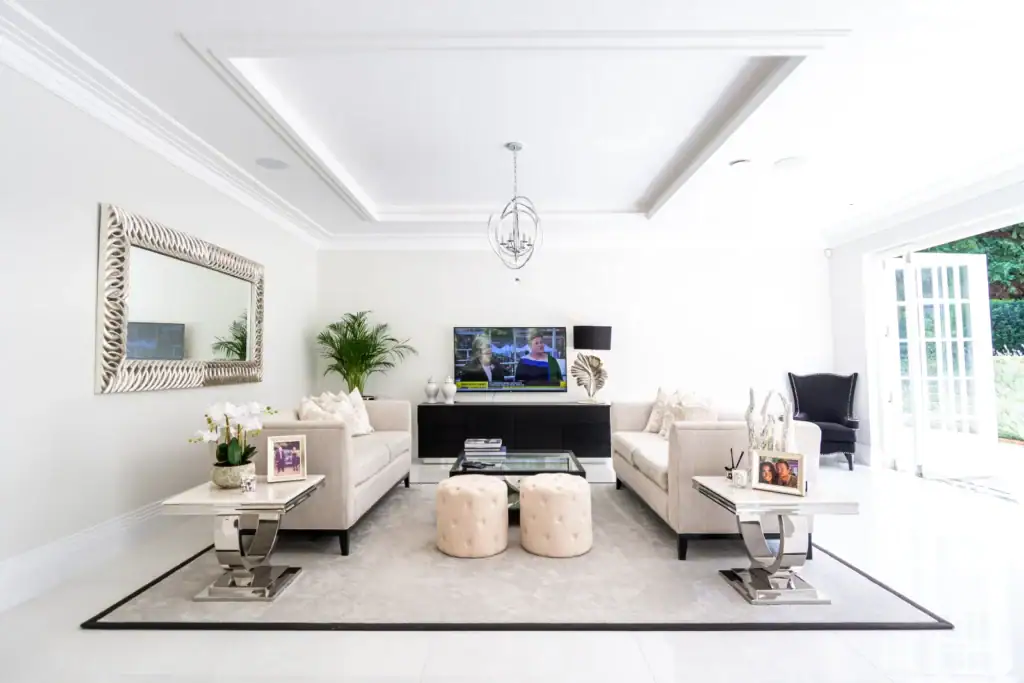
| Living room and snug | 2,700K | Warm and relaxed, flattering to skin and soft furnishings |
| Dining room | 2,700K, ideally warm dim | Gets warmer and more intimate as you dim for dinner |
| Bedroom | 2,700K, with very warm low levels at night | Restful in the evening without feeling gloomy |
| Kitchen | 3,000K, up to 4,000K for task lighting | Clearer light for chopping and cooking, without feeling clinical |
| Bathroom | 3,000K at the mirror, warmer for bathing | Accurate light for shaving and make-up, softer for a late bath |
| Study or home office | 3,000K to 4,000K | Crisper light that helps with reading and screen work |
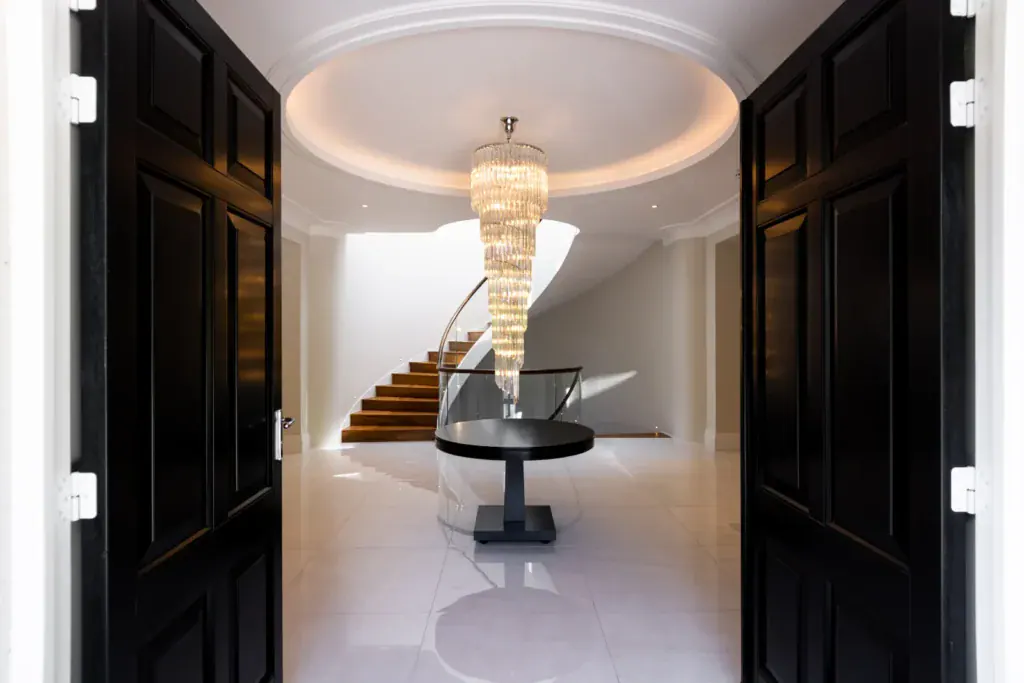
| Hall, stairs and landing | 2,700K to 3,000K | Matches the rooms either side so the house flows |
| Cinema or media room | 2,700K or warmer, very low | Low, warm light between films that does not wash out the screen |
Two practical points sit behind this table. First, very cool light, 5,000K and above, rarely suits a home in the evening, however bright the lamp box makes it sound. Second, finishes matter. A white gloss kitchen can look yellow under very warm light, while a kitchen in oak and stone usually looks richer at 3,000K than at 4,000K.
Why does colour temperature matter more in the evening?
In daylight, artificial light is competing with the sun, so small differences in colour are hard to notice. After dark in a British winter, your lights are the only light, and a cool white that looked fine at noon can make a sitting room feel like an office.
There is also a wellbeing angle. The Sleep Foundation’s guide to which colour of light helps you sleep says that in the hours before bed, warmer yellows and oranges are preferable to cooler light, and that bright, cool-toned light can inhibit melatonin production. That is a good reason to make the evening scenes in bedrooms and living spaces warm and low, whatever colour temperature you choose for daytime.
Should every light in a room be the same colour temperature?
Yes, as a rule. The most common problem we see in homes is a ceiling of downlights from one batch, a pendant from another and a picture light from a third, each a slightly different white. The eye picks up the mismatch straight away, especially on a plain painted wall.
To avoid it:
- Specify the kelvin figure for every fitting, including lamps in pendants, wall lights and joinery strips, not just the downlights.
- Buy each room’s fittings from the same range where you can, because two products labelled 2,700K will not always look identical.
- Treat open-plan spaces as one room. If the kitchen runs into the family room, the whole space needs to match, even if the kitchen task lights run a little cooler.
- Replace whole rooms, not single lamps, when you upgrade from older bulbs.
What is warm dim, and is it better than fixed white?
A standard LED keeps the same colour temperature as you dim it. Lutron’s guide notes that static white light can look greyish and dull when dimmed, and suggests it is best for functional areas where people spend little time.
Warm dim, sometimes called dim to warm, behaves more like an old filament bulb: the light gets warmer as it gets dimmer. Lutron describes a dimmed incandescent glow as roughly 1,400K to 2,400K, and warm dim LEDs mix colours to imitate it. We find warm dim particularly good in dining rooms, snugs and bedrooms, where you spend the evening at low light levels.
Tunable white goes further and lets you set colour temperature and brightness independently, so a kitchen can be crisp at breakfast and warm at supper. Lutron says its Ketra lamps cover 1,400K to 10,000K. Our guide to Lutron Ketra and tunable white lighting explains where it earns its place and where ordinary dimmable lighting will do.
Does colour rendering matter as much as colour temperature?
It matters more than most people expect. Colour rendering index (CRI) is a 0 to 100 scale for how accurately a light shows colours compared with a reference source. Designing Buildings notes that the BRE recommends a CRI of at least 80 for most indoor lighting, with higher values where colour accuracy matters. Lutron’s own design advice for tunable white is to specify a CRI above 90.
In a home, we would treat CRI 90 or above as the target for kitchens, bathrooms, dressing areas and anywhere you have artwork or natural materials. A cheap 2,700K lamp with poor colour rendering can make a beautiful oak floor look muddy, and no amount of dimming will fix that.
How does a lighting control system help?
Choosing the right kelvin figure gets you most of the way. A lighting control system does the rest by putting each room at the right level for the time of day, so you are not living under full-power downlights at 10pm.
With a Lutron system, we set scenes such as Morning, Cooking, Dinner and Night for each room, and a single keypad press recalls them. Where tunable white is installed, those scenes can change colour temperature as well as brightness. Our guide to planning lighting scenes room by room shows how we build them, and our Lutron lighting control page explains how we design and install the system itself.
Lighting also works best alongside shading. Motorised blinds and curtains change how much daylight reaches a room, which changes how your artificial light needs to behave. Our smart lighting and shading service plans the two together, and in our Hampstead project the lighting was integrated into the home’s Control4 system.
How can you judge colour temperature before you commit?
Colour temperature is very hard to judge from a web page or a lamp box. The best test is to see the same room in warm white, neutral white and warm dim, at full brightness and dimmed right down.
You can do that at our demonstration cinema and showroom in Walton-on-Thames. Book a visit to the showroom, or get in touch on 020 3397 9888 and we will talk through the right lighting for each room in your home.
Frequently asked questions
Is 2,700K or 3,000K better for a living room?
Most people find 2,700K more relaxing in a living room, especially in the evening. 3,000K can work well in a bright, modern room with cool finishes. Whichever you choose, use it for every fitting in the room.
What colour temperature is best for a kitchen?
Around 3,000K suits most kitchens, with up to 4,000K for under-cabinet or island task lighting if you prefer a crisper light. If the kitchen opens onto a living area, warm dim or tunable white lets the space feel softer in the evening.
Is daylight 6,500K lighting good for a home?
It rarely suits living spaces. Very cool light can feel harsh after dark, and the Sleep Foundation advises warmer light in the hours before bed. It can be useful in a garage workshop or utility area.
Can I change colour temperature without new fittings?
Only if the fittings are tunable white. A standard LED has a fixed colour temperature, so changing it means new lamps or new fittings. Smart lamps can do this in table and floor lamps, but whole-room tunable white is best planned at design stage.
Does colour temperature affect energy use?
The kelvin figure itself makes little practical difference. Energy use depends mainly on the wattage of the LED and how long and how brightly it runs, so dimming and scenes matter far more. Our guide to whether smart lighting saves energy covers this in detail.