
There’s something special about going to the cinema. The big screen, surround sound and comfortable seats provide a wonderfully immersive experience. That’s until the kid behind you starts kicking your chair. And someone else is coughing and sneezing. Then there’s the rustling of sweet wrappers and the annoying crunch of snacks. That’s decidedly not special.
But you can have that immersive cinema experience in the comfort of your own home. We’re not talking about straining your eyes to watch a film on your mobile device here. We mean creating your ultimate home cinema experience. But what do you need for a home cinema installation and what’s the best room design? We’ll answer both of those questions and more here.
If you would rather hand the planning to a specialist, our home cinema design service covers the room layout, acoustics and seating, and our home cinema installation team builds it. For inspiration first, browse our cinema room ideas from real projects.
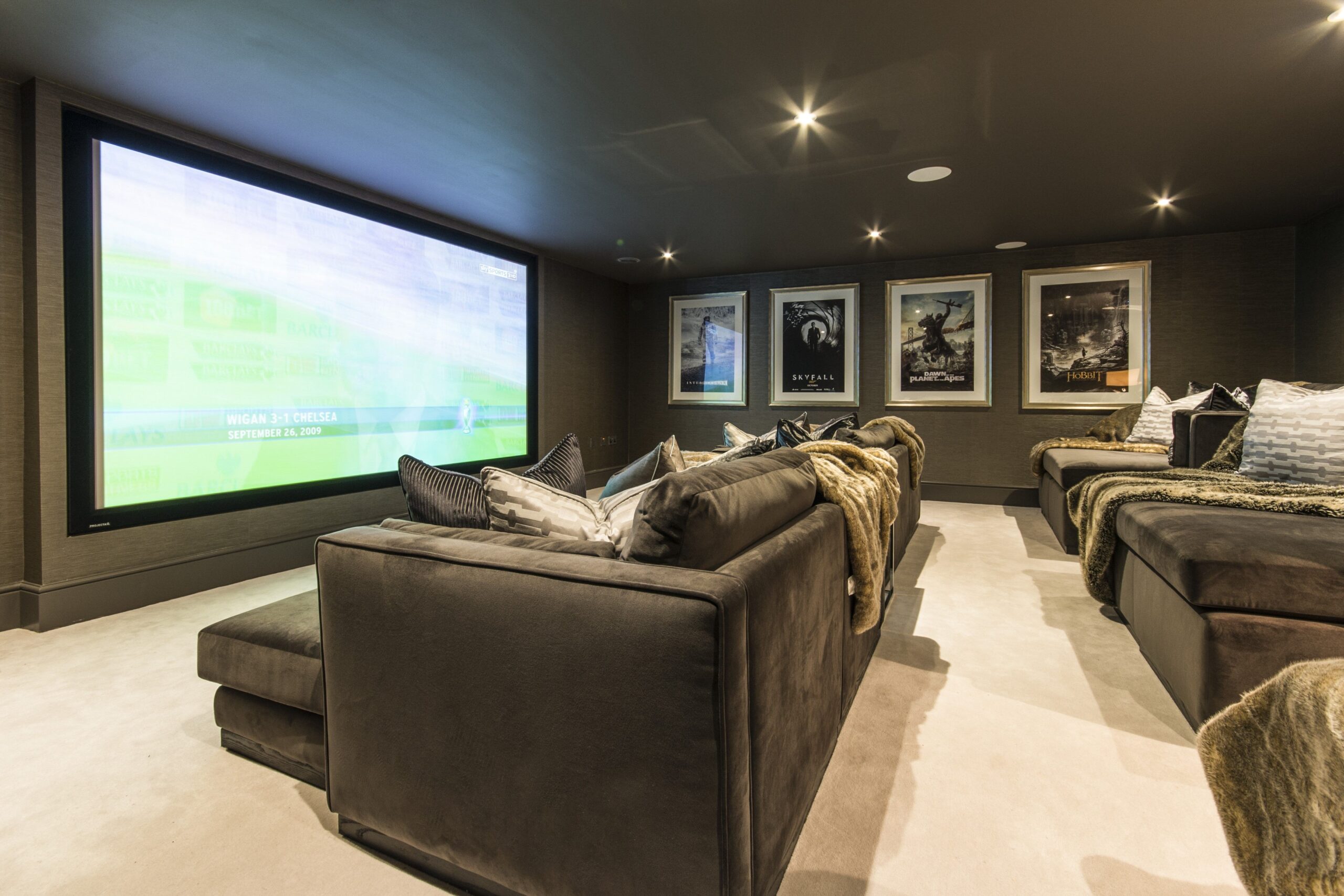
What is a home cinema system?
A home cinema system means different things to different people. One person may be happy with a basic DIY solution, simply adding a soundbar to their TV in the living room. But another will only be satisfied with a high end, dedicated cinema room with a superb surround sound system, big cinema screen and reclining, super comfy chairs.
The starting point for a successful home cinema installation is to think about how you use the room. Is it a media room that’ll be used for day-to-day home entertainment – TV viewing, gaming, along with the occasional movie night. Or is it a home cinema room, dedicated to big screen viewing and immersive experiences?
In this blog, we’re focussing on the dedicated, luxury home cinema room set up.
The benefits of the home cinema
Nothing compares to creating your own home cinema experience. You can bring all of your favourite cinema room ideas to create a bespoke solution that works for you. It’s an ideal way to use a basement room that’s slightly removed from the rest of the house, but you could also convert a garage or outbuilding for example.
For those of us with hectic lives, a home cinema makes a wonderful retreat. You can switch off from your to do list, and focus fully on the big screen action – be that live sport or an engaging movie. It’s also a great space to spend quality time together with family and friends, as long as you can decide on what to watch!
What is the best seating arrangement for a home theatre
This is the key question, and one that needs careful consideration before you design your space. After all, the right layout will give you a great cinematic experience. And it’s important to make sure that you get that great viewing experience from every seat in the room.

A few factors to think about:
Room shape: we can make anything work, but you may be surprised to learn that square isn’t good. Square rooms can negatively impact the sound quality. Ideally, you have a rectangular room as it helps with the acoustics.
Room size: this is a key factor when deciding on the room layout. Think about the number of people that will use the movie room regularly. Will there be a few extra guests on certain occasions? Work out the maximum number of guests using the room at one time to plan how many seats you need and how to position them.
Seating position: Getting the perfect distance from the screen is critical to delivering a great viewing experience. If you’re too close, it feels uncomfortable. Too far away and the screen loses impact. The most comfortable viewing angle is between 33-35° to 40°.
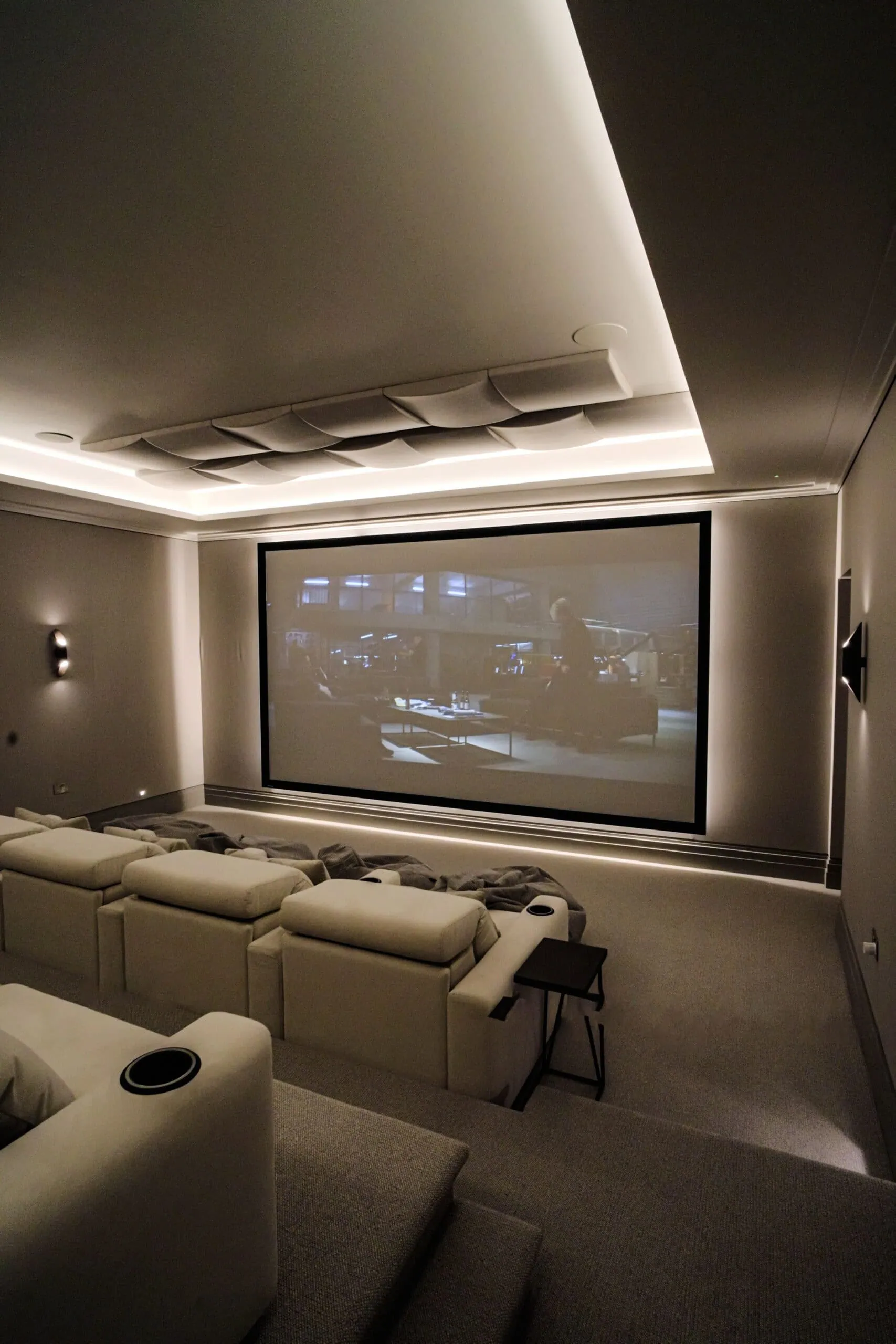
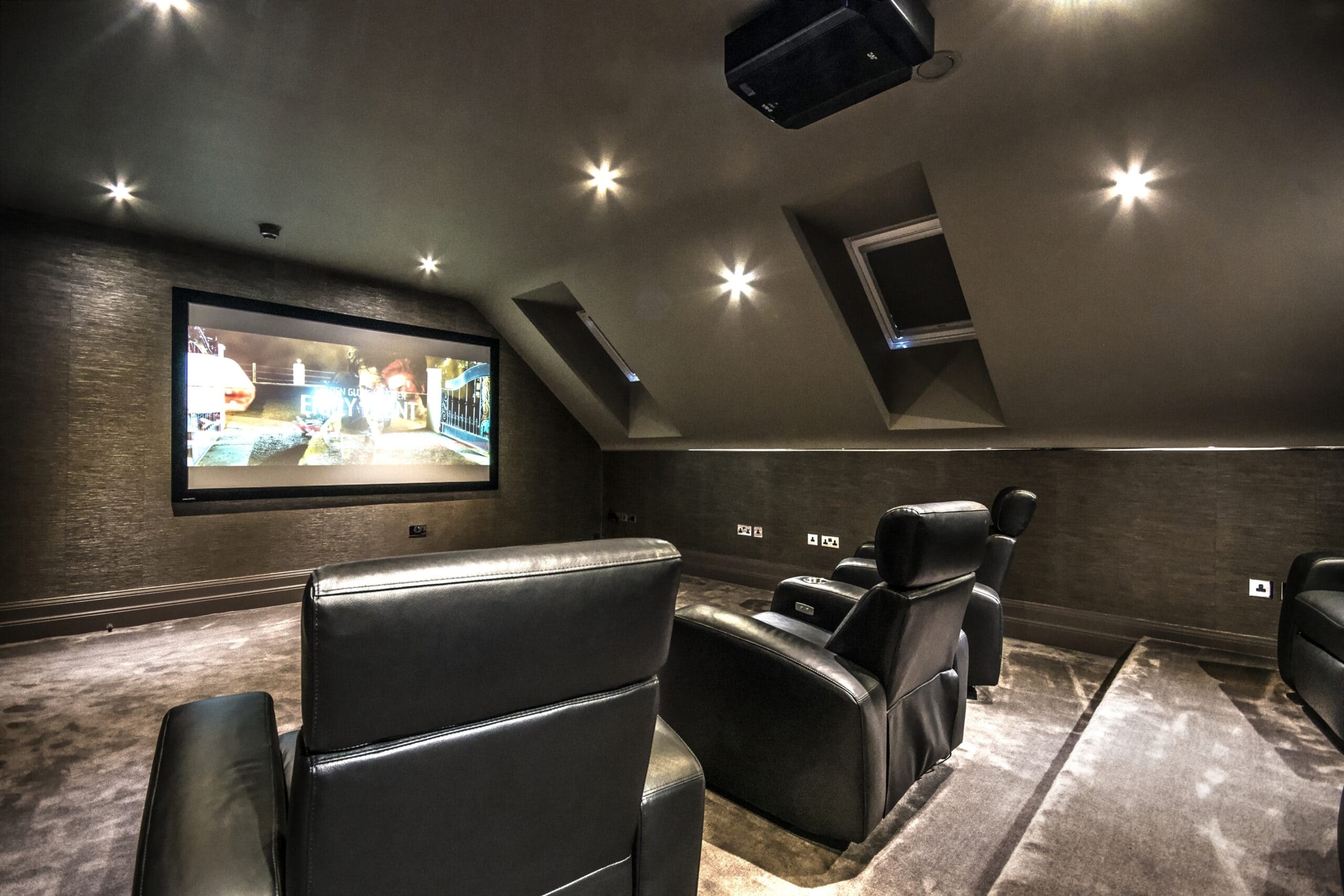
A single row of seats is a simple, yet effective, solution. A large sofa works perfectly in smaller rooms, or for 2-4 people. If you need flexibility for occasional guests, add a second row of tiered seating. The best sound quality and viewing experience is at the centre of the room. Make sure your prime seating is there.
Which sound system is best for a home theatre?
Audio is a crucial aspect of any home cinema system. The sound is a huge part of the cinema experience. There are several factors to get right.
Acoustics – you don’t want sound to echo and bounce around your home theatre room. Thick carpets, extra insulation and blackout blinds absorb sound and make a world of difference to the overall sound quality. Acoustic treatments can be applied to the same end.
Soundproofing – if your home cinema room is connected to the rest of the house, you may get distracted from your viewing experience by noises from other rooms. Conversely, soundproofing can also stop the cinema’s sound system from disturbing others in the rest of the house.
Surround sound – careful positioning of speakers will result in better audio. All of the speakers installed in a home cinema room need an amplifier to drive them and they need to be the right power for the room size. To feel the sound (you know those vibrations at heightened times), you must incorporate a subwoofer in your cinema room.
You’ve probably heard of Dolby Atmos surround sound – it’s the standard system for commercial cinemas. You can achieve that grade of sound quality (and the all important feel) in your own home.
Other important aspects to consider for your home cinema room
Lights, camera, action – there are multiple factors to get right, alongside decent sound and comfortable seats.
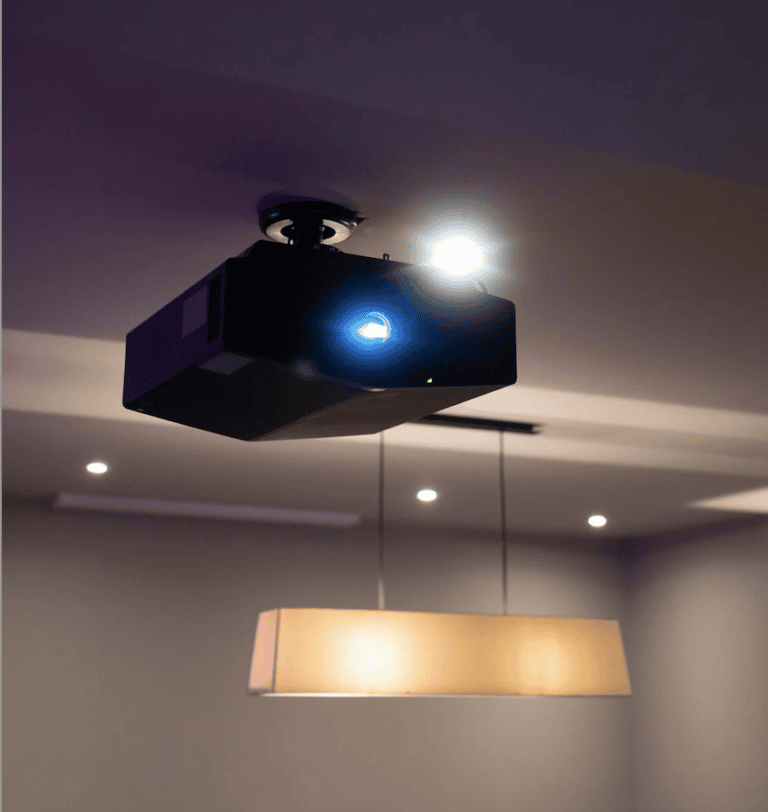
Vision – you could opt for a big screen TV, but a projector screen brings a next level viewing experience. There’s no limit to the screen size on a projector so it could exceed 100 inches.
Lighting – in most areas of the house you want to maximise natural light, but not in your movie room. Ambient light (light that fills a room) is the enemy of a good picture as it washes it out. Design your room to reduce ambient light by using curtains or blackout blinds. It’s another reason why a basement or garage (without windows) make a good location for your cinema.
Smart home lighting installations are a game-changer in a cinema room. You get to decide how much light and shade you have in the room at any one time. You can adjust settings easily to create a different ambience. Set the appropriate mood to watch a blockbuster action movie, romantic comedy or even live sport.
Control system – a brilliant addition to the modern home, a smart home control system means that you can tailor the lighting, temperature and AV to suit the situation. You don’t need to be a tech wizard to use it either. It has pretty simple functionality that you can control with one touch. Instantly dim the lights, close the blinds and optimise the sound ready for movie night.
Aesthetics – a high tech media space doesn’t have to compromise on style. Stunning interior design can work harmoniously with a sophisticated home cinema system. We often partner with interior designers when defining the room layout. We take care to hide unattractive cables and wires discreetly so as not to detract from the luxury look of our clients’ decor.
Create your bespoke home cinema rooms
There’s a lot to think about when designing your home cinema room layout. We can bring our extensive experience to your project. We specialise in the design and installation of luxury home cinema rooms and home entertainment spaces. We’ll work with you to create your best home cinema room, tailored to your needs. Please get in touch to arrange a free consultation.
Get inspiration from this custom-built cinema room in Fetcham and this luxury basement cinema in Weybridge.
From a layout plan to a finished room
A good layout is the starting point, not the finished room. When you are ready to turn yours into a cinema, our home cinema design service produces 3D visuals of the room before you commit, and our home cinema installation team builds, calibrates and looks after it. If the room also has to work as an everyday family space, a media room may suit you better.