Our Rako lighting review in brief: Rako is a Kent company, founded in 2002, that designs and makes wireless and wired lighting control in the UK. It is flexible, strong on retrofits and works with Control4. The trade-offs are real, though: wired systems need laptop programming, battery keypads lose backlit buttons, and Lutron isn’t on its integration list.
Last reviewed: 15 October 2026
This piece is about the company and what living with it is like. For how we design and install it, see our Rako lighting control page.
Where did Rako come from?
Rako Controls Limited was incorporated at Companies House on 23 April 2002 and is registered at Knight Road in Rochester, Kent, where it also has its head office. Its own 2025 brochure says the company was at the forefront of bringing wireless lighting control to homes and luxury developments, and that its products are designed and made at an ISO 9001 facility in Sittingbourne, which lets it keep close control of production and stock.
Ownership is not something Rako talks about. Companies House records no person or company with significant control over the business, which means nobody is registered as holding more than a quarter of it. In other words, the public record shows no single owner or parent group in control.
What is Rako known for?
Wireless scene control is still what most people associate with the name. A Rako system sends commands by radio from keypads to dimming modules hidden near the lights, so a room can move to a chosen scene at one press without new data cable to every switch. Rako’s 2026 wireless system overview pitches the range squarely at properties where rewiring is impractical, and lists a repeater, the WRB100, for extending range in bigger buildings (checked 14 October 2026).
It is also known for the details people touch. When we checked on 14 October 2026, Rako offered three keypad families, Classic, EOS and Modular, and two network hubs, the RK-HUB for wireless systems and the WK-HUB for wired ones, which add the app, voice control and timed events (Rako Hub). It makes curtain and blind modules too, so the same keypad can run lights and shading.
Why do clients choose Rako?
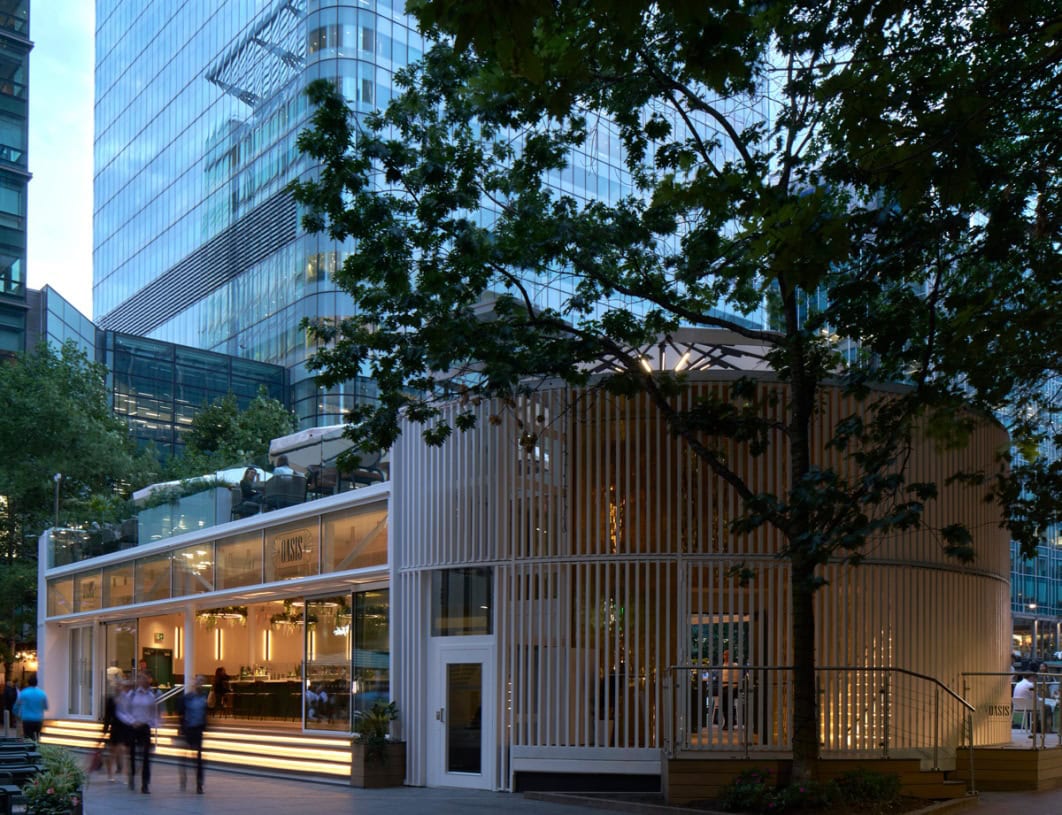
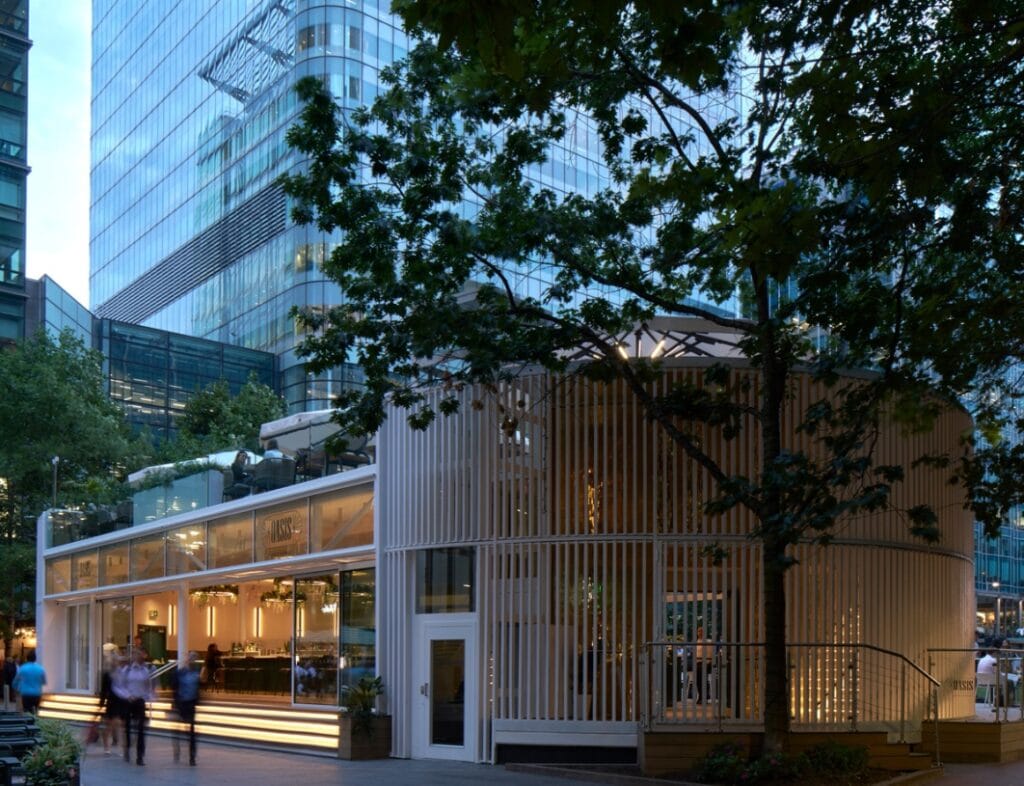
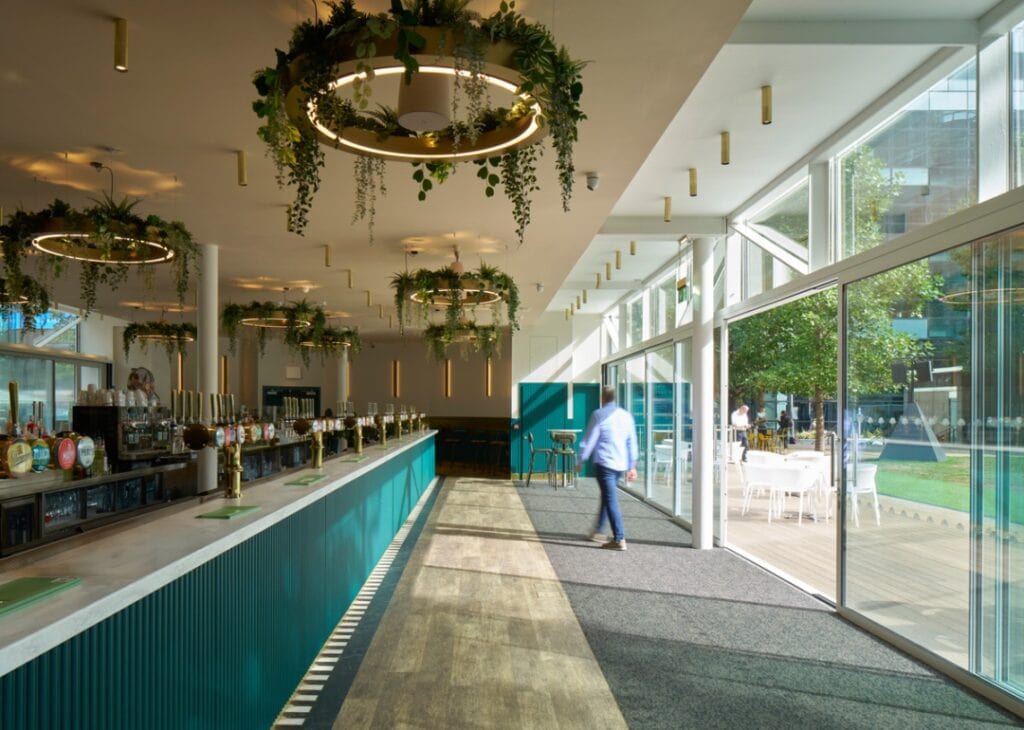
Our own Rako work is commercial. At Oasis Bar and Terrace in Canary Wharf, the venue needed to be a calm social space by day and a high-energy pre-club bar at night. We fitted Rako so that staff can switch between Day, Sunset and Night scenes at one touch, and installed a Sonance audio system alongside it, with one control interface for both. For a busy bar, being able to change the whole mood without thinking about individual circuits is the point.
In homes, the reasons are usually practical. Rako lets one house use wireless in finished rooms and wired where walls are open, within one product family. It is made in Britain, which matters to some clients. And it can run on its own, with keypads controlling lights and blinds, before any wider automation is added. Our guide on how to plan lighting scenes shows how we turn that into a scene list.
What are the pros and cons of Rako?
These points come from Rako’s own planning advice and published data, checked on 14 October 2026.
Pros
- Wireless, wired or both, so the system can follow the state of the building room by room.
- Retrofit friendly. Rako’s planning guidance treats wireless as the natural choice where there is no data cable to switch positions.
- Designed and made in the UK, with its head office and factory both in Kent.
- A wide integration list, including Control4, Crestron, Savant, Sonos, Silent Gliss and QMotion (Rako integrations).
- Shading built in, with modules for mains and low voltage curtain and blind motors.
Cons
- Wired takes more work. Rako says wired systems are more involved to set up, need a laptop to programme and use more expensive keypads.
- Battery keypads. Rako’s guidance notes that wired keypads can have backlit buttons because they don’t rely on batteries, which tells you wireless keypads do, and lose that feature.
- The extras need a Hub. App control, voice and most third-party links run through an RK-HUB or WK-HUB, and the app needs hub firmware 3.7.6 or later (checked 14 October 2026) (Rako app).
- No Lutron link. Lutron isn’t on Rako’s integration list.
- Ageing Control4 drivers. The newest Rako drivers in Control4’s public driver database were last updated in June 2019, so we test the integration on every job.
- Range planning. Larger buildings may need repeaters, such as the WRB100 (checked 14 October 2026), to carry the radio signal, which is one more thing to design in.
Who does Rako suit, and who does it not?
Rako suits retrofits and period houses where chasing walls for cable would damage plaster and decoration, which is why it comes up in our guide to smart lighting in listed and period homes. It suits clients who like the idea of a British-made system, venues where staff need a few clear presets, and homes that want good lighting control first and broader automation later.
It suits less well when a house already runs Lutron, because the two don’t talk to each other directly and you would end up with two lighting systems. It is also a poorer fit for anyone who wants backlit keypads everywhere without running new cable, or for a very large house where radio range is a worry and nobody wants to open the walls for a wired core.
How does Rako fit a Control4 and Lutron home?
With Control4, the link is straightforward. Control4 is on Rako’s integration list, and most third-party control runs over the home network through a Rako Hub. In a Control4 smart home, Rako handles the dimming and keypads while Control4 adds the lighting to scenes alongside AV, heating and blinds, so one Film button can set everything at once.
Lutron is a different matter. Most of our projects pair Lutron lighting with Control4, and in those houses Lutron is the lighting system, so there is no reason to add Rako. Where a property genuinely has both, perhaps an older Rako installation in one building and Lutron in another, Control4 is the layer that can bring them into shared scenes, because each connects to Control4 in its own right. Our smart home lighting and shading service covers how we plan that.
If you want to talk through a Rako system, new or inherited, contact us or arrange a visit to our showroom in Walton-on-Thames, by appointment.
Frequently asked questions
Where are Rako products made?
In the UK. Rako’s 2025 brochure says its products are designed and manufactured at its ISO 9001 facility in Sittingbourne, Kent, and its sustainability page says it manufactures in the UK to cut the distance components travel. The head office is in Rochester.
How long has Rako been around?
Since 2002. Rako Controls Limited was incorporated on 23 April 2002, and the company’s own literature gives the same year. That makes it more than two decades old, with its early reputation built on wireless lighting control for homes.
Does Rako work with Alexa, Siri or Google?
Yes, through a Rako Hub. Rako lists voice control through Alexa, Siri and Google Home among the Hub’s features, using the Rako Cloud. Without a Hub, the system still works from its keypads, but you lose app, voice and timed control.
Can Rako be used in bars and restaurants?
Yes. Our Rako installation at Oasis Bar and Terrace in Canary Wharf gives staff Day, Sunset and Night scenes at one touch, and Rako’s own case studies include restaurant and hospitality projects. Preset scenes suit venues well, because staff don’t need to understand the circuits behind them.