


Sony's home cinema projectors at a glance
Sony builds its home cinema projectors around SXRD panels, its own imaging chips, with a full native 4K pixel count (3,840 by 2,160) rather than the pixel-shifting used by many rival 4K projectors. The current generation uses a laser light source rated for up to 20,000 hours, so there are no lamps to replace.
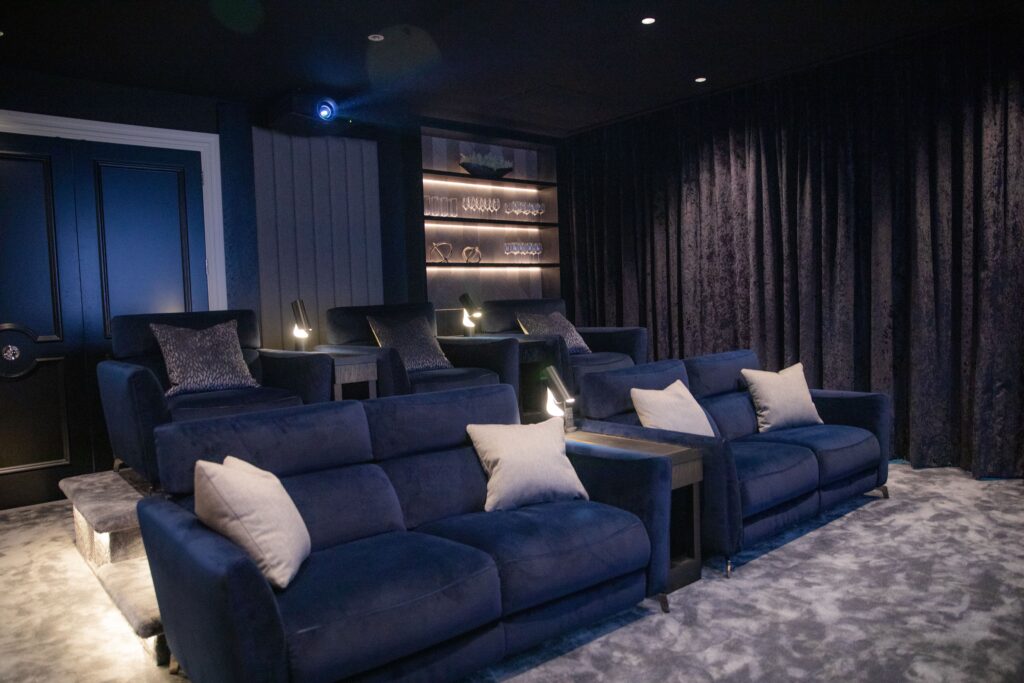
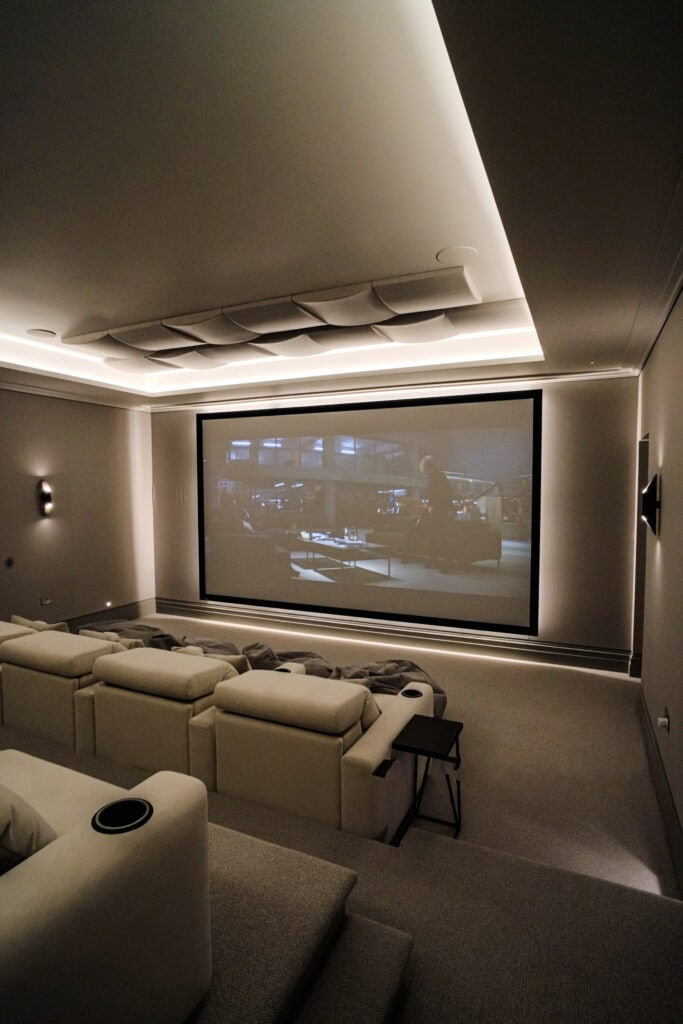
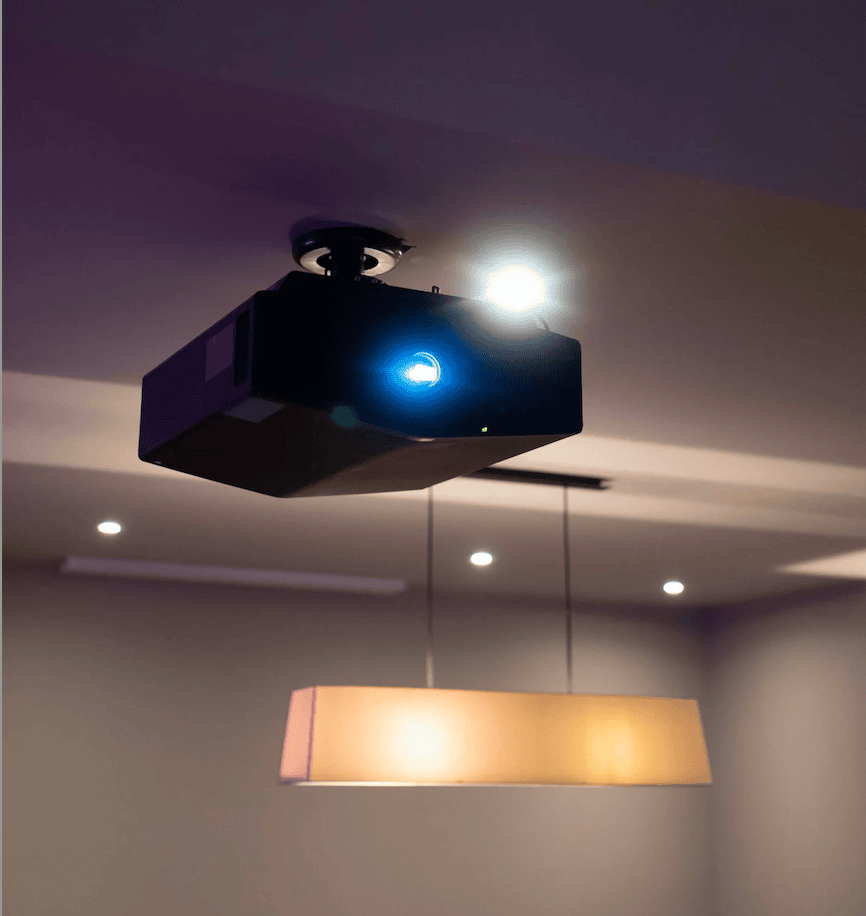
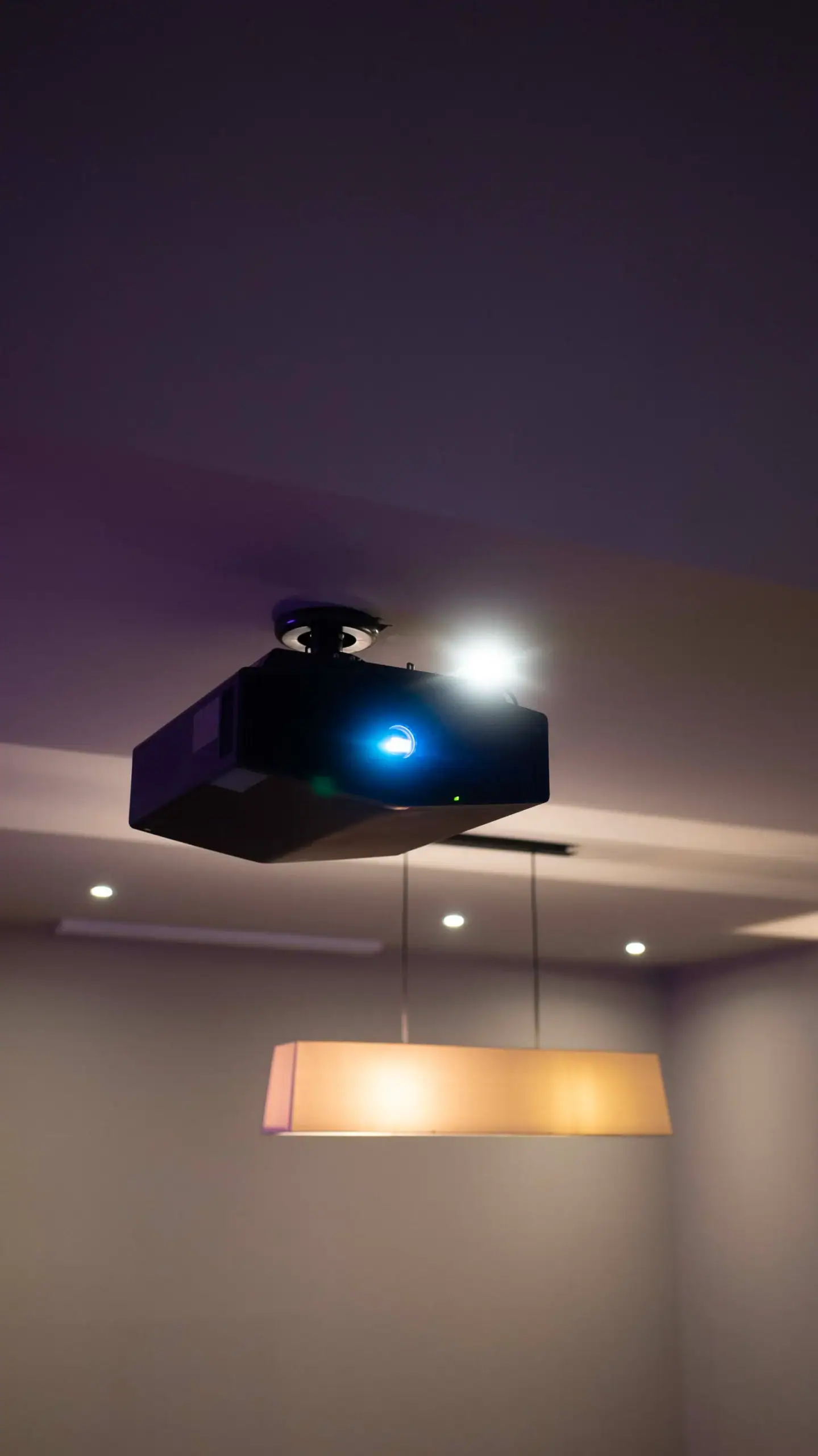
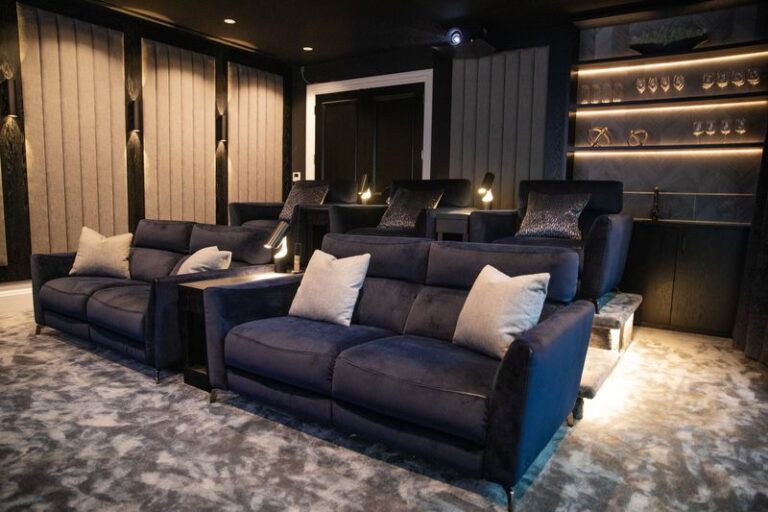
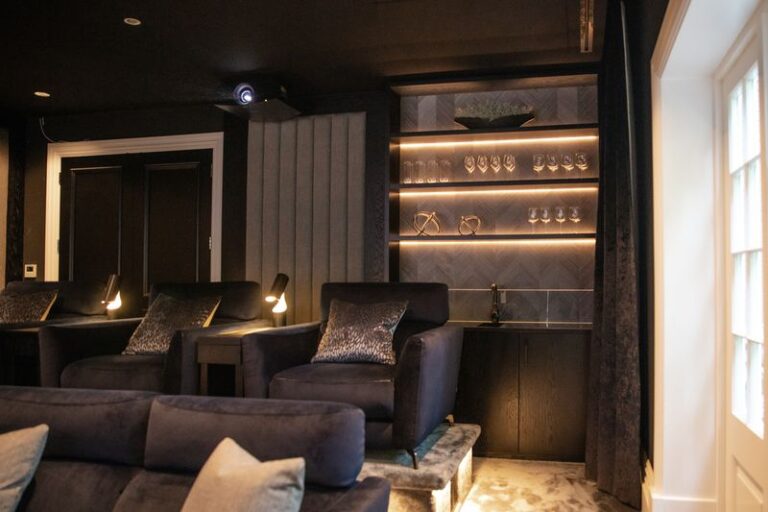
In the UK, Sony's BRAVIA Projector range sits above the long-running VPL-XW5000ES, the compact model in our Fetcham cinema, which Sony rates at 2,000 lumens:
- BRAVIA Projector 7 (VPL-XW5100ES), rated at 2,200 lumens, adds Sony's XR processor, adapted from its TV range, and 4K at 120Hz on both HDMI 2.1 inputs.
- BRAVIA Projector 8, rated at 2,700 lumens, whose processor is adapted from the one in Sony's BRAVIA 8 OLED and BRAVIA 9 Mini LED TVs.
- BRAVIA Projector 9, the flagship at 3,400 lumens, which adds Sony's Live Colour Enhancer and has fully motorised lens adjustment with a 2.1x zoom.
What Hi-Fi notes that the BRAVIA Projectors handle HDR10 and HLG, and that the Projector 9 does not support Dolby Vision or 3D, which is worth knowing if your film collection depends on either.
Why Sony suits rooms built for sport, gaming and films
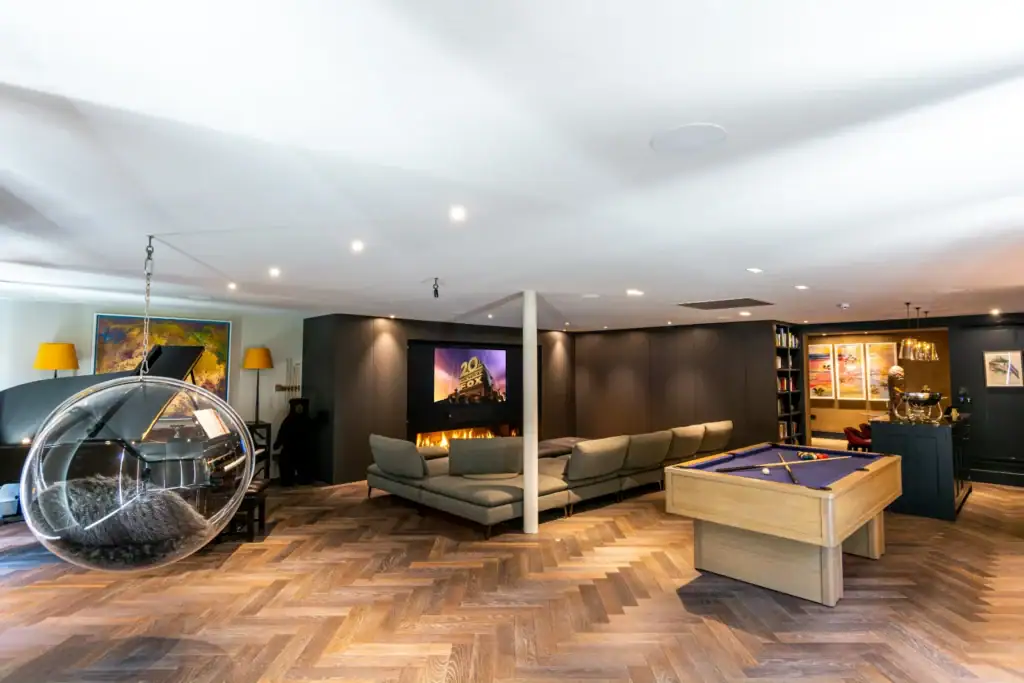
The briefs behind our Sony projects have a lot in common. In Walton-on-Thames the room was mainly used for sport, and the family wanted it to work for films together and for hosting friends. In Fetcham the teenagers needed somewhere to game with friends that the whole family could also use. In Epsom the clients wanted one room for football, films and games.
Sony fits that mix well. Its 4K Motionflow processing is designed to keep fast action clear, which matters for a football match on a large screen. Sony's processing draws on the same work as its BRAVIA TVs, so HD broadcasts and older films are upscaled to 4K cleanly. For gamers, What Hi-Fi measured the BRAVIA Projector 9 at 21ms of input lag with 60Hz sources and 12ms at 120Hz, and its HDMI inputs accept 4K at 120Hz from current consoles.
Light control in a multi-use media room
Sony's laser projectors are bright, but that brightness is there to give HDR pictures more punch, not to beat daylight. What Hi-Fi makes the same point about the BRAVIA Projector 9, advising that a projector at this level belongs in a room that can get close to cinema darkness. In a media room that also has a bar, a pool table or garden doors, the planning comes down to how much light you can control:
- Windows. Walton-on-Thames has Silent Gliss blackout blinds and Epsom has QMotion blackout blinds; tying blinds like these to the scene that starts a film means nobody has to remember them. Our motorised blinds and shading page covers the options.
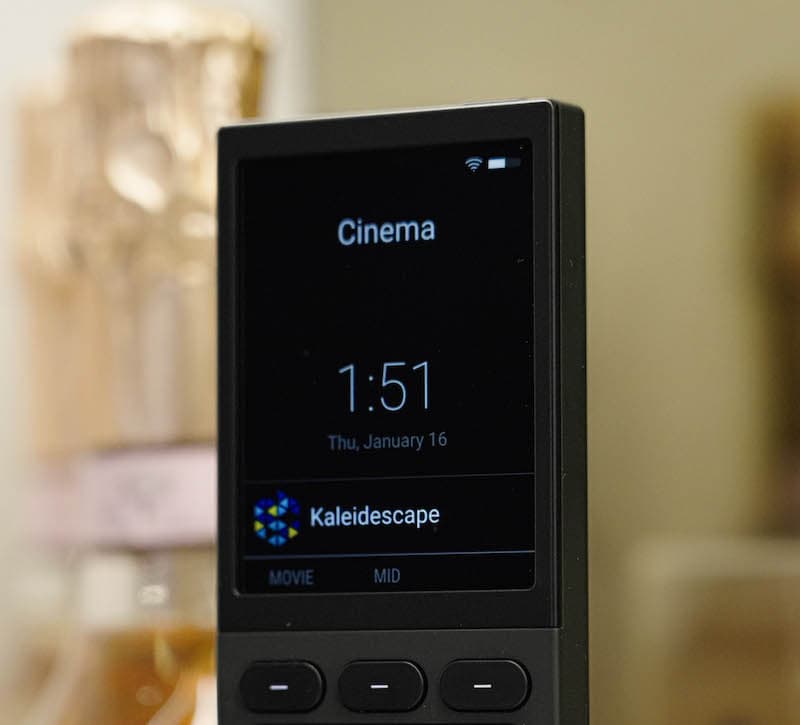
- Lighting zones. Fetcham's cinema was designed with several lighting modes, and zoning like this lets a bar and pool table stay lit while the screen end of the room stays dark.
- When the room cannot be darkened. If daylight cannot be controlled, a large TV is usually the better choice. The Epsom media room, for example, is built around an 85-inch Sony TV recessed into the wall.
Our guide to choosing a projector or a TV for a home cinema sets out where the line falls.