

What are Sonance invisible speakers?
Sonance began in 1983 in San Clemente, California, when its two founders introduced what the company calls the first in-wall loudspeaker. More than forty years later it still builds speakers to live inside the house rather than on a shelf, and that single idea runs through every range it makes.
Indoors, the current residential line-up has three families:
- Invisible Series: flat panels set flush into the wall or ceiling and then finished over, so no grille shows at all. Sonance lists drywall, select plasters, wallpaper, leather and wood veneer as compatible finishes and quotes roughly 180 degrees of dispersion, which helps one panel cover a wide room.
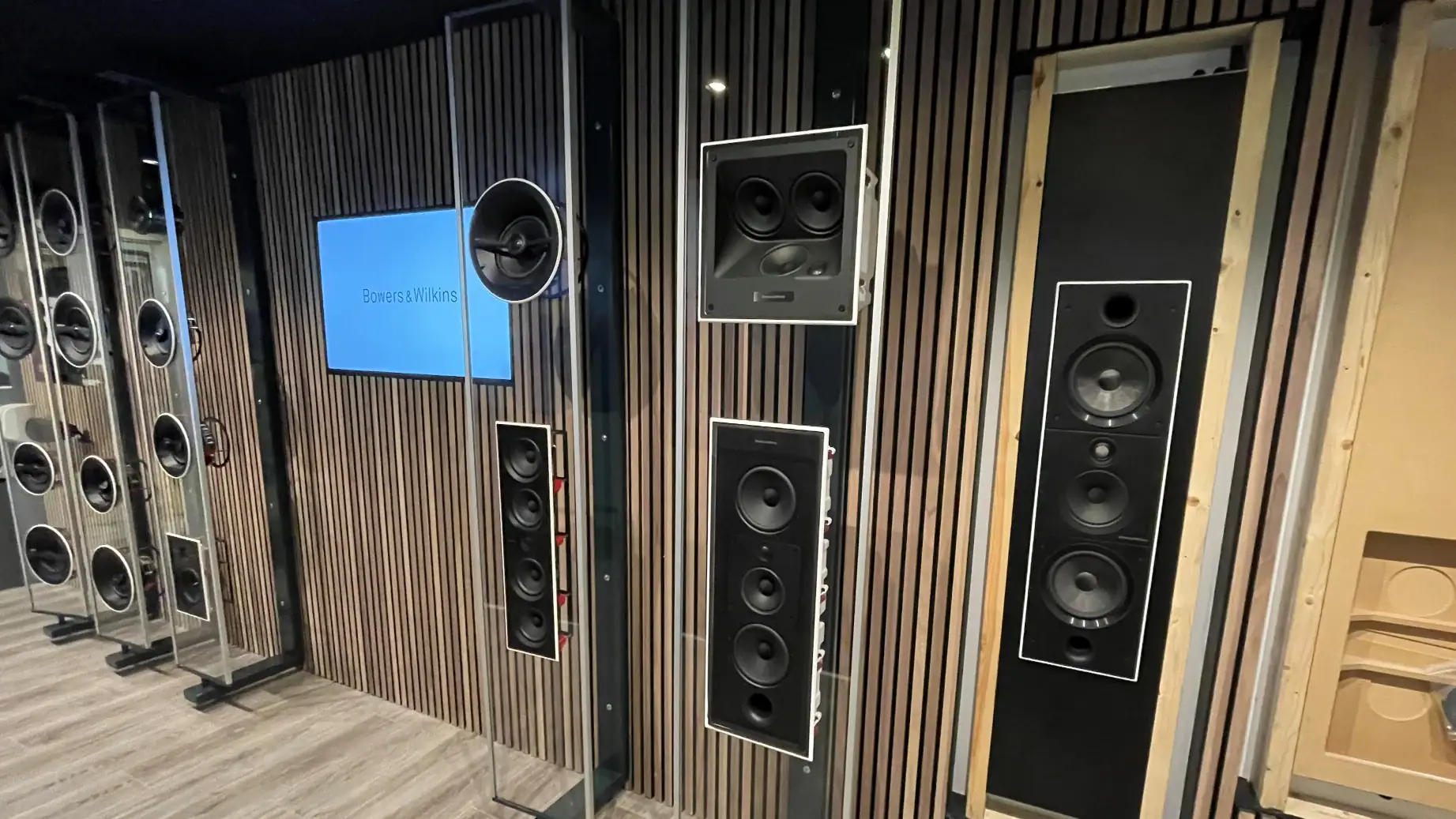
- Visual Experience Series: in-wall and in-ceiling speakers with grilles, including a painted grille option and a laser-printed grille for wood ceilings.
- Small Aperture Series: compact round openings for ceilings where a standard speaker would look oversized next to the downlights.
Outside, Sonance makes Landscape, Garden and Patio Series speakers. Its Landscape Solutions system stakes small satellites into the planting, finished to look like garden lighting, with a partly buried subwoofer for the bass.
Why architects and designers specify Sonance
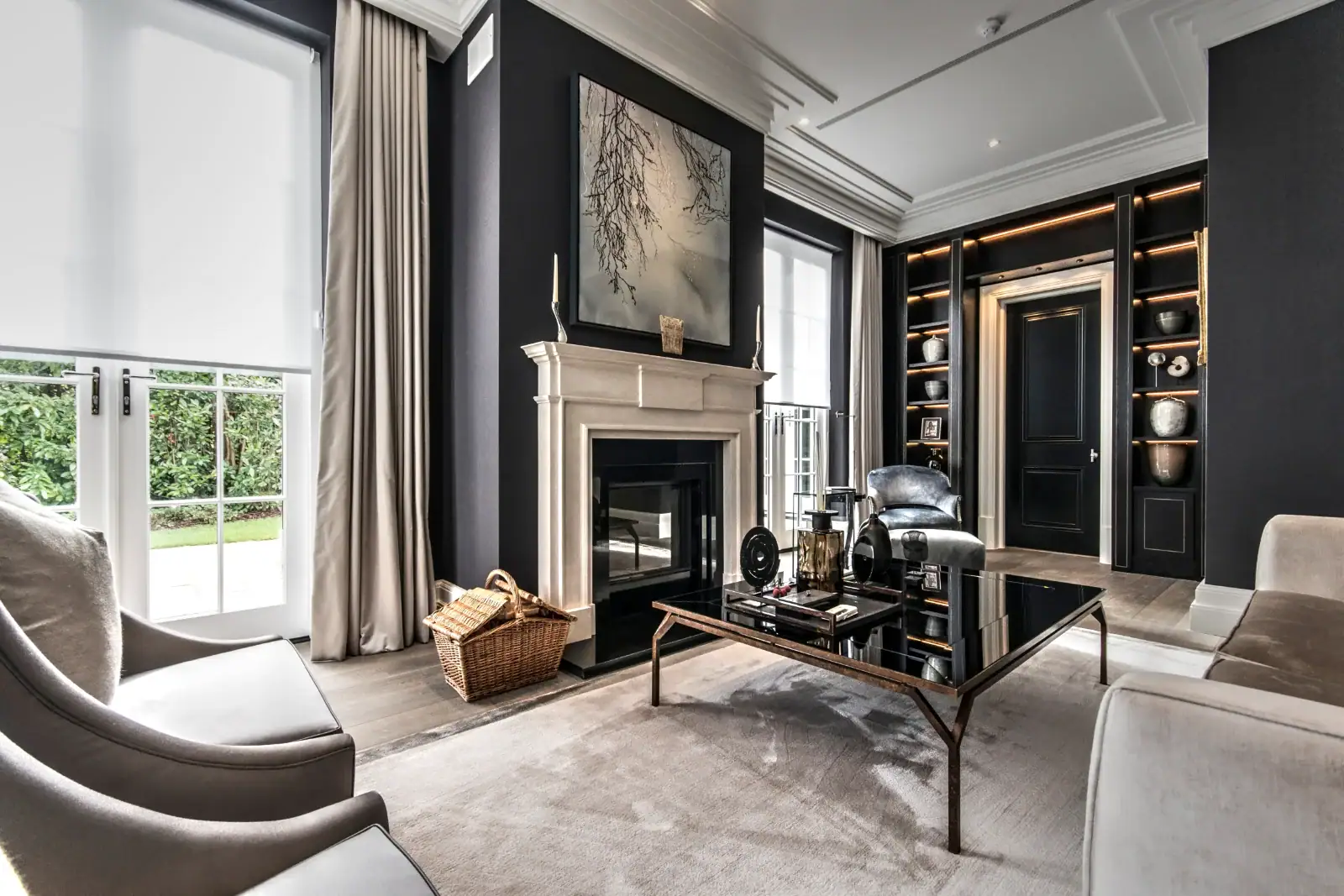
Most speaker brands offer concealment as an extra. For Sonance it is the starting point, which is why the name comes up so often on projects led by an architect or interior designer. A finished-over Invisible Series panel leaves an unbroken ceiling, and that matters in a room with fine cornicing, a polished plaster wall or a hand-painted ceiling, where a row of white grilles would undo expensive work.
The trade-off is that invisible speakers are a building decision, not a shopping one. They go in before the final skim and are decorated with the wall, so they suit renovations and new builds far better than a finished room. Where the plaster is already done, the Small Aperture and Visual Experience ranges give a smaller, paintable grille instead. A sensible plan often mixes the two: invisible panels in the formal rooms, grilled speakers in kitchens and bathrooms where surfaces get cleaned hard. Lighting raises the same conservation questions in older houses, which we explore in our listed and period homes guide.
Planning invisible speakers: positions, plaster and timing
Invisible speakers reward early planning more than any other audio product, because once the wall is decorated there is no grille to lift off.
- Fix positions at first fix. We mark speaker locations on the drawings with the lighting layout, so a panel never ends up behind a picture light, a curtain track or a joist.
- Agree the finish with the plasterer. Sonance names select plasters, wallpaper, leather and veneer as compatible, and its DISC system measures the finish over each panel. Keeping that layer even across a room keeps every speaker sounding alike, so our engineer and the plasterer check it together before decoration starts.
- Protect the panels through the messy trades. They go in before the final skim, are covered while sanding and painting happen, and are commissioned once the room is dry.
- Keep the electronics reachable. The speakers are fixed for the life of the decoration, so all adjustment happens at the amplifier. We label every cable run and photograph each position before the wall is closed.
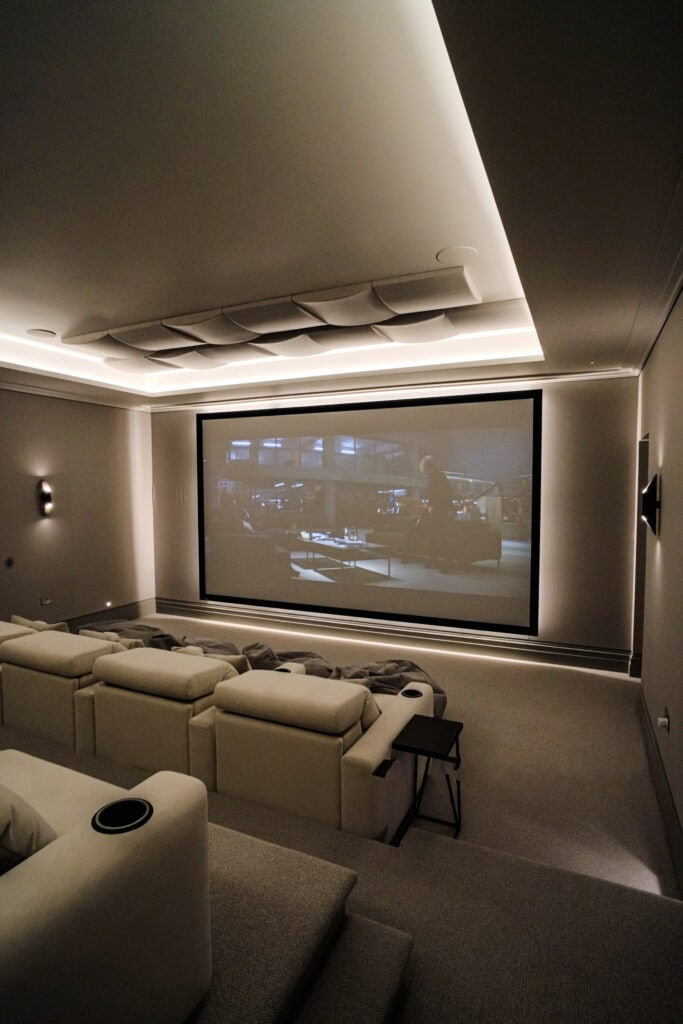
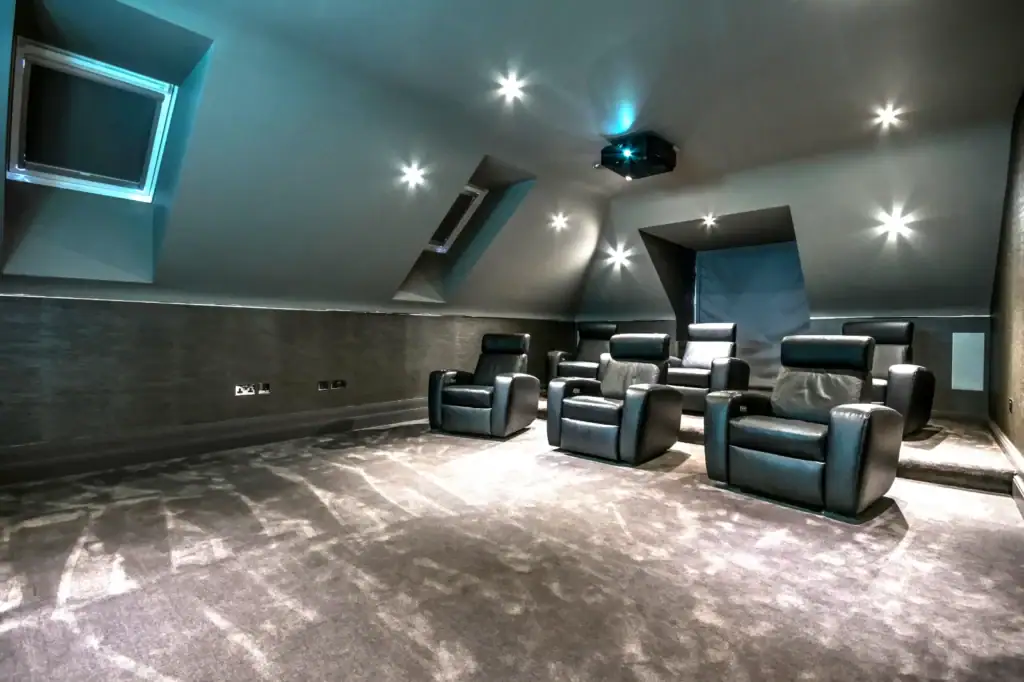
- Choose the right room. Invisible panels shine in living spaces and for music. A dedicated cinema usually suits grilled in-wall speakers behind the screen plus in-ceiling heights, as at Fetcham, which our home cinema design team plans separately.