Epson's home cinema projectors: 3LCD, pixel shift and laser light
Epson's home cinema projectors are built on 3LCD. Light is split into red, green and blue, passed through three separate LCD panels and recombined in a prism before reaching the lens, so there is no spinning colour wheel. One practical result shows up on the specification sheet: Epson quotes the same number for colour and white light output, 2,700 lumens of each on the EH-LS12000B, so the brightness figure applies to a colourful film scene and not only to a white test pattern.
Epson reaches 4K by pixel shifting. It describes the EH-LS12000B as pairing three high-definition LCD chips with pixel-shift processing to reach 8.3 million on-screen pixels, while the older EH-TW9400 carries Epson's 4K PRO-UHD label. For dedicated rooms the current UK line-up includes:
- EH-LS12000B, a 2,700 lumen laser model with motorised zoom, focus and lens shift, ten lens memory positions and 4K at 120 frames per second for gaming;
- EH-LS9000B, a 2,200 lumen laser model with the same 2.1x motorised zoom;
- the Professional Home range, from the 3,300 lumen EH-QB1000 to the EH-QL3000 (6,000 lumens) and EH-QL7000 (10,000 lumens). The QL models are sold without a lens, so one is chosen to suit the throw distance.
Why an Epson suits a cinema that also hosts match day
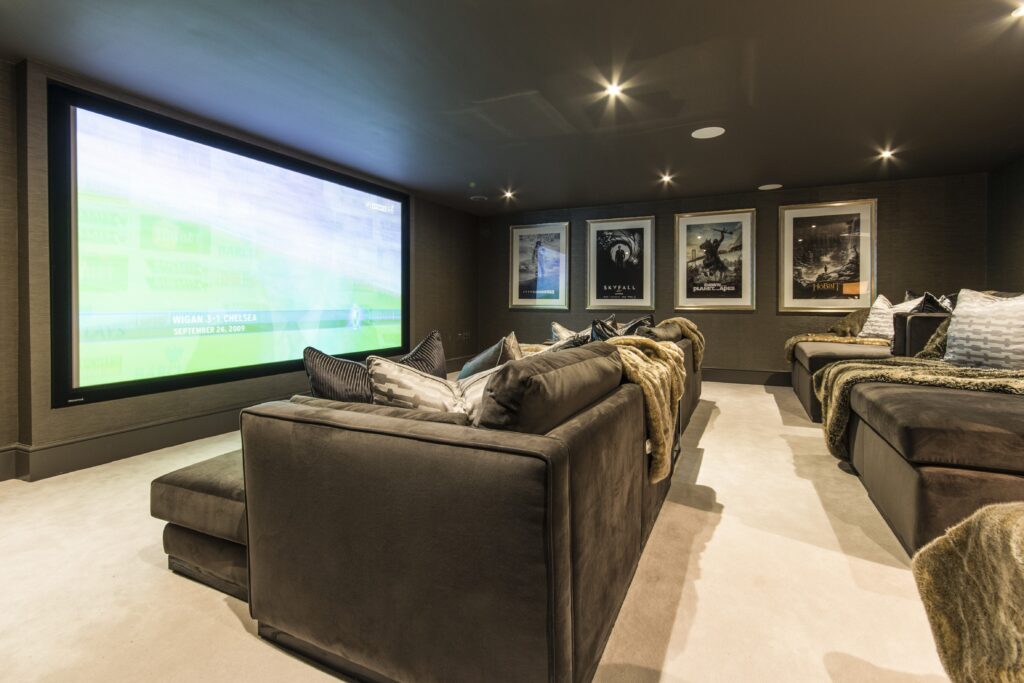
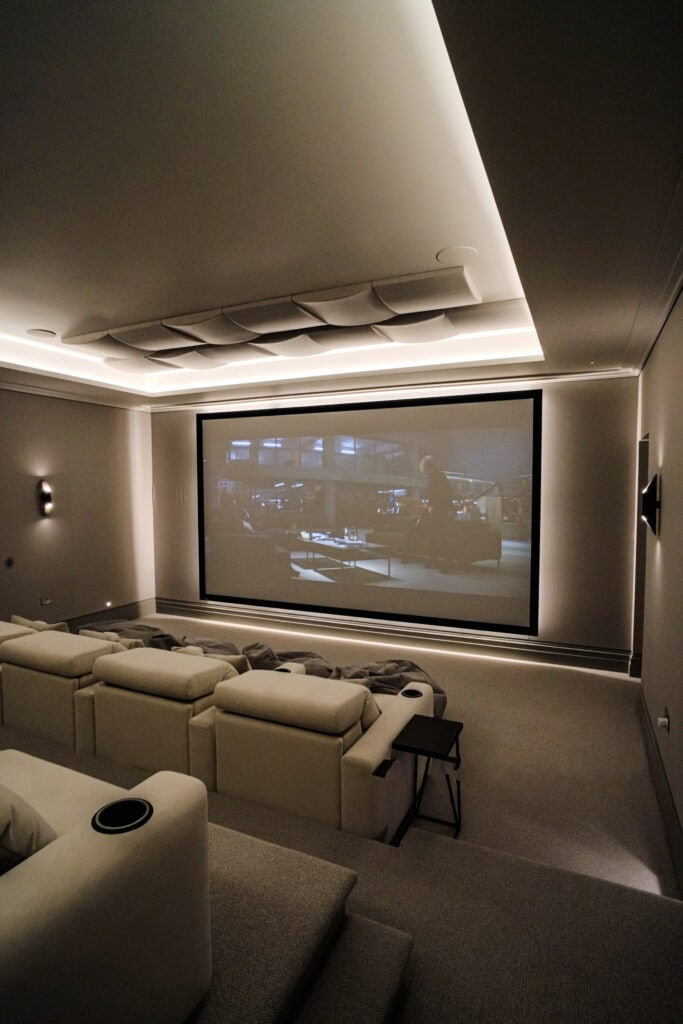
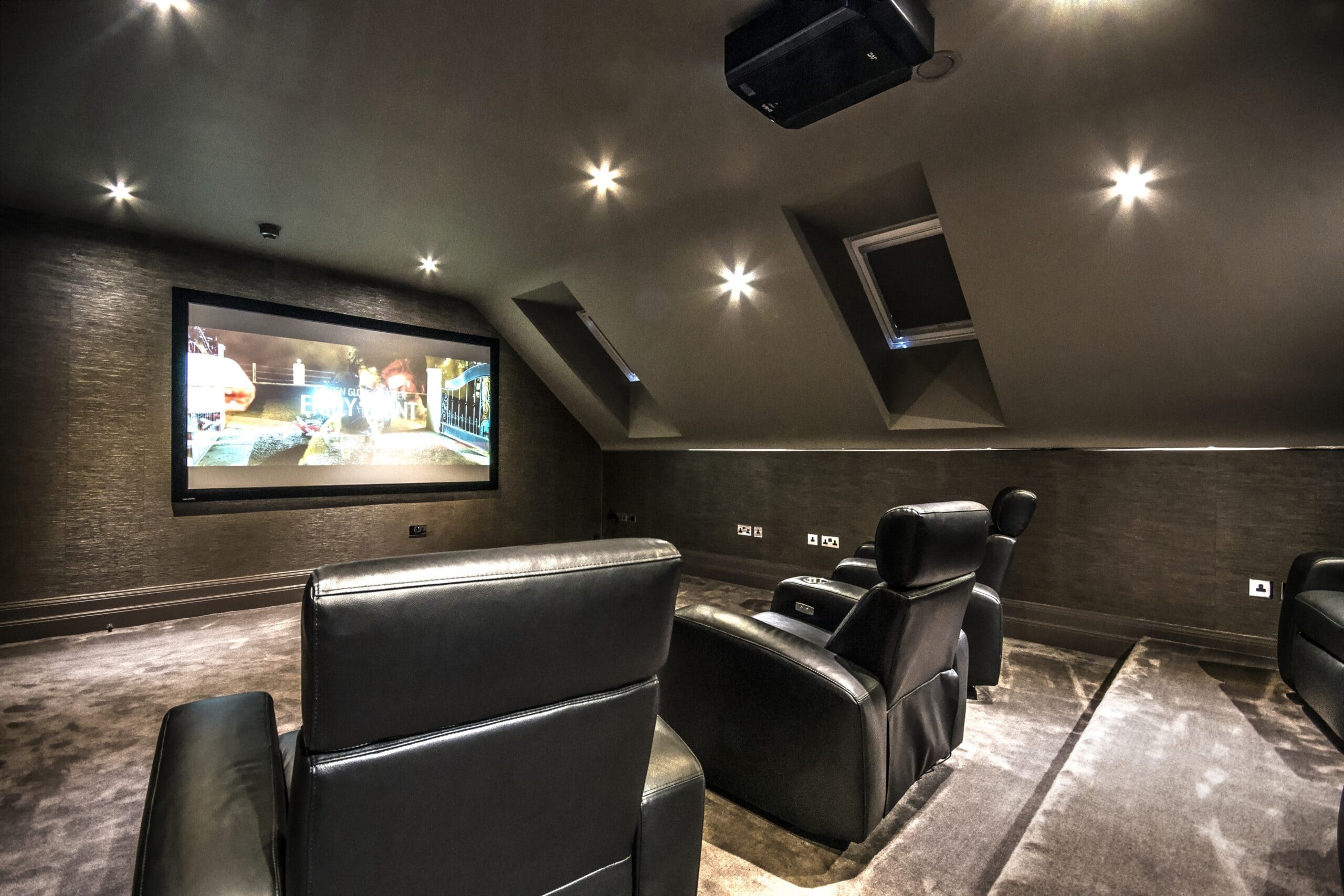
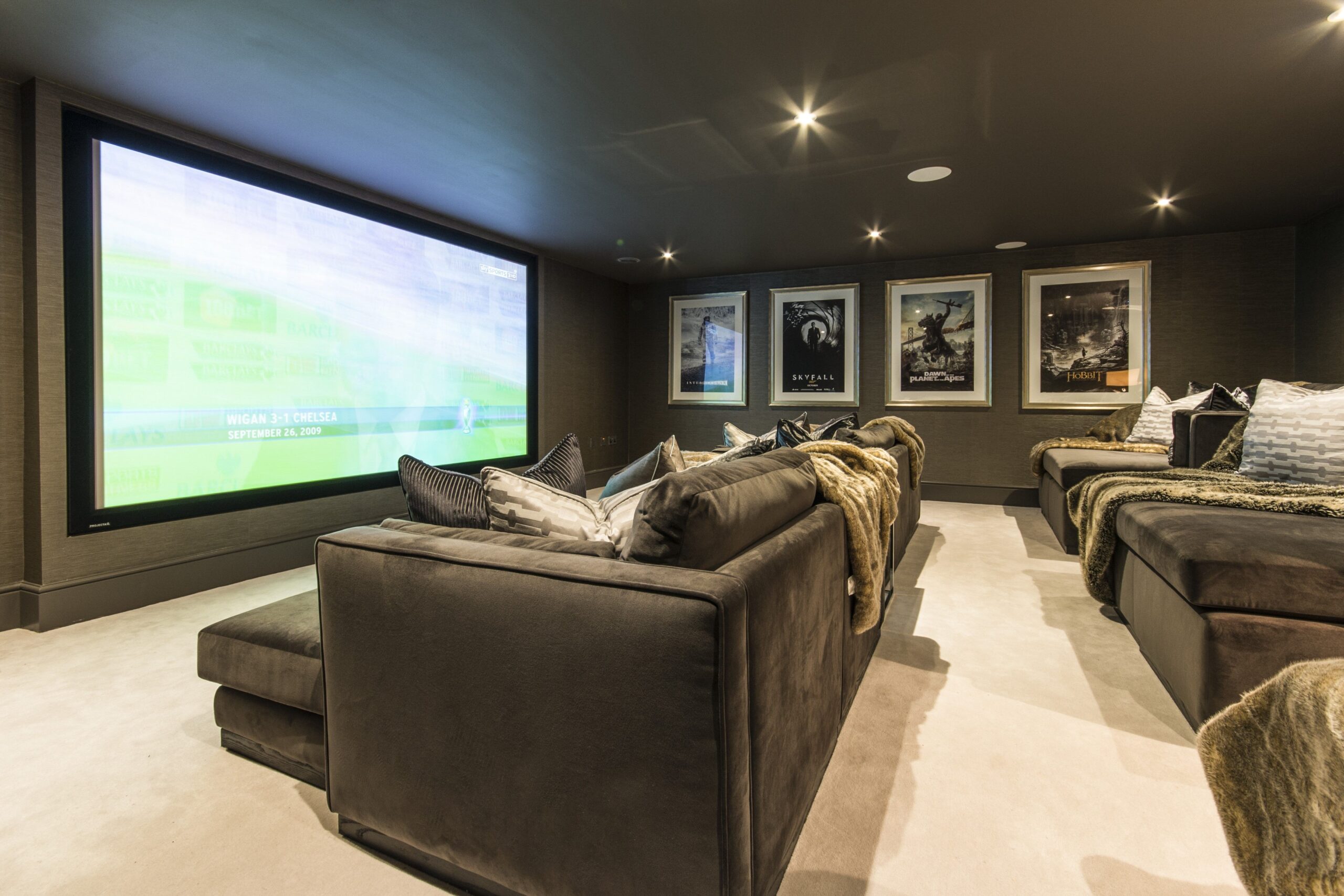
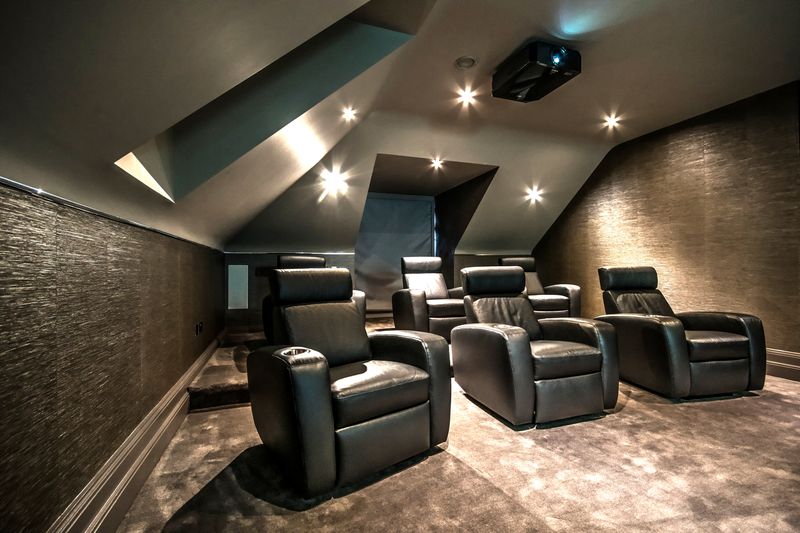
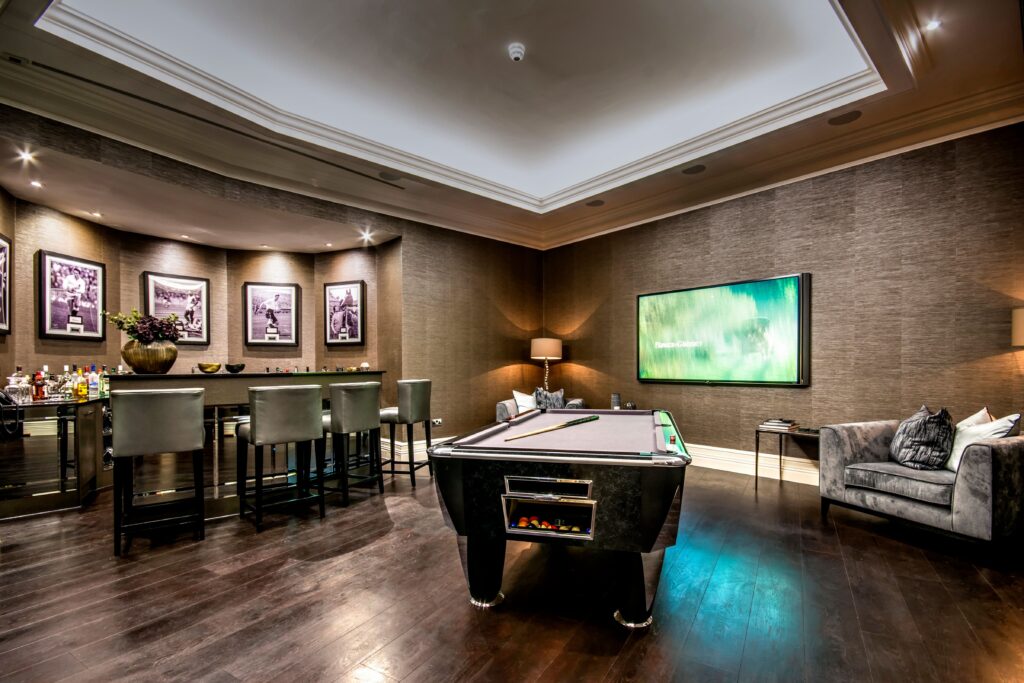
Both of our Epson rooms were briefed for sport as much as for films. In Weybridge the family wanted one space for movie nights and sporting events; in Oxshott the owner wanted a proper cinema that would also carry the atmosphere of a Chelsea match with his children and grandchildren. Sport is watched with a few lights on, people get up and move about, and the picture has to stay punchy while that happens.
That is where Epson earns its place. Its brightness comes with the colour intact, and Epson itself positions the Professional Home range for living rooms and media rooms with some ambient light. In a review syndicated on What Hi-Fi, Sound+Image found the EH-LS12000B could be watched with a side lamp on and daytime light reaching the screen without the image washing out, though blacks lose depth when that happens. We still design for darkness, but an Epson is more forgiving when a family room cannot be fully blacked out.
The value case is just as practical. An Epson gives a large, bright, 4K-capable picture with motorised optics and network control without moving into the flagship tier of projectors, which leaves more of the budget for the screen, the sound and the room itself.
Placing an Epson: throw distance, lens shift and awkward ceilings
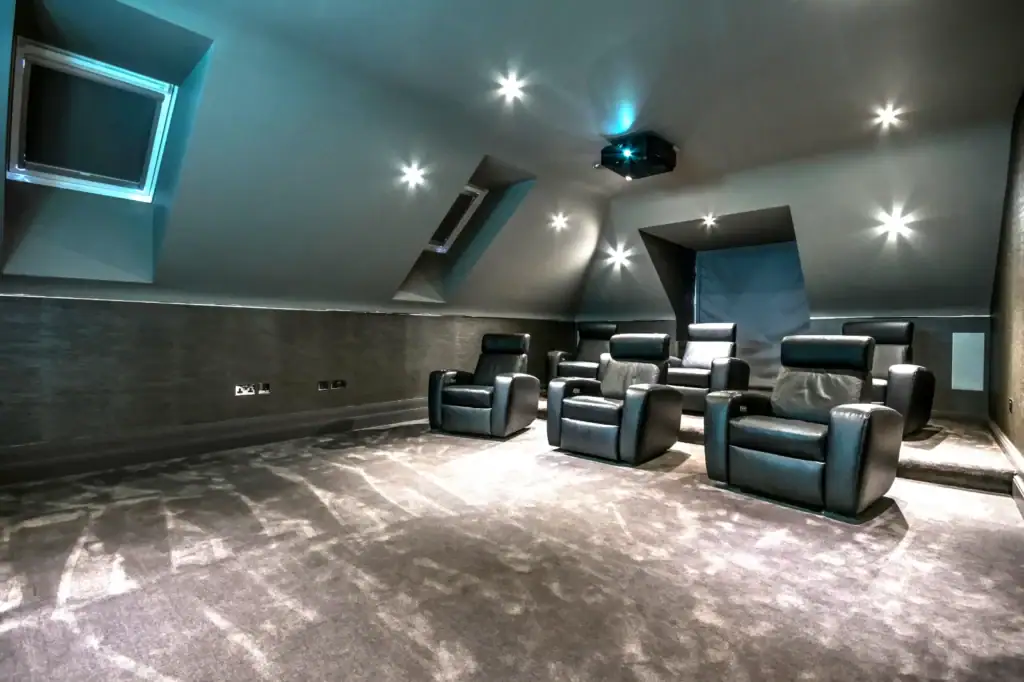
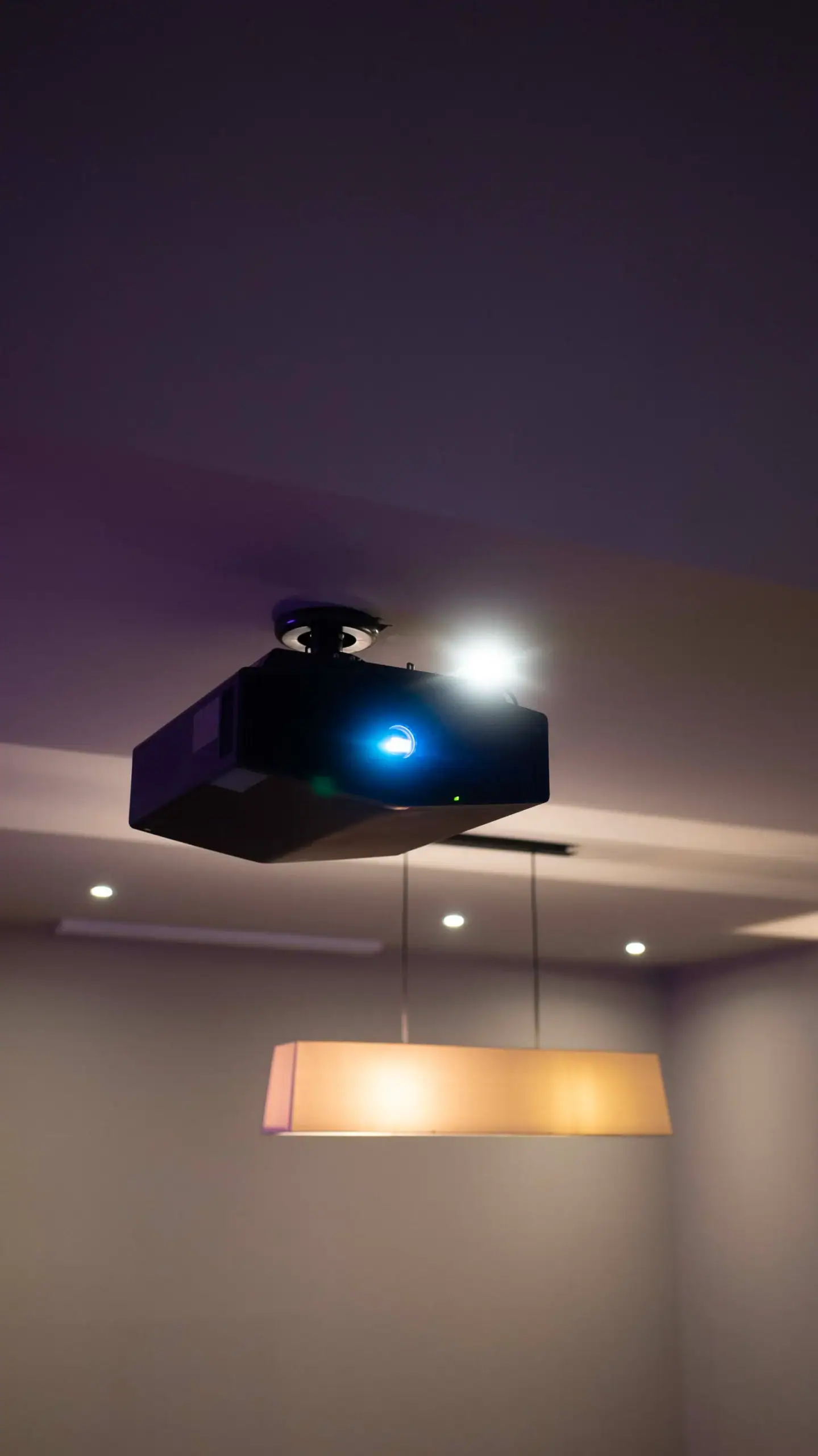
Oxshott shows why placement is the first planning question. With a sloped ceiling, the projector could not simply hang wherever a brochure diagram puts it. Epson's lens-fitted laser models give us room to work:
- Throw range: the EH-LS12000B has a throw ratio of 1.35 to 2.84:1. On a 120-inch 16:9 screen, about 2.66 metres wide, it can sit anywhere from roughly 3.6 to 7.5 metres from the screen.
- Lens shift: motorised shift of up to 96.3 per cent vertically and 47.1 per cent horizontally lets the projector sit off-centre, closer to the ceiling or to one side of a beam, without the digital keystone correction that softens the image.
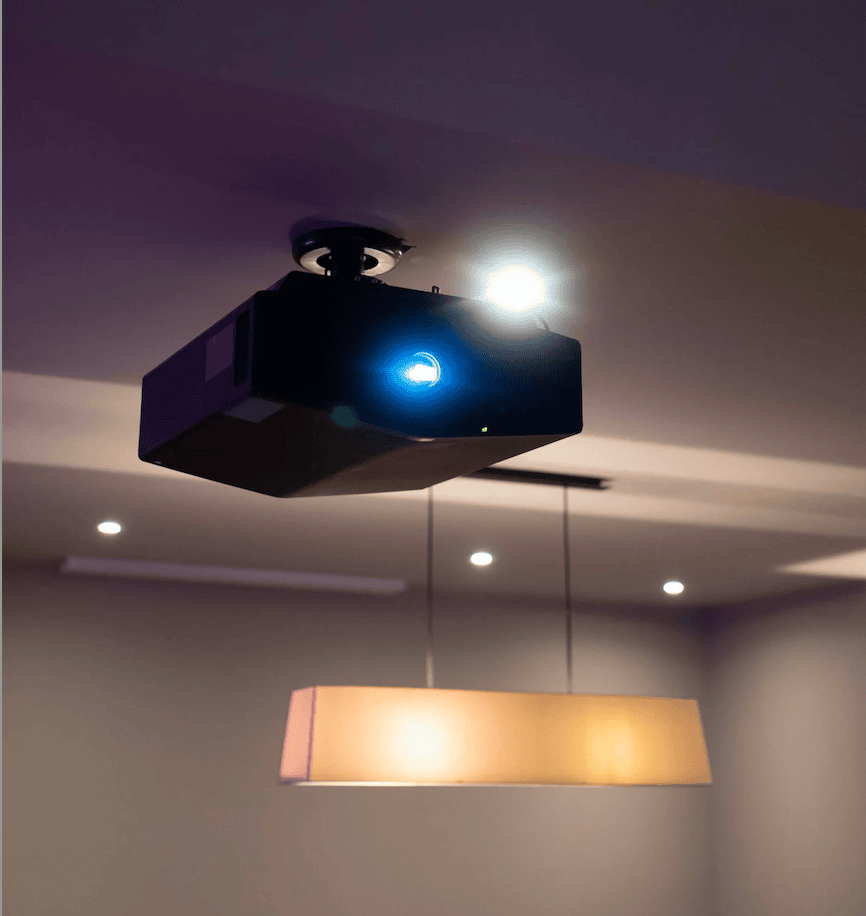
- Weight and fixings: Epson lists the EH-LS12000B at 12.7kg, so ceiling mounts are fixed into structure and fitted with a safety wire, as Epson's installation guidance asks.
- Noise: Epson rates it at 30 dB(A) in normal mode and 22 dB(A) in eco mode, which still decides whether it can hang directly above the back row.
- Long rooms: if the projector has to sit very far back or very close, the QL models take interchangeable lenses chosen for the throw.
Seating, screen and projector positions are settled as one decision, and the order we work in is set out in our guide to cinema room layout.