
What does an AV processor do in a home cinema?
Every source in a cinema room, whether a film player, a streaming box, a games console or satellite TV, sends its picture and sound to one box. That box is the AV processor, the part of the system most people never see. It switches the video through to the projector or TV, decodes Dolby Atmos and DTS:X soundtracks, works out which of a dozen or more speakers each sound belongs to, and sets the timing and level of each one so dialogue stays on the screen and effects move around the room as the film's mixer intended.
It also manages bass. The processor decides which frequencies go to the main speakers and which go to the subwoofers, and its room correction measures how the room itself colours the sound before compensating for it. In a basement with hard walls, or a media room with glass doors to the garden, that correction often makes a bigger audible difference than a change of speakers.
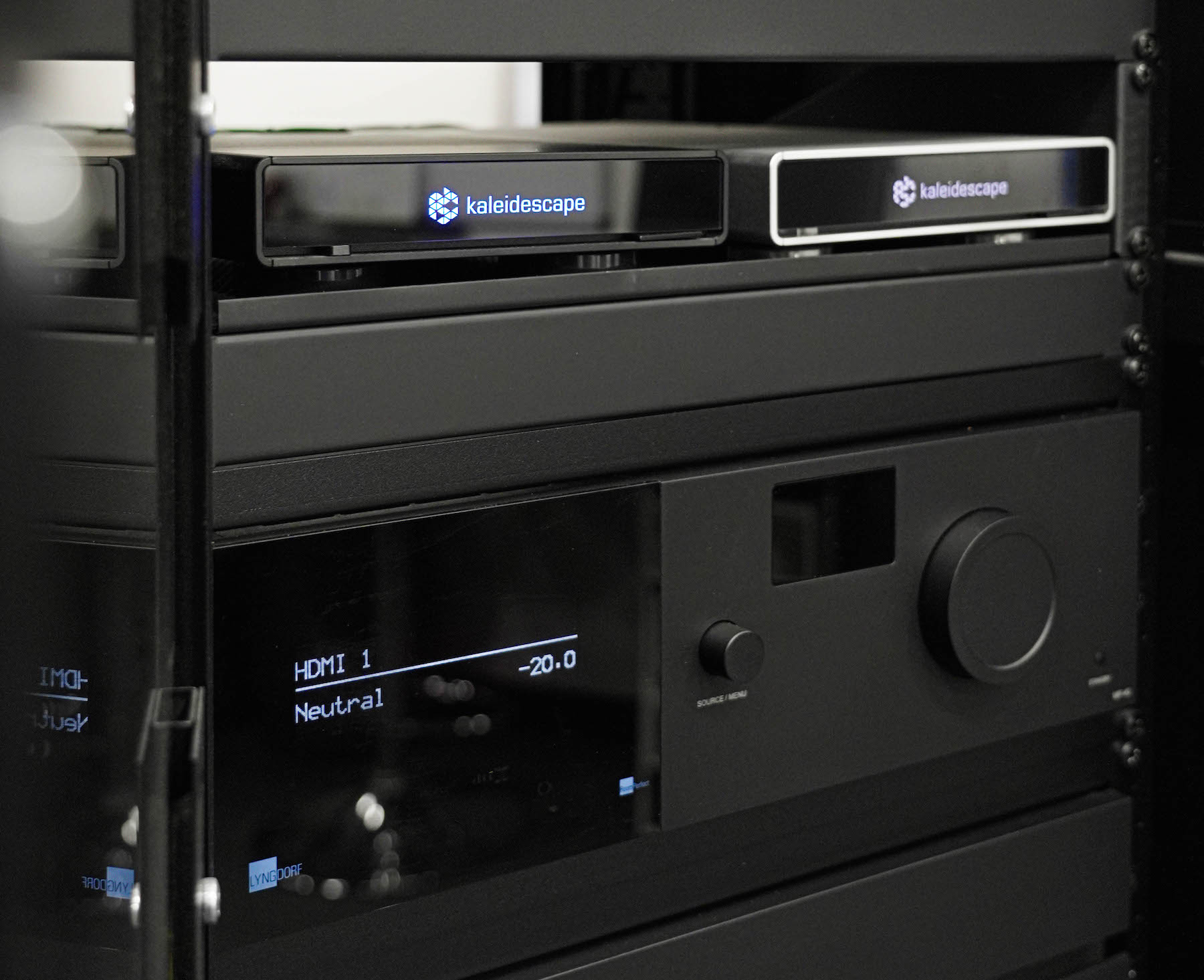
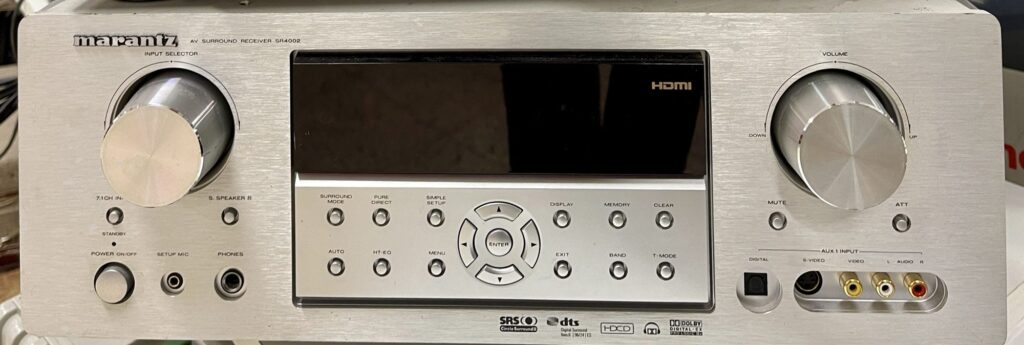
A receiver puts the processor and the amplifiers in one chassis. Separates split them: a processor (Anthem's are called AVM, Marantz's are called AV) feeds a dedicated multichannel power amplifier. Both brands make both types, so we can match the electronics to the room rather than the room to the electronics.
Why we specify Anthem and Marantz
Anthem is best known for its room correction, ARC Genesis. It uses the calibrated microphone supplied with the product and software on a Windows or Mac laptop, and it can correct the full range from 20 Hz to 20 kHz, although by default it stops at 5 kHz and leaves the character of the speakers alone above that. Depending on the model, it stores up to four measurement sets, which Anthem suggests using when the room changes, for example with a drop-down screen lowered or raised. The current range runs from the MRX 540, MRX 740 and MRX 1140 receivers to the AVM 70 and AVM 90 processors, the AVM 90 handling 15.4 channels.
Marantz builds its reference separates around the AV 10 processor and AMP 10 amplifier. The AV 10 handles up to 15.4 channels with balanced outputs on every channel and four independent subwoofer outputs, decodes Dolby Atmos, DTS:X Pro, IMAX Enhanced and Auro-3D, and comes with Audyssey MultEQ XT32 room correction, with Dirac Live available as an upgrade. The AMP 10 provides 16 channels of 200 watts into 8 ohms from a Class D design Marantz developed itself, and channels can be bridged for 400 watts. Smaller rooms suit the AV 20 or AV 30, with 13.4 and 11.4 channels.
Receiver or separates: matching the electronics to the room
The deciding factors are channel count, amplifier power and where the equipment will live. An Anthem MRX 740 processes 11.2 channels and amplifies seven of them at 140 watts each into 8 ohms, which suits a 5.1 or 7.1 media room, or a modest Atmos layout with an extra amplifier for the height channels. Once a room needs 7.2.4 or more, or large speakers that need headroom, separates make more sense: an AVM or AV 10 processor feeding a multichannel amplifier such as the AMP 10.
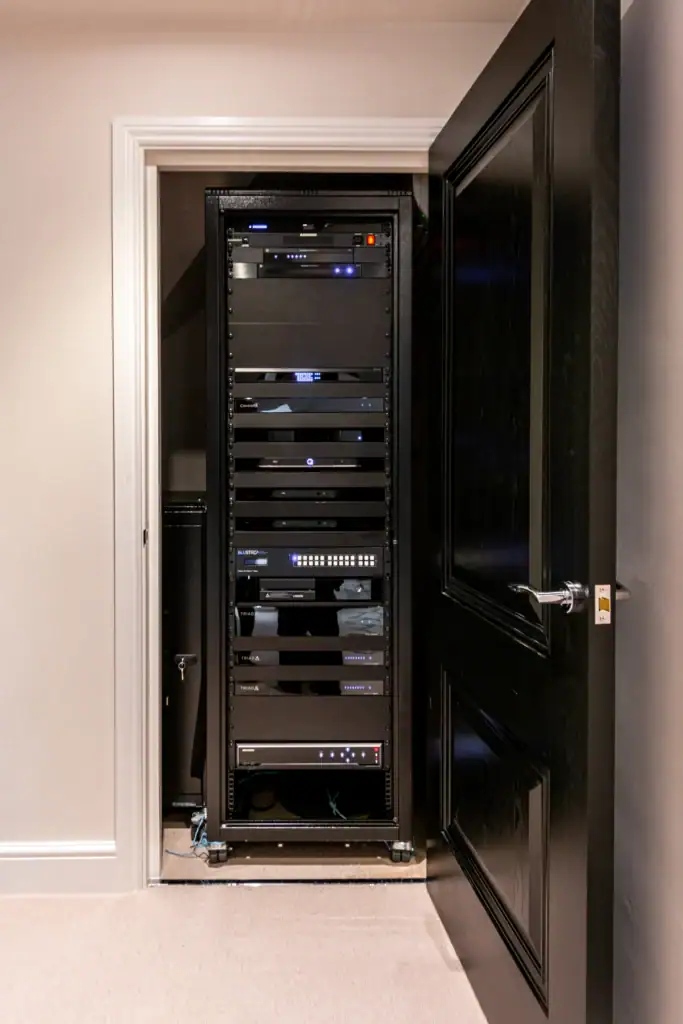
Separates take more rack space and produce more heat, so we plan the equipment cupboard early, with ventilation, a rear cable route, a dedicated mains supply and wired network points. If a drop-down screen will sit in front of the speakers, we plan room correction for both screen positions from the start. The speaker layout comes first, so read our guide to Dolby Atmos speaker layouts before choosing the processing.