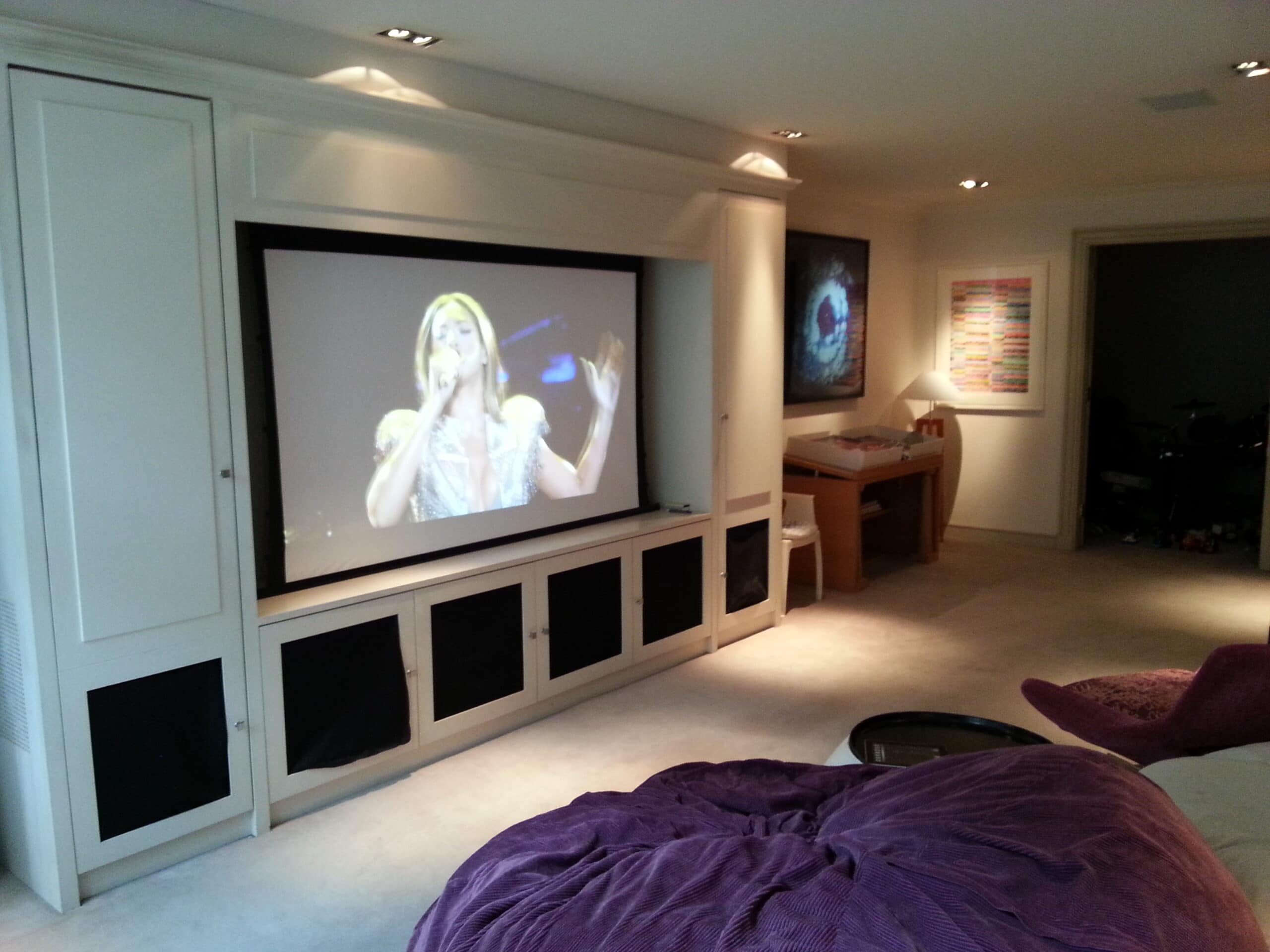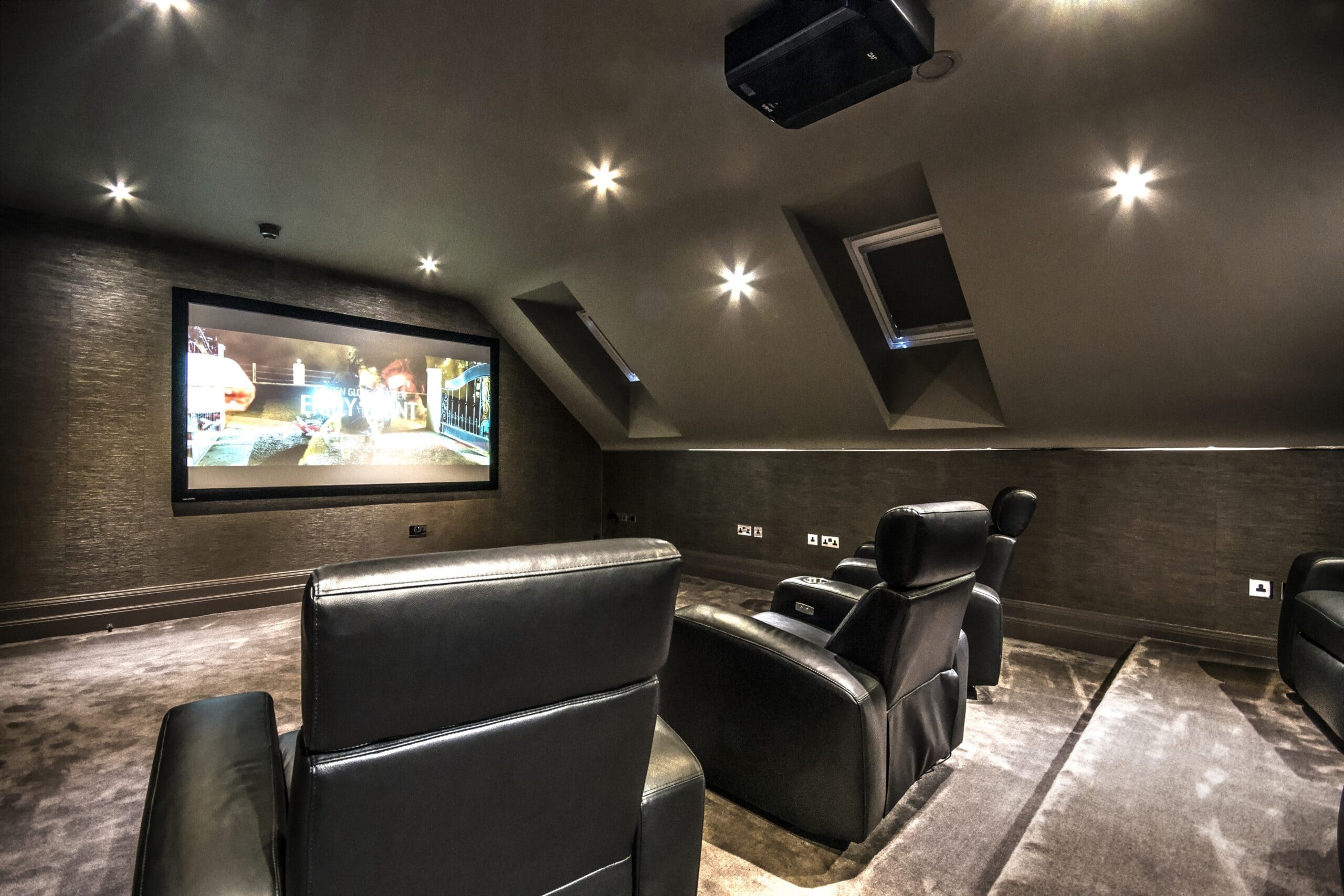


What makes a Meridian DSP loudspeaker different
In a conventional system, an amplifier sends power down a cable to passive speakers. Meridian turns that around. Its digital active loudspeakers have the processing and amplification inside the cabinet and receive music as a digital signal over Meridian's SpeakerLink connection. The crossover is handled in software, and Meridian tailors those filters to each arrangement of drive units, a technique it calls Bespoke Signal Mapping.
The current home range on meridian-audio.com falls into three groups:
- Freestanding speakers: the flagship DSP8000 XE, the sculpted DSP9, the Special Edition DSP7200 and DSP5200 (each also offered in an HC version), and the compact DSP3200 and DSP3300. Meridian suggests three DSP3300s as matched left, centre and right speakers for a smaller cinema.
- Architectural speakers: the DSP750 and DSP730 in-wall models, refreshed as 2026 Editions, which need a mounting depth of 100mm, and the DSW600 in-wall subwoofer, which reaches down to 24 Hz.
- 200 Series electronics: the 271 Digital Theatre Controller, the 218 Zone Controller, the 251 Powered Zone Controller, the 210 Streamer, the 258 eight-channel amplifier and the UHD121, which links a TV's HDMI eARC socket to Meridian speakers.
If you came to Meridian through a Range Rover, a Jaguar or an LG soundbar, those are separate automotive and licensing businesses. The home products above are the ones that matter for a house.
Why owners choose Meridian for a cinema or a whole house
Three things set Meridian apart once it is in a real home.
- One speaker family for every room. The same digital approach runs from a freestanding DSP9 in a living room to DSP750s behind a cinema screen, so a recording keeps its character as you move from room to room.
- Built for hidden installation. The 2026 Editions of the DSP750 and DSP730 use a sealed aluminium enclosure with a double baffle, which Meridian says keeps their sound consistent whatever the wall is made of. For speakers mounted under a screen, a feature called Image Elevation helps lift dialogue up towards the picture.
- Bass managed in software. Resonance Control uses the room's dimensions to reduce its main resonances, which Meridian notes are worse with in-wall speakers. The DSW600 can extend the bass of in-wall speakers in a music room or play the LFE channel in a cinema, alone or in multiples.
The 200 Series fills the gaps between those speakers. A 218 or 251 can create a high-resolution music zone in a kitchen or study, both act as Roon endpoints, and the 210 adds Spotify Connect, Bluetooth and UPnP streaming to any system with a SpeakerLink input.
Active speakers in the walls: planning a Meridian architectural system
- Depth and wall build. The DSP750 and DSP730 need only 100mm of depth, which suits a stud wall or a battened masonry wall, but each position still has to clear pipes, joists and insulation.
- Power and signal at every speaker. Each architectural speaker needs a mains supply and a SpeakerLink run, and the 2026 Editions add IR and RS-232 for system integration. Mark these on the electrical drawings, not just the AV ones.
- Centre channels under the screen. If the screen is not acoustically transparent, the centre speaker usually goes below it, which is the position Image Elevation is designed for. Our guide to home cinema room layout explains the trade-offs.
- Bass in the wall or in the room. Meridian describes a DSW600 paired with one of its architectural speakers as a full-range, two-box in-wall solution. A freestanding subwoofer gives more freedom to move it once the room is finished.
- Finishes. The 2026 Editions have magnet-attached grilles that can be painted to match the wall, which helps in a period house. Our guide to technology in listed and period homes covers the other constraints those buildings bring.
Changing a speaker position after plastering is expensive, so we would settle the drawings with the architect and interior designer before first fix.