AV processing integration and support by Art of Integration

Trinnov Control4 integration and room correction advice for Altitude owners in Surrey and London

Trinnov Audio is a French company, launched in 2003, that makes the Altitude range of home cinema processors around its Optimizer room correction. Art of Integration is a Control4 Platinum dealer in Surrey and London. We can connect an Altitude to Control4 using the free driver Trinnov points to, and advise owners on getting more from it.

Since 2012Showroom in Walton-on-Thames★ 5.0 on Google
Best for

Large dedicated cinemas with many speakers, more than one row of seats, or speaker positions the architecture will not allow to be ideal

Works with

Control4, Crestron, Savant, RTI and AMX through drivers Trinnov lists; Dante and AES67 audio networks on the Altitude CI

Where to see it

Trinnov's reseller finder on trinnov.com. For a reference point, our Walton-on-Thames cinema runs a Lyngdorf Audio 7.2.2 system

How we help

Control4 integration, network checks and advice on keeping, extending or replacing an existing Trinnov system

Official website: Trinnov (opens in a new tab)

trinnov control4trinnov control4trinnov control4
Overview
trinnov control4
01

Altitude CI, 16, 32 and 48ext: the Trinnov range explained

Trinnov started as a research project. Its founders met at IRCAM, the Paris institute for music and acoustics research, and worked on high-resolution 3D sound from 2000 before launching Trinnov Audio in 2003. The same technology runs in recording studios and commercial cinemas, and it shows in the home processors: they run on a single multi-core Intel platform with Trinnov's own operating system instead of banks of fixed DSP chips, so new features can arrive as software updates.

The home cinema line-up currently listed on trinnov.com is:

  • Altitude CI, the newest model, in a 2U chassis with a five-inch touchscreen on the front. It is licensed from 8 to 32 outputs in steps of two, and adds native Dante and AES67 audio over the network alongside analogue and AES/EBU outputs.
  • Altitude 16, for systems that will never need more than 20 channels, with Dolby Atmos, DTS:X Pro and Auro-3D decoding.
  • Altitude 32, which Trinnov treats as its reference processor, decoding Dolby Atmos across up to 34 discrete channels.
  • Altitude 48ext, for the rare room that needs more than 32 channels, with up to 48 decoded outputs.

Trinnov also makes the Amplitude 8 and Amplitude 16 power amplifiers to drive them.

trinnov control4
02

Optimizer, WaveForming and Remapping: what Trinnov room correction does

Most people choose Trinnov for what happens after the speakers are fitted. Three pieces of software do that work:

  • Optimizer. Trinnov's 3D measurement microphone, designed and individually calibrated by Trinnov, captures every speaker across the seating area in a few seconds. The Optimizer then corrects timing and phase as well as level. Trinnov first showed it to acousticians and sound engineers in 2005, and it sits at the heart of every processor in the range.
  • Remapping. Because the microphone records where each speaker actually sits in three dimensions, the processor can compare that with where the soundtrack expects it to be. A centre speaker that has to sit below the screen, or a ceiling speaker moved to clear a steel beam or an air-conditioning duct, can still place sound where the film's mixer intended.
  • WaveForming. Room modes make bass boom at one seat and thin out at the next. WaveForming drives several subwoofers with individual signals to control how bass energy travels through the room. It works from two front subwoofers, and Trinnov says front and rear subwoofers unlock its full range. It runs on the Altitude CI, 16 and 32.

For a cinema with two or three rows, that last point matters most. Trinnov quotes seat-to-seat bass consistency down to half a decibel up to 100 Hz in a WaveForming room.

trinnov control4
03

Channel count, licences and rack space: planning an Altitude

The biggest Trinnov decisions are taken long before anyone sets up a microphone.

  • Channels now and later. A 7.1.4 room needs 12 outputs and a 9.4.6 room needs 19. The Altitude CI is bought with a licensed output count and upgraded two channels at a time, with licences installed through the Trinnov app once they are assigned to the unit. The Altitude 16 stops at 20 channels, so a room likely to grow beyond that points to the CI or the Altitude 32.
  • Subwoofer count. Every extra subwoofer for WaveForming needs its own amplifier channel and a place in a wall, riser or floor, which makes it a building decision as much as an audio one.
  • Speaker positions. Remapping can rescue an awkward position, but it is a correction, not a reason to skip the layout. Our guide to Dolby Atmos speaker layouts sets out the standard positions.
  • Treatment and isolation. Trinnov corrects what reaches the seats, but it cannot stop sound escaping to the room above. Our guide to acoustic treatment versus soundproofing explains where each belongs.
  • Heat. An Altitude CI gives off up to 480 BTU an hour at full load, so a closed cupboard needs planned ventilation.

Our approach

How we would approach Trinnov in your home

Trinnov sells its processors through resellers listed on trinnov.com, and that network looks after the processor itself, its channel licences and any warranty question. Our part is everything the processor has to live with:

  • Speaker and subwoofer plan first. Trinnov publishes a loudspeaker position guide and WaveForming subwoofer placement guidelines. We would read them against the room drawings before the seating, screen wall and joinery are fixed, because a subwoofer position is far easier to move on paper than in a finished wall.
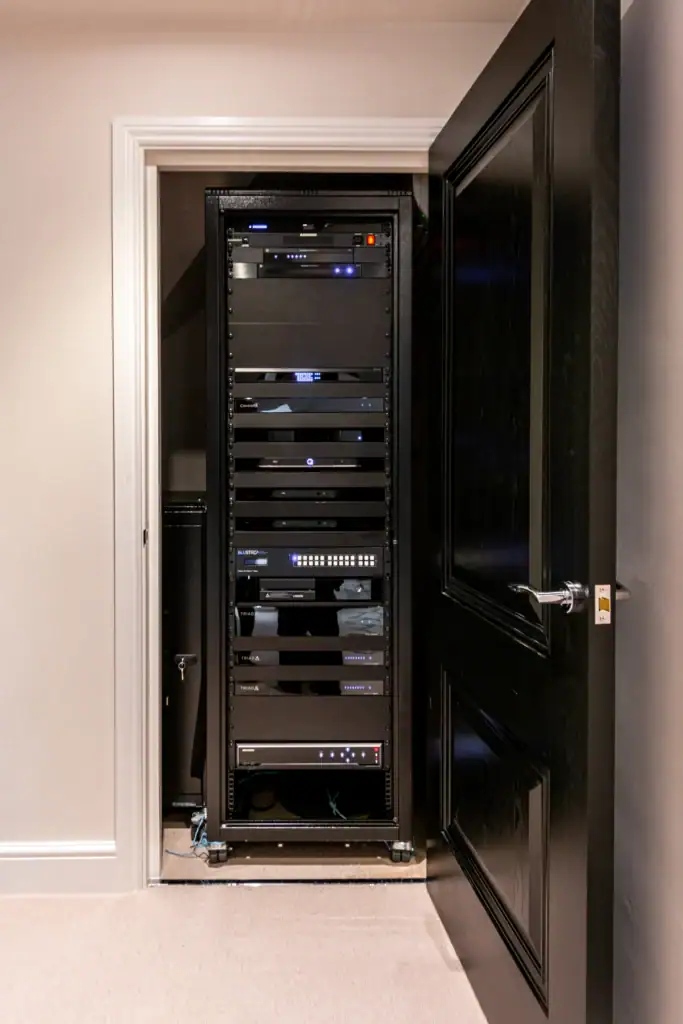
  • Rack and network. The Altitude CI has three gigabit network ports and can run as an integrated switch or on isolated or redundant paths. We would plan the switch, cabling and rack cooling around it as part of our data and Wi-Fi network design.
  • Control. On a Control4 smart home the processor becomes one more device in the cinema's scenes, as set out below.
  • A clear handover. Owners should know which settings live in the Trinnov app and which live in Control4, so a change in one does not quietly undo the other.

The rest of the room, from screen size to seat spacing, follows our home cinema design process.

trinnov control4
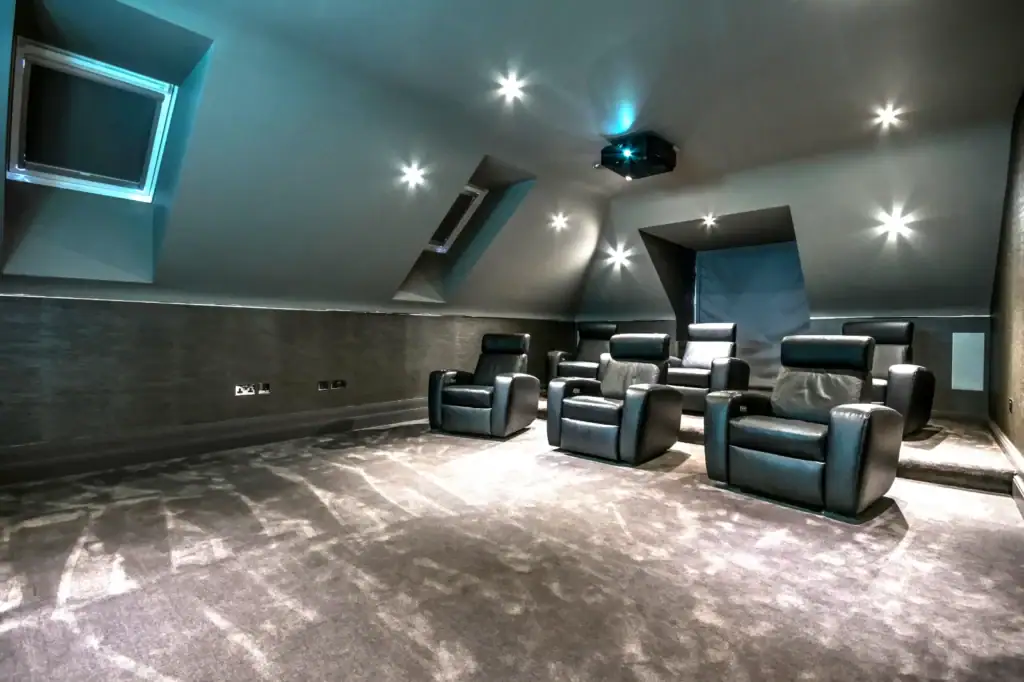
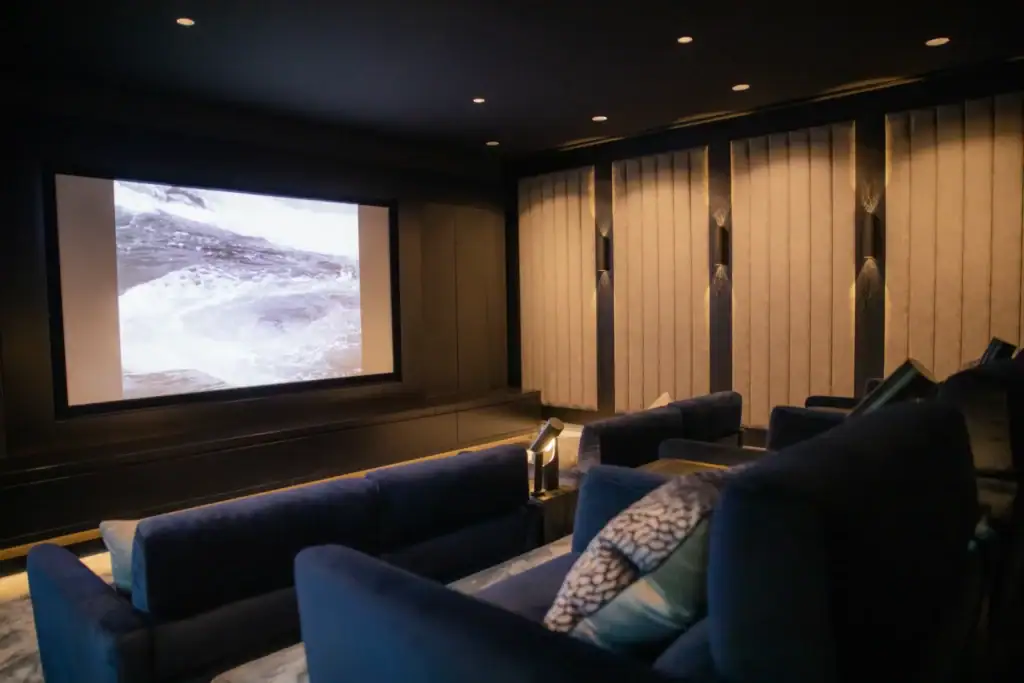
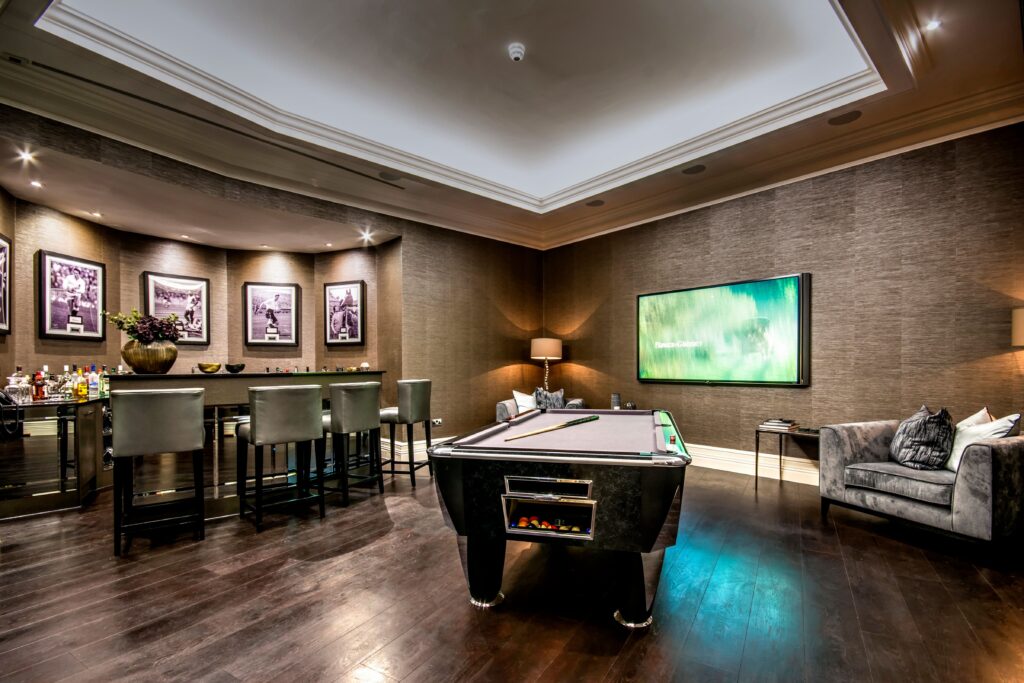
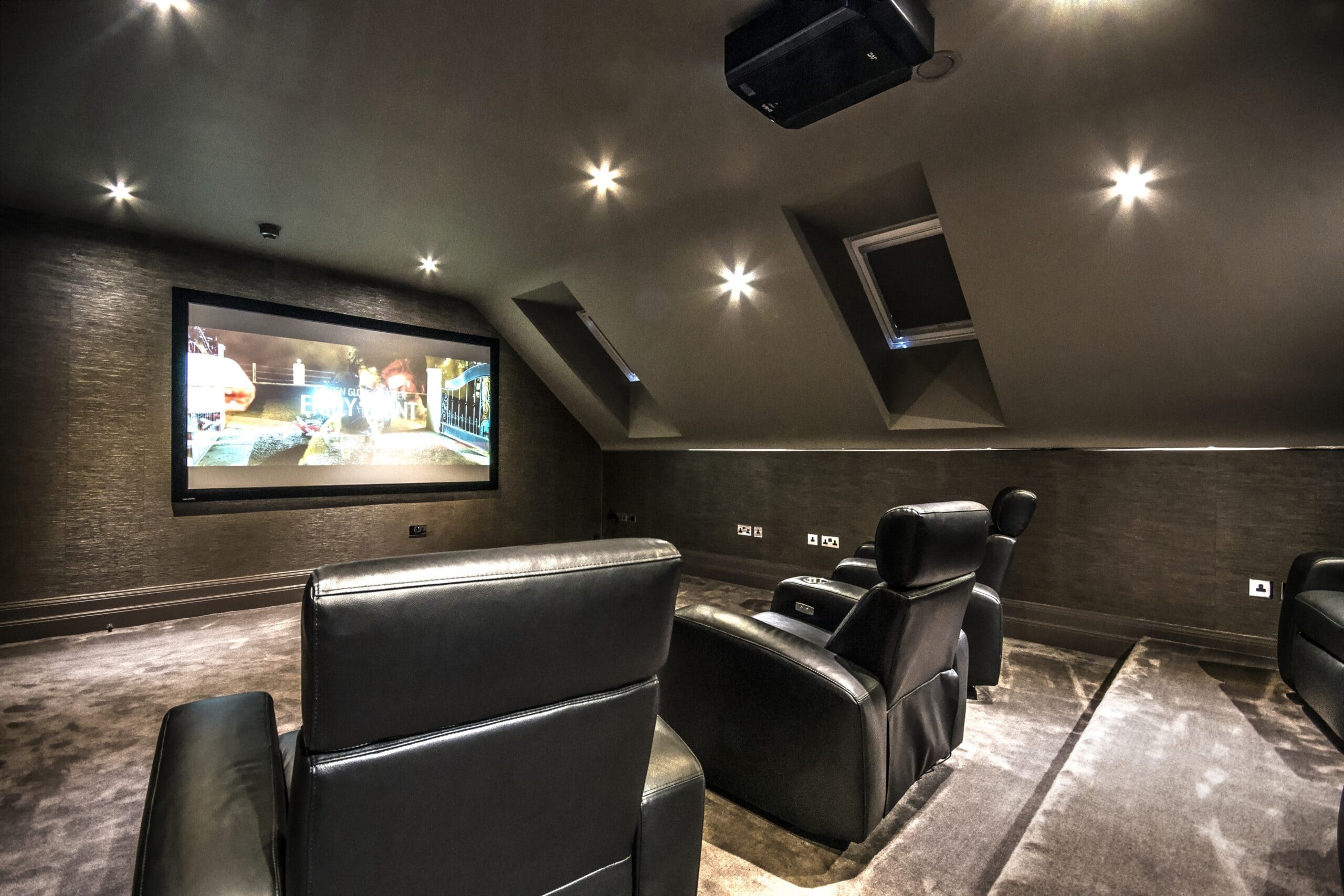
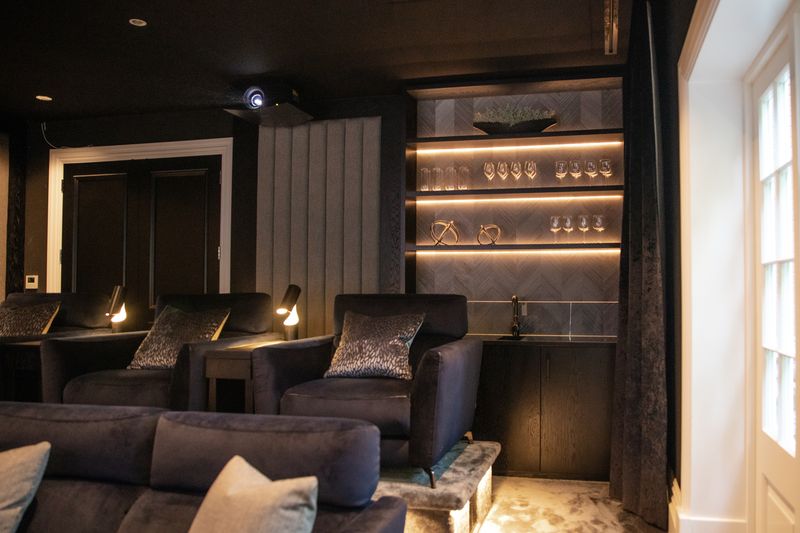
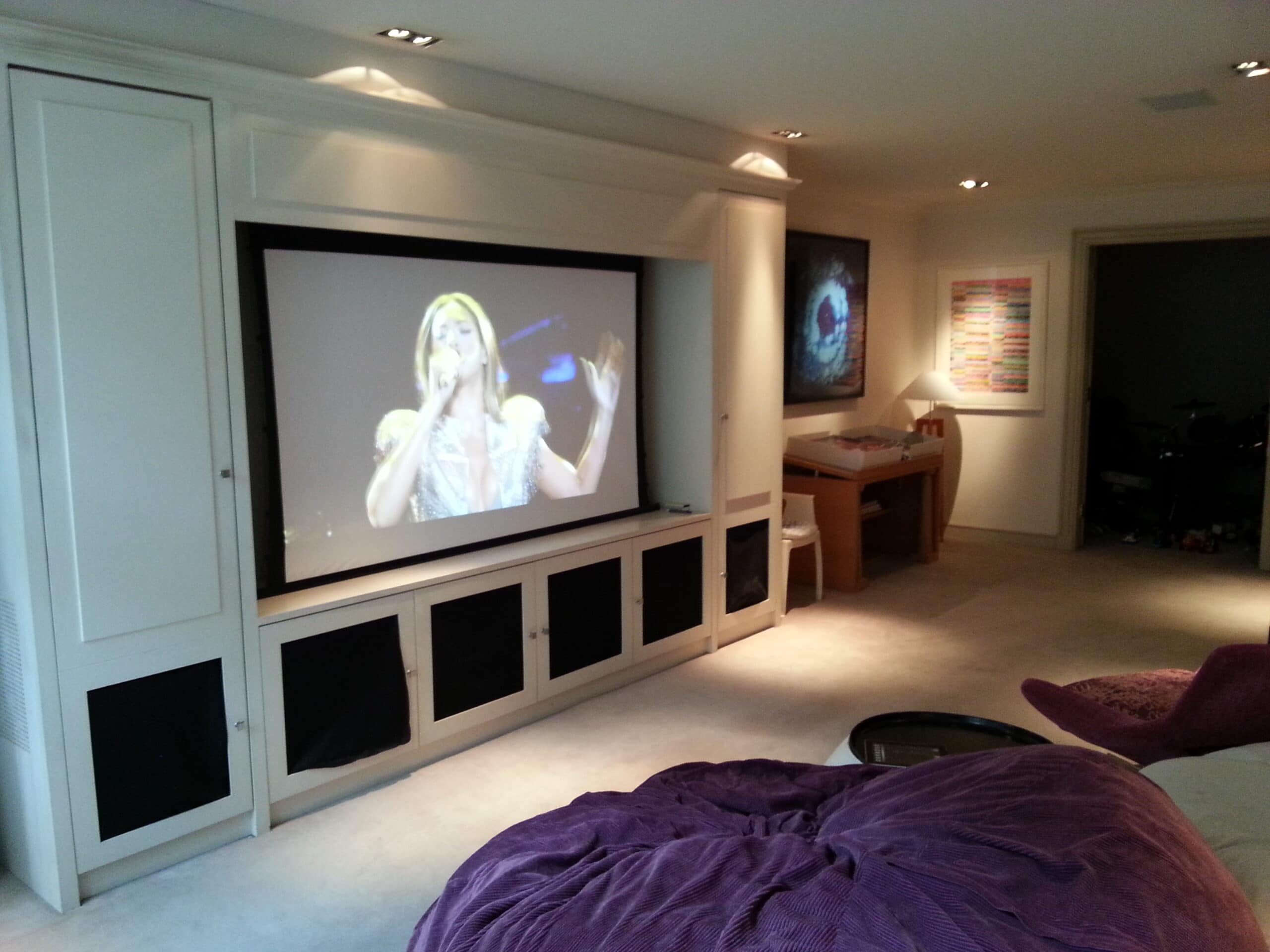
From our portfolio, not a Trinnov installation
Integration

Trinnov and Control4: the driver and the scenes it allows

Trinnov lists Control4 among the control drivers for the Altitude CI, next to Crestron, Savant, RTI, AMX and others. Its downloads page explains that the Control4 driver is written by Janus Technology, a specialist driver developer, and is free to download after registering. The processors also accept IP, RS-232 and infrared control, and Trinnov publishes its Altitude control protocol.

With the driver loaded, Control4 can treat the processor as part of the room:

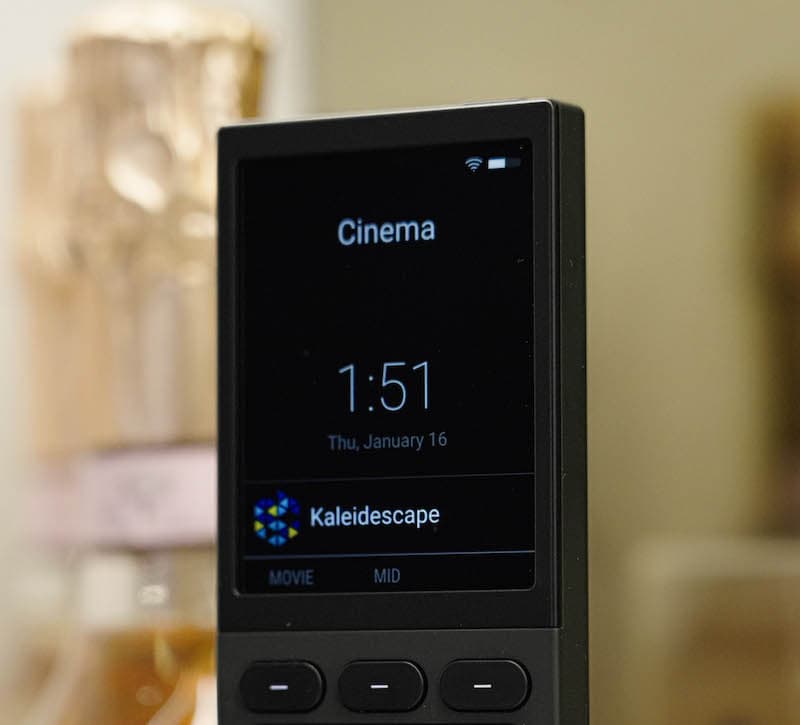
  • a Feature film button wakes the projector and the Altitude, selects the film player, recalls the cinema preset and takes the Lutron HomeWorks lighting down to step lights only;
  • a Late night button recalls a second preset set up for lower listening levels, so dialogue stays clear without the bass reaching the bedrooms;
  • a Two-channel button selects a stereo preset for music and brings the lights up slightly;
  • the Off command puts the processor into standby with everything else, instead of leaving it running overnight.

Trinnov's mobile app also handles volume, input and presets, but in a Control4 room one remote should stay in charge.

Already own Trinnov?

Already have a Trinnov processor? Where we can help

If you own an Altitude, whoever fitted it, talk to us about the system around it:

  • adding the Control4 driver and building film, music and late-night scenes so the processor follows the rest of the house;
  • tracing dropouts or slow responses back to the network, which matters more on an Altitude CI carrying audio over Dante;
  • advice on when a fresh calibration is due, for example after new seating, a new screen, added height speakers or a change of layout, and what has changed since the last one;
  • deciding whether to keep the processor, add channels or subwoofers, or move it to a new room or house;
  • linking Lutron lighting and blinds to the cinema scenes.

Our takeover and maintenance service covers the control and network side of systems another company installed. Channel licences, hardware faults and warranty work stay with Trinnov and its resellers.

Ask about your system Call 020 3397 9888

We also look after systems installed by other companies. See takeover and maintenance.

Compare

Trinnov vs Lyngdorf, Anthem or Marantz: when is an Altitude worth it?

Many rooms do not need a Trinnov. Our pages on Steinway Lyngdorf and Lyngdorf Audio and Anthem and Marantz cover strong alternatives. The differences are scale and correction:

  • Channel count. The Lyngdorf MP-60 decodes up to 16 channels and the Anthem AVM 70 offers 15.2. Trinnov begins where those stop: the Altitude 32 decodes up to 34 Atmos channels and the Altitude CI scales to 32 outputs.
  • Bass across rows. WaveForming is Trinnov's own technology. If a room has several rows and even bass between them is the priority, it is the clearest reason to choose an Altitude.
  • Architecture that fights the layout. Remapping helps where doors, windows or beams push speakers away from their ideal places.

For a single-row media room with a 7.1.4 layout, a Lyngdorf or Anthem processor will often do the job well. A large dedicated cinema is where an Altitude is easiest to justify.

trinnov control4
Our showroom

See and hear it before you decide

Visit our demonstration cinema and smart home showroom in Walton-on-Thames and try the technology for yourself.

“Fantastic service from Andy and Adrian, who installed a cinema room and full Sonos sound integration throughout my home. I would definitely recommend them! Their communication and professionalism were excellent from start to finish, and the cinema room they created was outstanding.”

C
Chris KiplingGoogle review

“We engaged AOI for the renovation of our period property in West London. A key requirement was a discreet, high-performance cinema arrangement that would blend seamlessly with the original character of the house, and they delivered exactly that.”

F
Fraser RobsonWest London

“We've worked with the team at Art of Integration on several high-end residential projects, where they've delivered Control4 smart home systems. From the initial design through to client handover and ongoing support, their attention to detail and level of service has been outstanding.”

A
Amanda HollisTrade partner
Questions

Trinnov: your questions answered

Anything else, call us on 020 3397 9888.

Does Trinnov work with Control4?

Yes. Trinnov lists Control4 among the control drivers for its Altitude processors. Its downloads page says the Control4 driver is developed by Janus Technology and is free once you register on their site. The processor also accepts IP, RS-232 and infrared control. As a Control4 Platinum dealer we can use the driver to put the Altitude into the room's film and music scenes alongside Lutron lighting.

What is the difference between the Trinnov Altitude 16 and Altitude 32?

Mainly channel count and expansion. The Altitude 16 renders up to 20 discrete channels and suits rooms that will not grow beyond that. The Altitude 32 decodes Dolby Atmos across up to 34 channels and has a modular design that Trinnov says can expand to a maximum of 64 outputs. Both run the same Optimizer software and support WaveForming.

How does Trinnov room correction work?

A 3D measurement microphone, made and calibrated by Trinnov, measures every speaker from several points across the seating area. The Optimizer then corrects level, timing and phase for each channel, and Remapping uses the measured speaker positions to place sounds where the soundtrack intends. WaveForming adds control over bass when the room has several subwoofers.

How many subwoofers does Trinnov WaveForming need?

Trinnov says WaveForming can start with two subwoofers at the front of the room, and that subwoofers on both the front and rear walls unlock its full capability. The exact number and positions depend on the room's dimensions and the result you want, and Trinnov publishes placement guidelines and online design tools for planning it.

When does a Trinnov system need calibrating again?

Whenever the room changes in a way that affects sound: new seats or a new seating layout, a different screen, added or moved speakers, new curtains or acoustic panels, or extra subwoofers. The original measurements describe the old room. We can help you work out whether a change is large enough to need a new calibration and what has changed since the last one.

Is Trinnov available in the UK?

Yes. Trinnov is a French company and says it is represented in 70 countries. Its website has a reseller finder for locating UK stockists. For owners in Surrey and London, we can help with the Control4, lighting and network side of a Trinnov cinema, whoever supplied the processor.

Get in touch

Talk to us about Trinnov

Planning a new room, or need help with a Trinnov system you already have? Tell us a little about it and a designer will come back to you.

  1. We call you backA quick conversation about your home, the room and your timings.
  2. Design consultationAt your home or in our Walton-on-Thames showroom, where you can see and hear the technology.
  3. Design and proposalA tailored design, with 3D visuals before you commit.

Request a free consultation

It takes less than a minute.

We will get back to you as soon as possible. We use your details to reply to your enquiry and keep them as described in our Privacy Policy.

Trinnov is a trademark of its owner. This page describes how we can integrate and support these products. Project photos are our own.