
How Steinway Lyngdorf and Lyngdorf Audio fit together
The two names come from one company. Steinway Lyngdorf (SL Audio A/S) grew out of the work of Danish audio entrepreneur Peter Lyngdorf, and today it runs two separate product lines:
- Steinway Lyngdorf systems are made in collaboration with Steinway & Sons, the piano maker, and are designed as complete systems. The processor, amplifiers and Steinway & Sons loudspeakers are linked by the company's own digital connection, and the chosen speakers are programmed into the processor, so speaker and amplifier are matched before anything is switched on.
- Lyngdorf Audio covers the TDAI stereo amplifiers and the MP multichannel processors. They share the same core technology but are built to connect to other makers' speakers, projectors and sources.
The thread running through both is RoomPerfect, the room correction system Peter Lyngdorf's team developed, which is built into TDAI amplifiers, MP processors and Steinway Lyngdorf systems alike.
What RoomPerfect does in a real room
Every room changes how speakers sound. Parallel walls, a glass wall onto the garden or a sofa pushed against the back wall can make bass boom at one seat and disappear at the next. Lyngdorf points out that most correction systems measure only at the main seat and flatten what they hear there. RoomPerfect works differently:
- it measures at the main listening position and then at further points around the room, using Lyngdorf's own calibrated microphone and an extended test signal that copes with background noise;
- it separates the room's effect from the speaker's own behaviour, and corrects only the room's faults in the digital domain;
- it aims at a target that keeps the speaker's character rather than forcing a perfectly flat response;
- it also improves how subwoofers blend with the main speakers.
For anyone who listens to as much music as they watch films, that last design choice is the important one. A cinema calibration that leaves a stereo recording sounding thin defeats the point of having a Lyngdorf system, and RoomPerfect is built to avoid it. It can be run and adjusted from the My Lyngdorf app or the remote, without a laptop.
Room shape, seating and correction: planning a Lyngdorf room
RoomPerfect is powerful, but it works best on a room that has been laid out well first. On a Lyngdorf project we look at four things before anyone talks about calibration:
- Proportions. A square room, or one with two matching dimensions, stacks its bass problems at the same notes. We place seats and subwoofers away from the worst spots so the correction has less to do.
- Seats and the sweet spot. A cinema row and a stereo listening chair rarely want exactly the same place. We decide early which matters more, then position speakers so both work. Our guide to home cinema room layout shows the trade-offs.
- Treatment versus correction. RoomPerfect corrects the sound that reaches your ears, but it cannot stop bass travelling to the bedroom above; that needs building work. Our guide to acoustic treatment and soundproofing explains the difference.
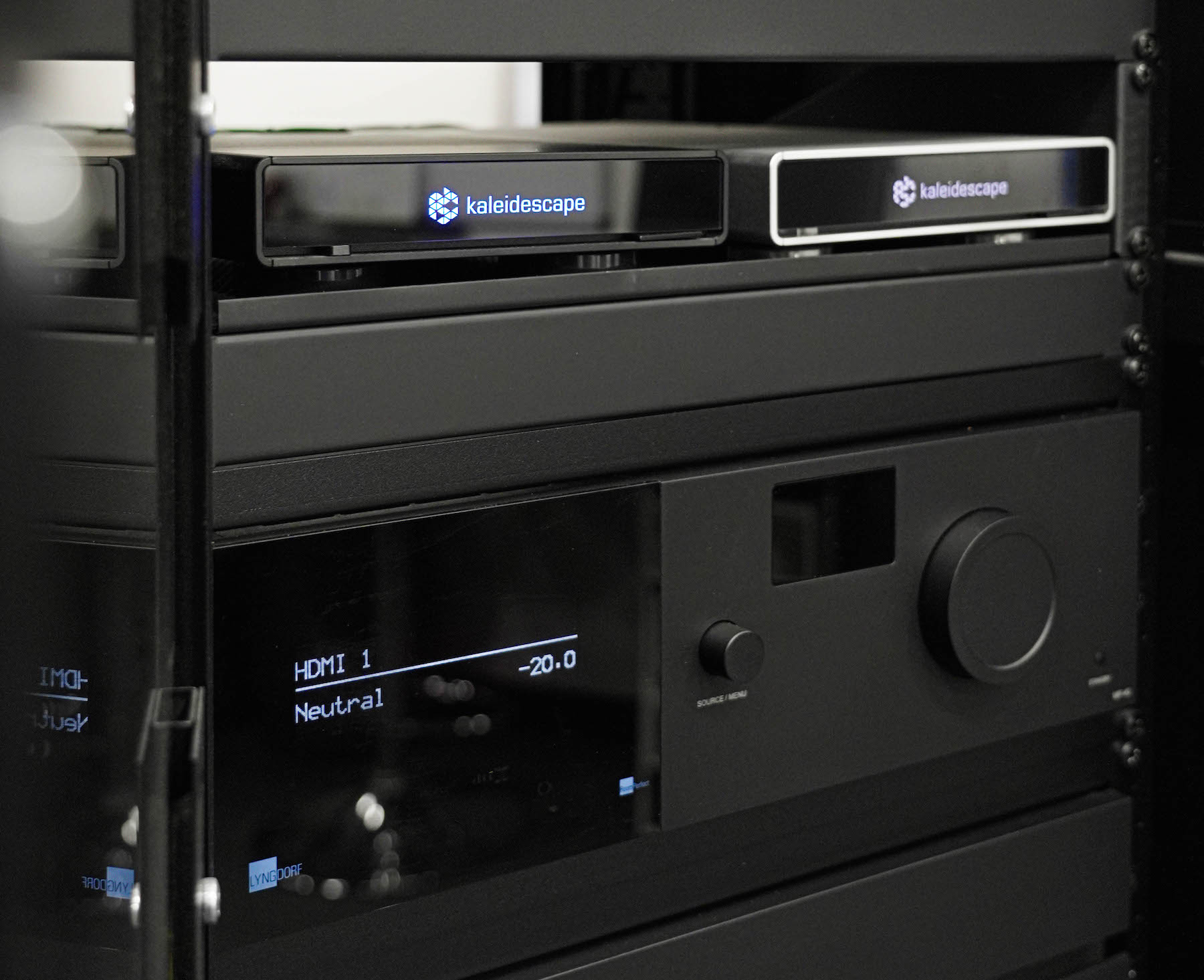
- Where the electronics live. Steinway Lyngdorf processors and amplifiers talk over the company's own digital link, so the rack position and cable routes are part of the first drawing, not an afterthought.
Lyngdorf itself says its loudspeakers are designed to work with a room's acoustics rather than against them, which is why we treat the room plan and the correction as one job.