Altitude CI, 16, 32 and 48ext: the Trinnov range explained
Trinnov started as a research project. Its founders met at IRCAM, the Paris institute for music and acoustics research, and worked on high-resolution 3D sound from 2000 before launching Trinnov Audio in 2003. The same technology runs in recording studios and commercial cinemas, and it shows in the home processors: they run on a single multi-core Intel platform with Trinnov's own operating system instead of banks of fixed DSP chips, so new features can arrive as software updates.
The home cinema line-up currently listed on trinnov.com is:
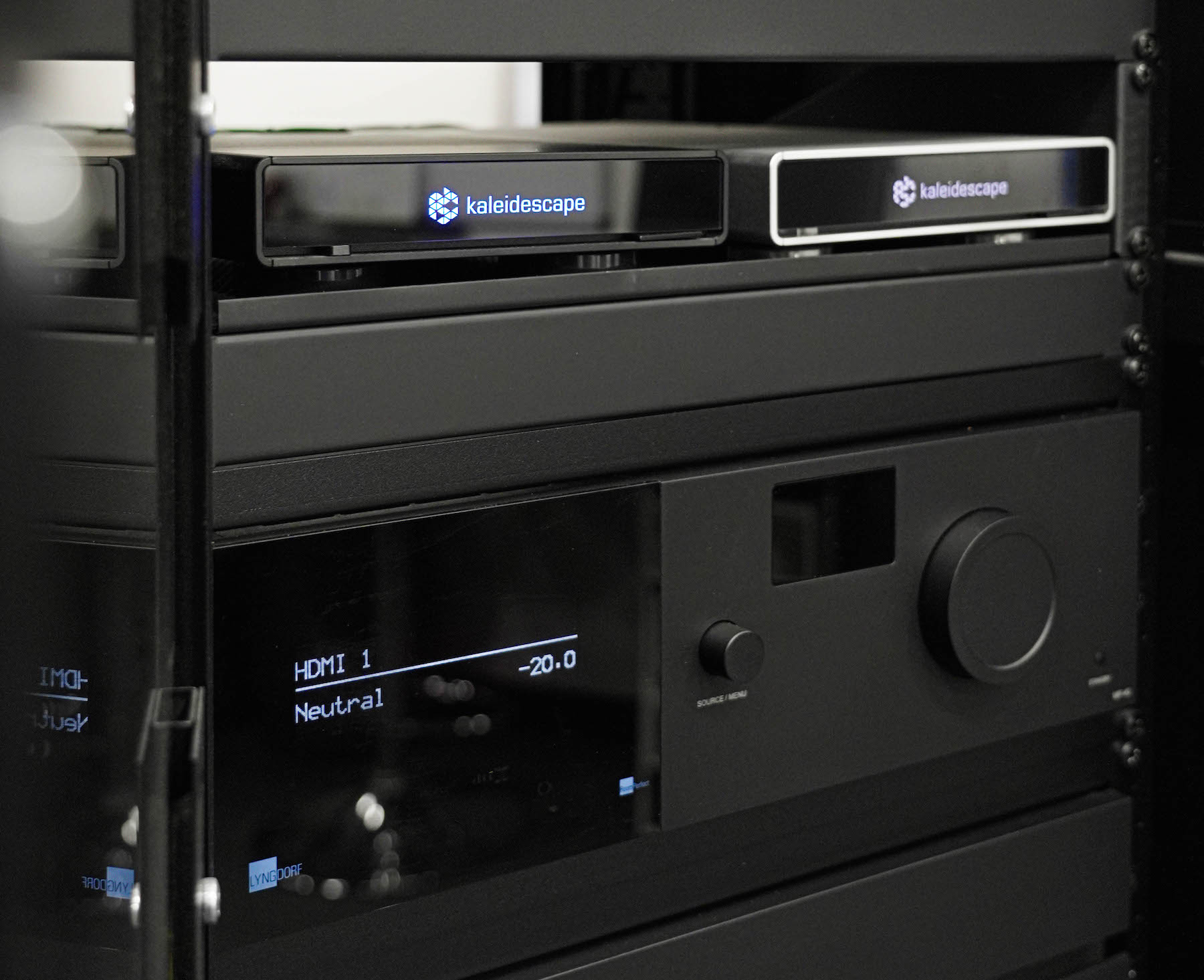
- Altitude CI, the newest model, in a 2U chassis with a five-inch touchscreen on the front. It is licensed from 8 to 32 outputs in steps of two, and adds native Dante and AES67 audio over the network alongside analogue and AES/EBU outputs.
- Altitude 16, for systems that will never need more than 20 channels, with Dolby Atmos, DTS:X Pro and Auro-3D decoding.
- Altitude 32, which Trinnov treats as its reference processor, decoding Dolby Atmos across up to 34 discrete channels.
- Altitude 48ext, for the rare room that needs more than 32 channels, with up to 48 decoded outputs.
Trinnov also makes the Amplitude 8 and Amplitude 16 power amplifiers to drive them.
Optimizer, WaveForming and Remapping: what Trinnov room correction does
Most people choose Trinnov for what happens after the speakers are fitted. Three pieces of software do that work:
- Optimizer. Trinnov's 3D measurement microphone, designed and individually calibrated by Trinnov, captures every speaker across the seating area in a few seconds. The Optimizer then corrects timing and phase as well as level. Trinnov first showed it to acousticians and sound engineers in 2005, and it sits at the heart of every processor in the range.
- Remapping. Because the microphone records where each speaker actually sits in three dimensions, the processor can compare that with where the soundtrack expects it to be. A centre speaker that has to sit below the screen, or a ceiling speaker moved to clear a steel beam or an air-conditioning duct, can still place sound where the film's mixer intended.
- WaveForming. Room modes make bass boom at one seat and thin out at the next. WaveForming drives several subwoofers with individual signals to control how bass energy travels through the room. It works from two front subwoofers, and Trinnov says front and rear subwoofers unlock its full range. It runs on the Altitude CI, 16 and 32.
For a cinema with two or three rows, that last point matters most. Trinnov quotes seat-to-seat bass consistency down to half a decibel up to 100 Hz in a WaveForming room.
Channel count, licences and rack space: planning an Altitude
The biggest Trinnov decisions are taken long before anyone sets up a microphone.
- Channels now and later. A 7.1.4 room needs 12 outputs and a 9.4.6 room needs 19. The Altitude CI is bought with a licensed output count and upgraded two channels at a time, with licences installed through the Trinnov app once they are assigned to the unit. The Altitude 16 stops at 20 channels, so a room likely to grow beyond that points to the CI or the Altitude 32.
- Subwoofer count. Every extra subwoofer for WaveForming needs its own amplifier channel and a place in a wall, riser or floor, which makes it a building decision as much as an audio one.
- Speaker positions. Remapping can rescue an awkward position, but it is a correction, not a reason to skip the layout. Our guide to Dolby Atmos speaker layouts sets out the standard positions.
- Treatment and isolation. Trinnov corrects what reaches the seats, but it cannot stop sound escaping to the room above. Our guide to acoustic treatment versus soundproofing explains where each belongs.
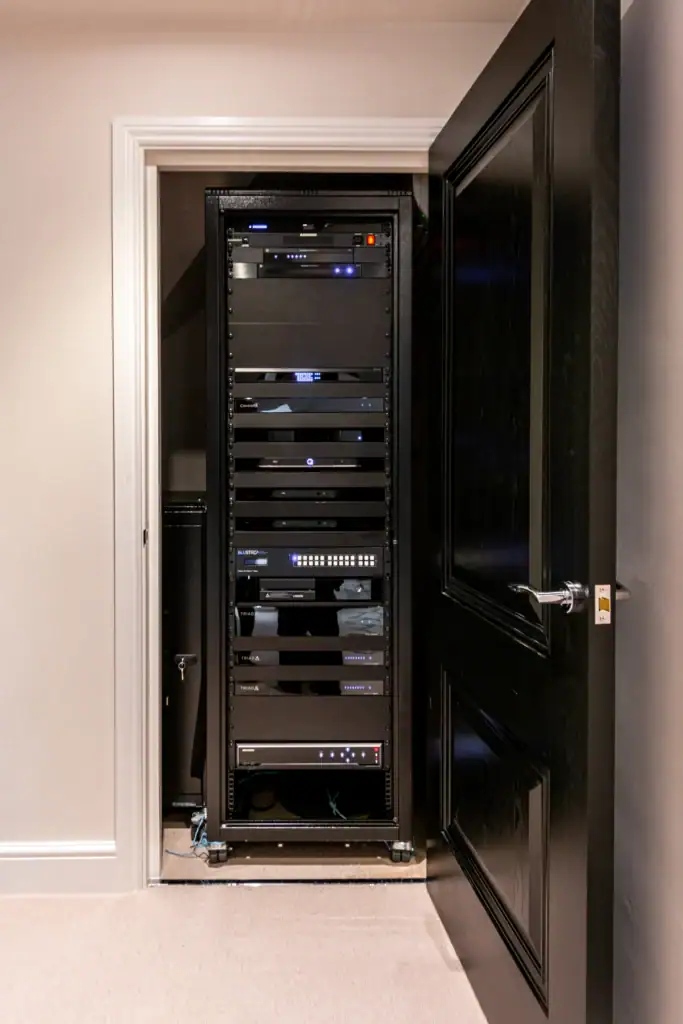
- Heat. An Altitude CI gives off up to 480 BTU an hour at full load, so a closed cupboard needs planned ventilation.