


Denon's AV receiver range, from AVC-X4800H to AVC-A1H
Denon, whose own history runs back to 1910, has built its home cinema business on the AV receiver: one chassis that switches the video, handles Dolby Atmos, Auro-3D, IMAX Enhanced and DTS:X Pro, measures the room and drives the speakers. The UK range climbs in channel count. The figures that matter for a cinema are how many speakers the receiver can power itself, how many it can process, and how many subwoofers it can manage separately:
- AVC-X4800H: nine amplified channels rated at 125 watts each, processing for 11.4 channels, and four independent subwoofer outputs.
- AVC-X6800H: eleven amplified channels, 13.4 processing channels and four independent subwoofers, which Denon positions for dedicated cinema rooms.
- AVC-A10H: thirteen amplified channels and four subwoofer outputs, one step below the flagship.
- AVC-A1H: the flagship, with fifteen amplified channels, 15.4 processing and support for layouts up to 9.4.6, handcrafted at Denon's Shirakawa Audio Works in Japan.
Below these sit the AVC-X3800H, the newer 9.4-channel AVC-X3900H, and the AVR-X and AVR-S ranges for smaller rooms. The X4800H, X6800H and A1H all include Audyssey MultEQ XT32 room correction, and Denon offers Dirac Live as a paid upgrade.
Why a Denon receiver suits a mid-size Atmos room
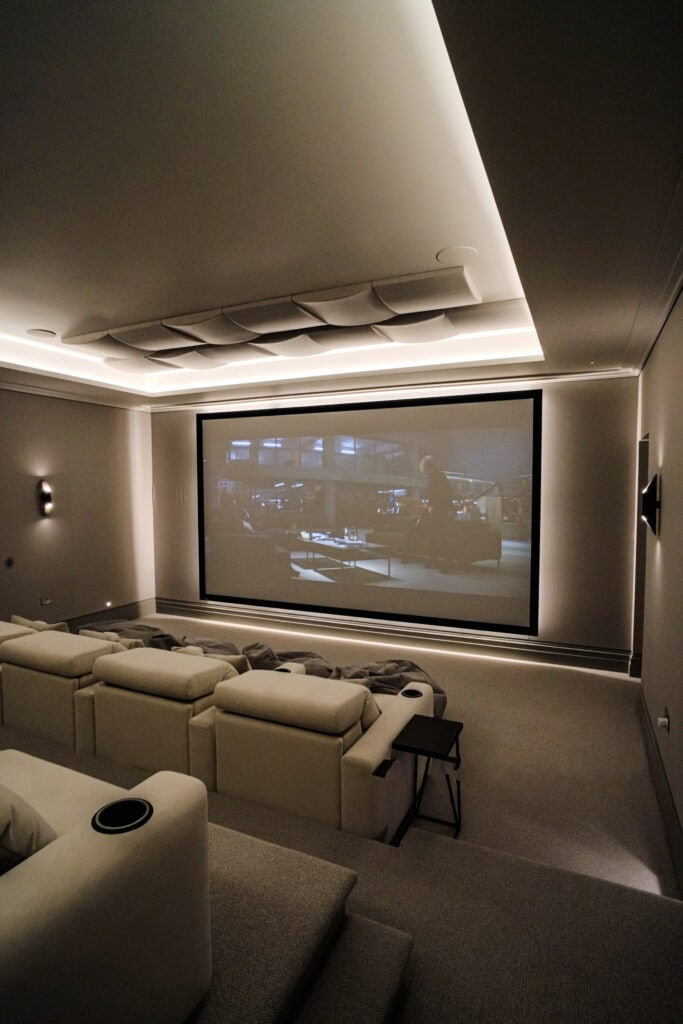
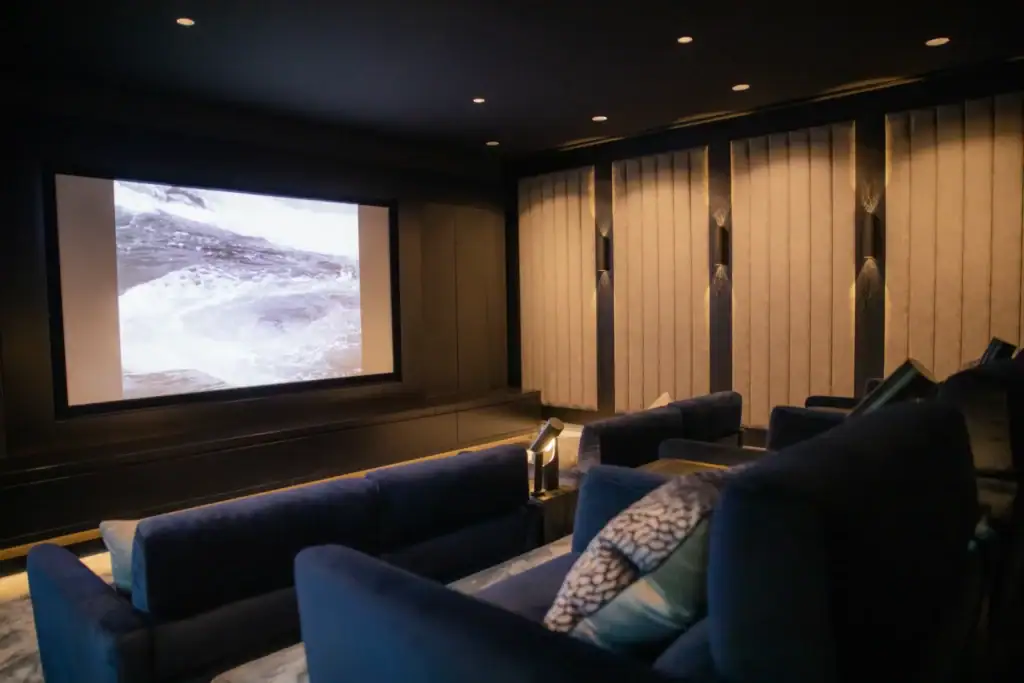
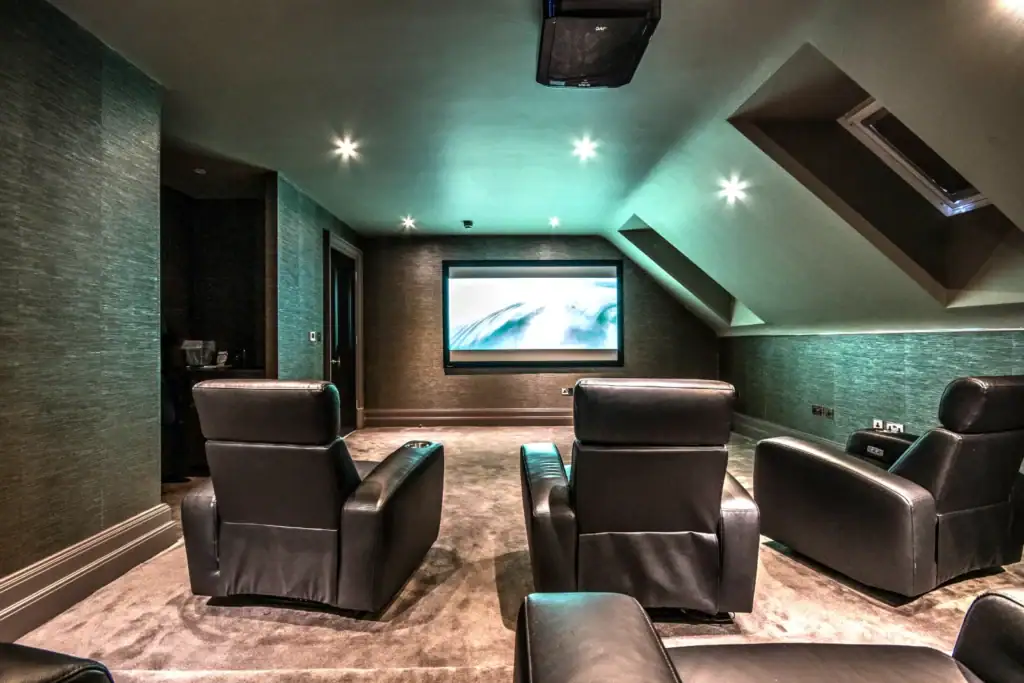
A mid-size cinema with one or two rows of seats is usually well served by a 5.2.4, 5.2.2 or 7.2.2 Dolby Atmos layout. That is nine speaker channels or fewer, which an AVC-X4800H can power from its own amplifiers. The whole system then lives in one box: one unit to ventilate, one set of connections to label, one calibration to run and one device for the control system to talk to.
Four independent subwoofer outputs on the X4800H and above matter more than the headline wattage. With two rows of seats, bass varies a lot from one chair to the next, and several subwoofers positioned and tuned separately even it out across the room. Audyssey MultEQ XT32 is included, and Dirac Live and Dirac Live Bass Control can be added with licences later without changing hardware.
Finally, the receiver plays music as well as films. HEOS is built in, alongside AirPlay 2 and Spotify Connect, so the cinema system can stream from the same apps as the rest of the house.
Is a Denon receiver enough for your room?
Count speakers before comparing models. Take 7.2.4, a common Atmos layout: seven ear-level speakers, two subwoofers and four overhead, so eleven amplified channels. Using Denon's own figures, and assuming a mid-size room with speakers of typical sensitivity:
- Up to nine speakers (5.2.4 or 7.2.2): an AVC-X4800H powers everything itself.
- Eleven speakers (7.2.4): the X4800H can process them, but two channels need a small external stereo amplifier. Alternatively, the AVC-X6800H amplifies all eleven.
- Fifteen speakers (up to 9.4.6): only the AVC-A1H amplifies that many in one chassis.
- More bass than one subwoofer can give: plan for the four independent subwoofer outputs from the X4800H upwards.
- Heat and space: a receiver doing all the amplification runs warm, so the equipment cupboard needs airflow.
A receiver stops being the right answer when the room is large, the speakers are demanding, or the layout runs past fifteen channels. That is where separate processors and power amplifiers come in. Each number in a layout name is explained in how Dolby Atmos layouts are numbered.