Cinema audio designed and installed by Art of Integration

KEF home cinema speakers, designed and installed in Surrey and London

KEF is a British loudspeaker company, founded in 1961 in Maidstone, Kent, best known for its Uni-Q driver, which builds the tweeter into the middle of the main cone. We design and install KEF in-wall and in-ceiling speakers in home cinemas, including KEF THX packages in Oxshott and Esher and a KEF Ci basement cinema in Weybridge.

Since 2012Showroom in Walton-on-Thames★ 5.0 on Google
Best for

Dedicated cinemas and media rooms where every speaker must sit in the walls and ceiling yet still fill the room

Works with

Denon and Marantz AV electronics, Control4 film and sport modes, Lutron lighting

Where to see it

Our Oxshott, Esher and Weybridge case studies (the showroom cinema uses a different speaker system)

Our experience

A KEF THX 7.2.2 cinema in Oxshott, a KEF THX 5.2.2 entertainment room in Esher and a KEF Ci basement cinema in Weybridge

Official website: KEF (opens in a new tab)

kef home cinemakef home cinemakef home cinema
Overview
kef home cinema
01

KEF in-wall and in-ceiling speakers: the Ci range

KEF has created its speakers from a UK home since 1961. Founder Raymond Cooke started out in a Nissen hut on the site of Kent Engineering and Foundry in Maidstone, which gave the company its initials. Its best-known invention is Uni-Q, patented in 1988. Rather than stacking a tweeter above a woofer, KEF nests the tweeter inside the larger cone, so treble and midrange leave the speaker from the same spot and the sweet spot stretches well beyond the middle seat.

KEF sells its built-in speakers under the Ci name. The current UK range covers:

  • Ci Q Series and Ci R Series in-wall and in-ceiling models, with several R Series models carrying THX in their names;
  • Ci Reference, the flagship custom-install range;
  • Ci-T Series, a low-profile range needing only 36mm of mounting depth;
  • Flush Mount models designed to sit level with the wall or ceiling, plus Dual Stereo units for small rooms;
  • installed subwoofers and the IP65-rated Ventura outdoor series.
kef home cinemaPhoto: david falkner from Birmingham, England, CC BY 2.0, via Wikimedia Commons
02

Why KEF suits a Dolby Atmos cinema room

Built-in speakers usually trade some sound quality for tidiness. KEF's answer has been to put its larger Ci models through THX certification. Its UK site describes the Extreme Home Theatre system as THX certified in the Dominus and Ultra performance classes, and both the Oxshott and Esher rooms we installed use KEF THX packages.

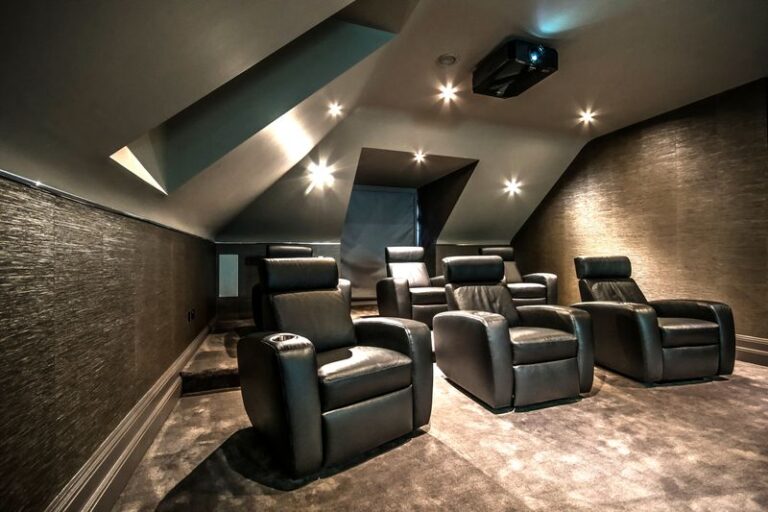
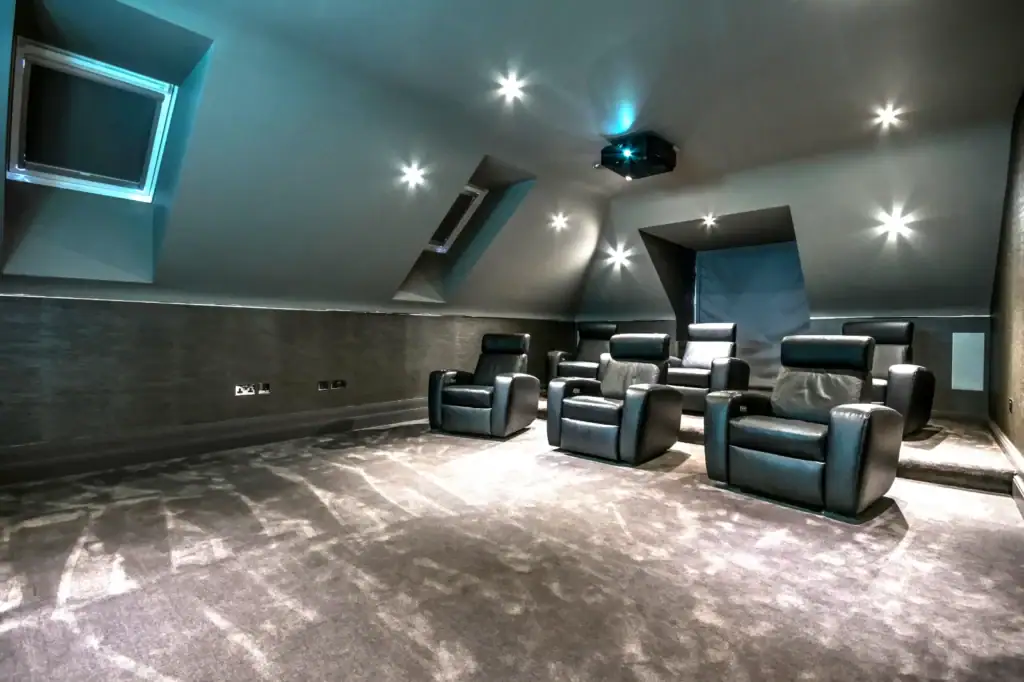
Uni-Q earns its keep overhead. A Dolby Atmos ceiling speaker reaches the audience at an angle, and a driver that behaves as one point source keeps its tone steadier along a row of seats than a separate tweeter and woofer. That makes KEF in-ceiling speakers a strong choice where there are two rows of seating, as in the Oxshott cinema with its six recliners in two rows.

For clients who already own KEF hi-fi, a KEF cinema also keeps one driver philosophy throughout the house, from the stereo in the drawing room to the height channels downstairs.

kef home cinema
03

Sizing a KEF Dolby Atmos layout to the room

KEF's Ci range is broad enough that the real work is matching speaker size and channel count to the room, not choosing the brand.

  • Start with how the room is used. A multi-use space can be served well by 5.2.2, as in the Esher entertainment room, where the cinema shares the floor with a bar and snooker table. A dedicated cinema with two rows of recliners, as at Oxshott, justifies rear surrounds as well as sides, which is where a 7.2.2 layout earns its place.
  • Count the heights from the ceiling, not the brochure. Two height speakers suit a modest room, and larger rooms with deeper seating move to four. A sloped ceiling like Oxshott's limits where heights and the projector can go, so we plan positions from the ceiling line before any cutting.
  • Decide whether THX matters to you. KEF puts THX certification on specific Ci models and packages rather than the whole range, so choosing a THX package narrows the list of models early. Both Oxshott and Esher went that way.
  • Check the wall depth. Basements and older houses often have shallow or solid walls. The Ci-T Series needs just 36mm, and Flush Mount models suit walls that will be skimmed smooth.
  • Keep Uni-Q where the seats are spread out. The wider the seating, the more a coincident driver helps, so KEF Uni-Q models make most sense overhead and at the sides of a broad room.

What each number in 7.2.2 or 5.2.2 stands for is set out in our Dolby Atmos layouts guide.
Our work

KEF cinemas in Oxshott, Esher and Weybridge

Three of our case studies are built on KEF, each in a very different room:

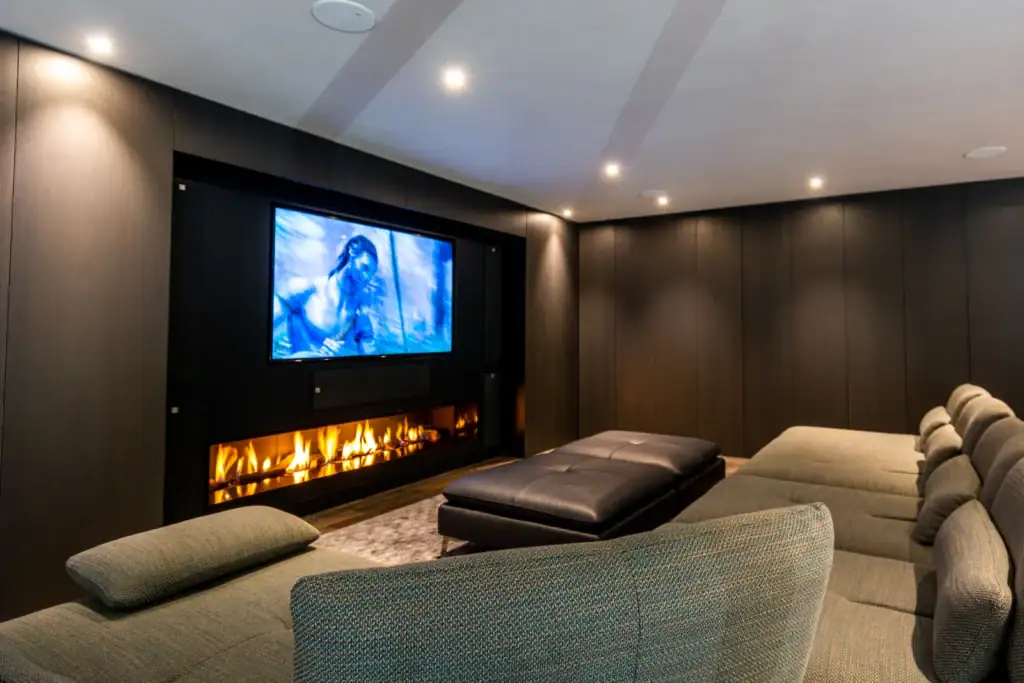
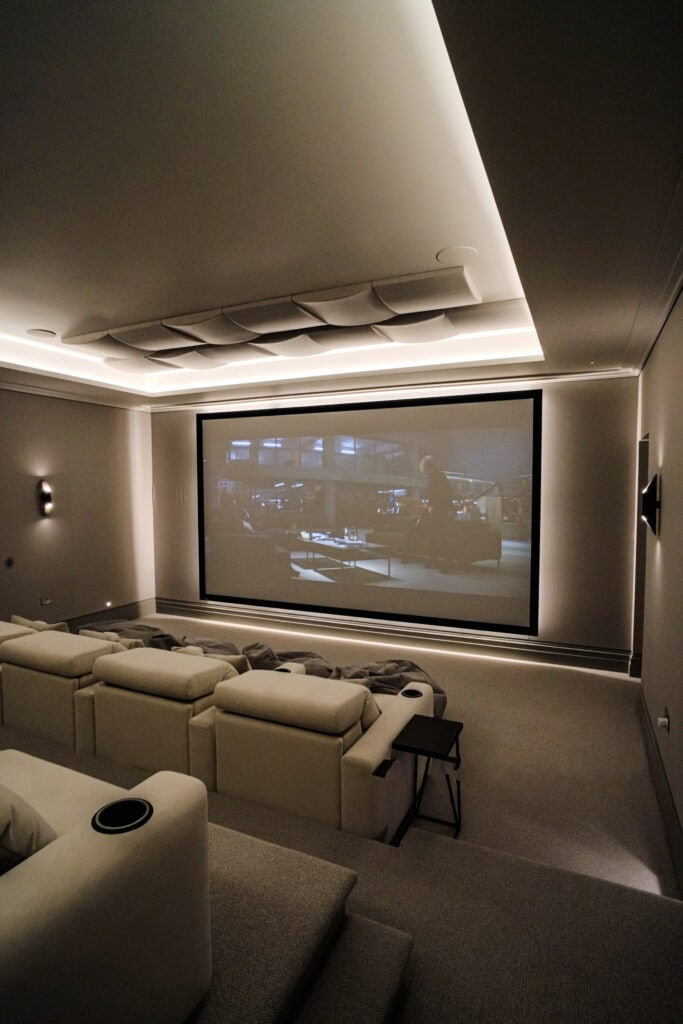
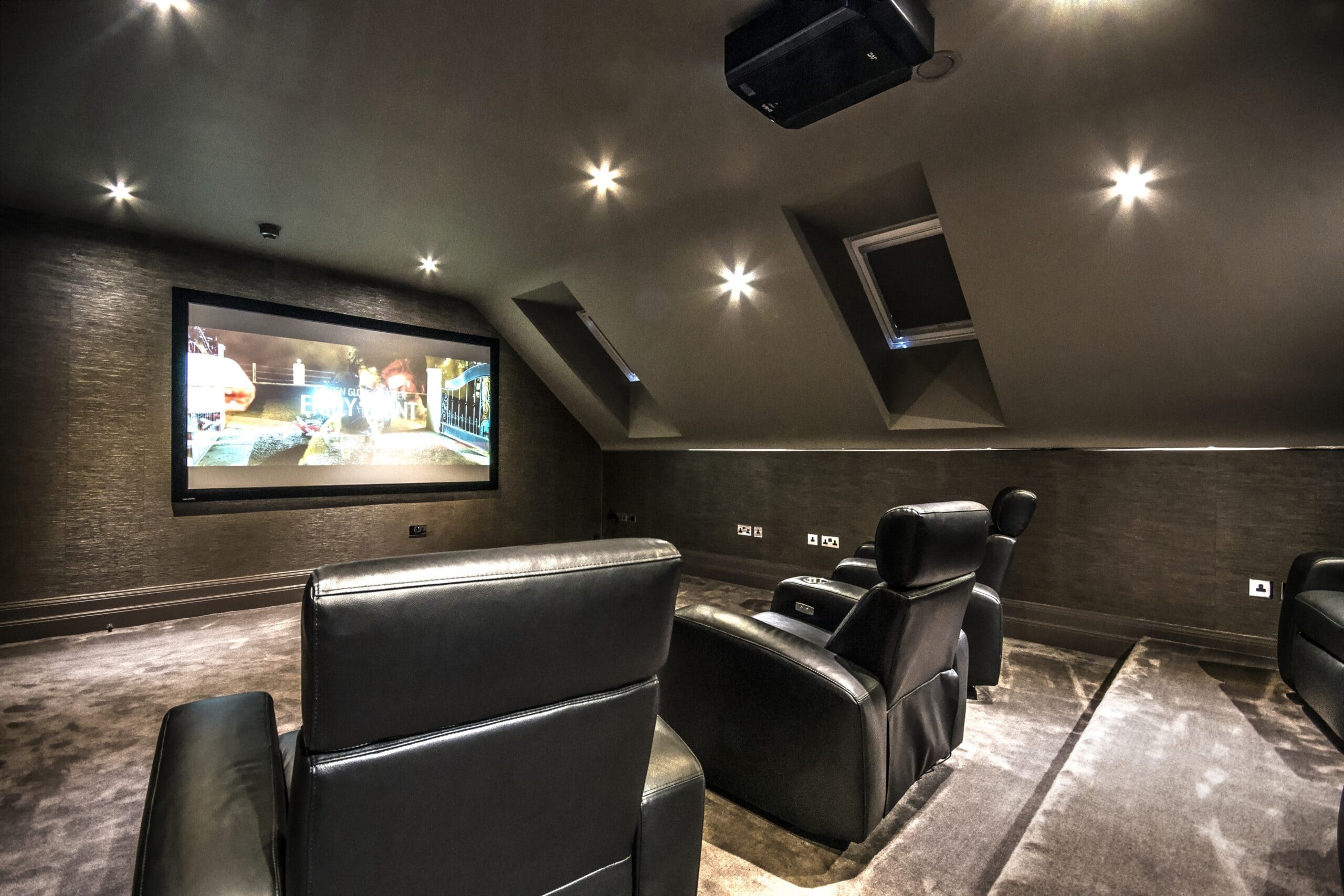
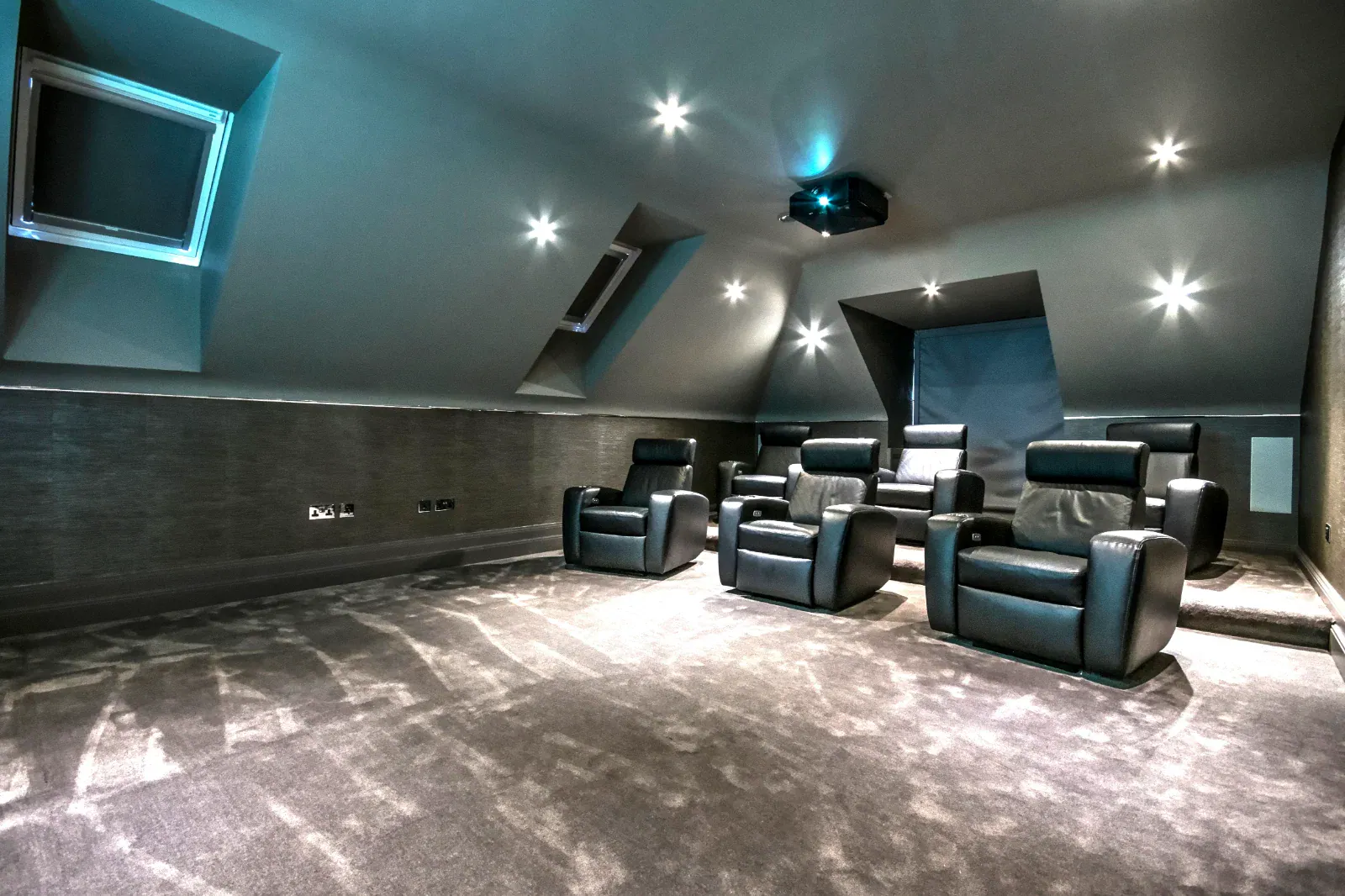
  • Oxshott: a dedicated cinema under a sloped ceiling, with a KEF THX 7.2.2 Dolby Atmos package and a Denon AV receiver. The front speakers sit behind a 120-inch acoustically transparent screen, an Epson laser projector is ceiling-mounted, and Control4 modes switch the room between films and live sport.
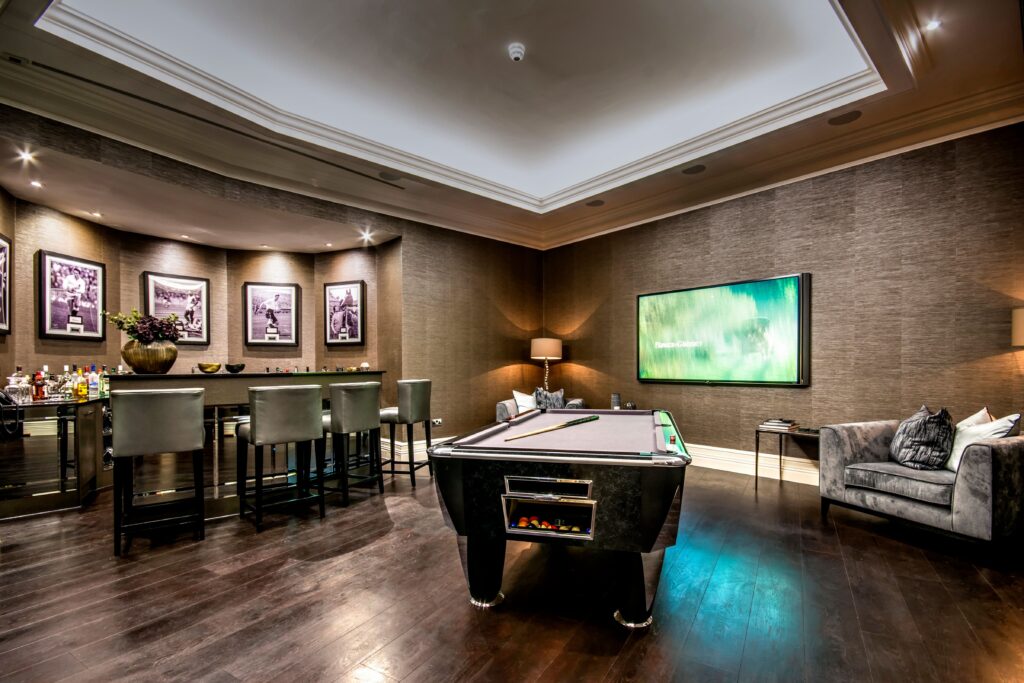
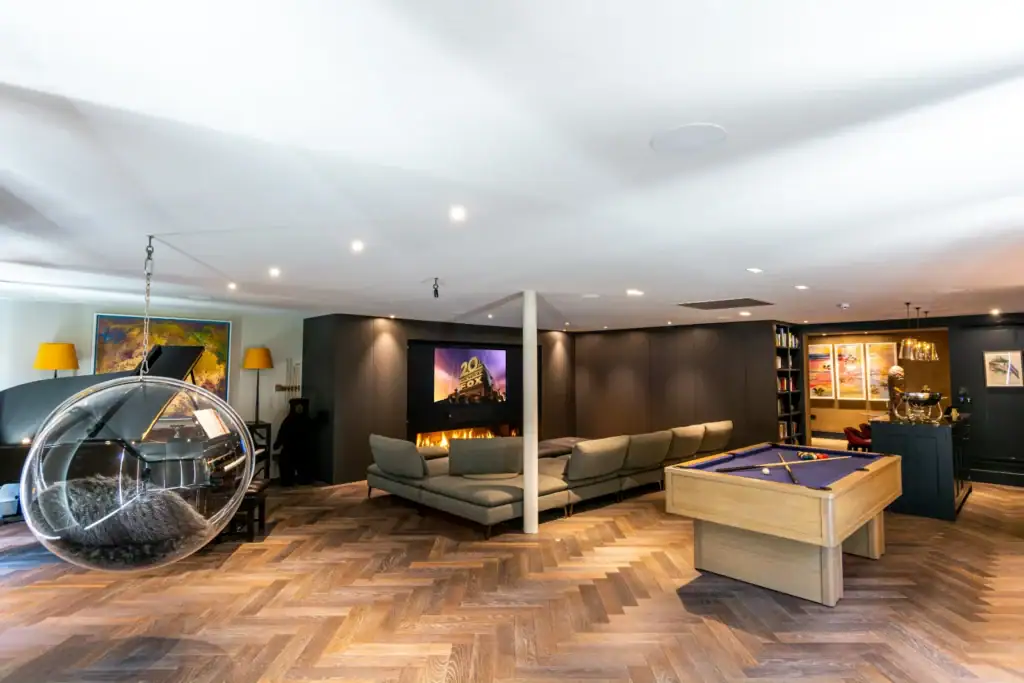
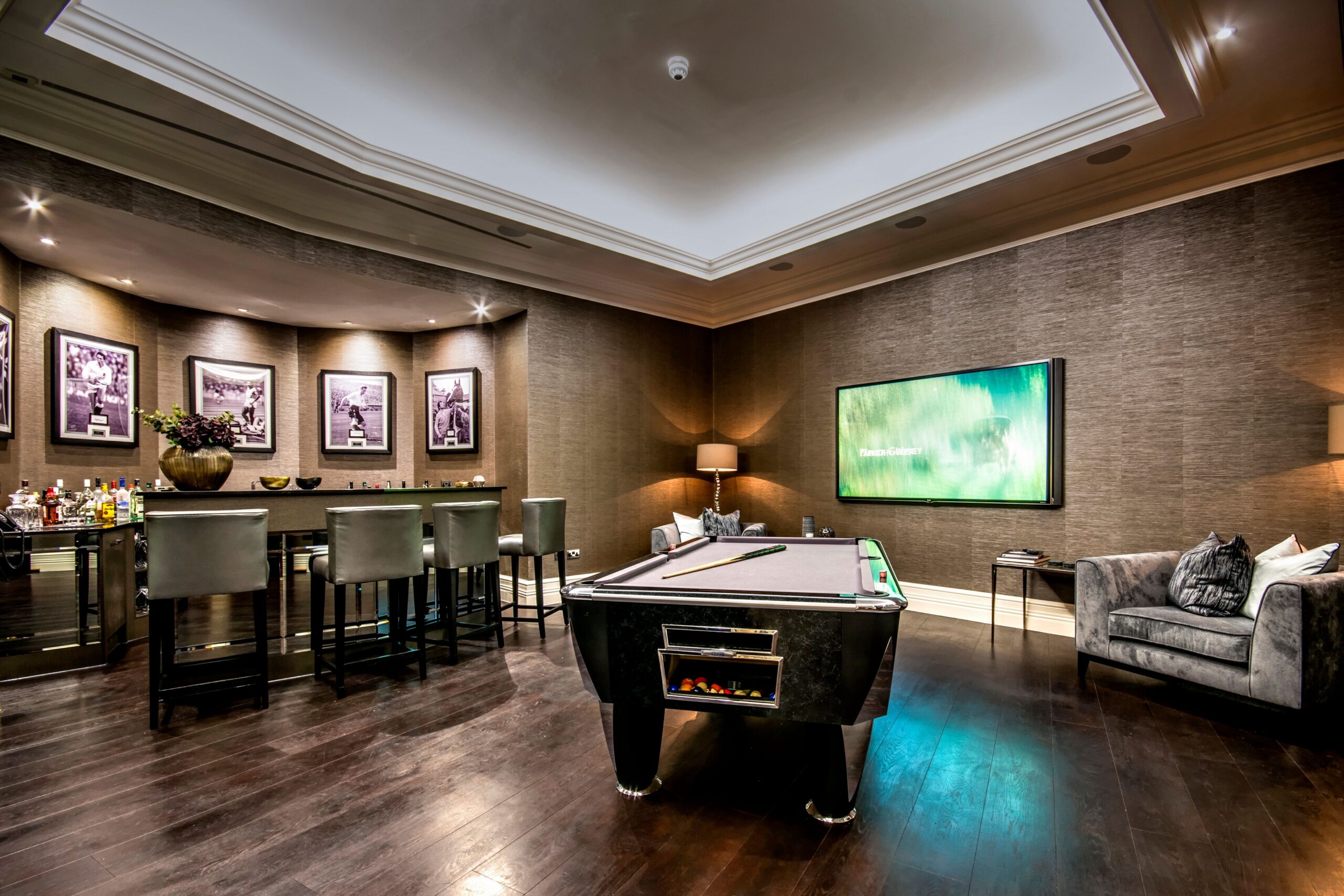
  • Esher: an open-plan entertainment room with a bar and snooker table. Dual KEF 8-inch subwoofers and a KEF THX 5.2.2 package are driven by a Marantz processor and power amplifier. An 85-inch Samsung TV handles everyday viewing; in cinema mode a Draper motorised screen drops in front of it and the projector descends on a Future Automation lift.
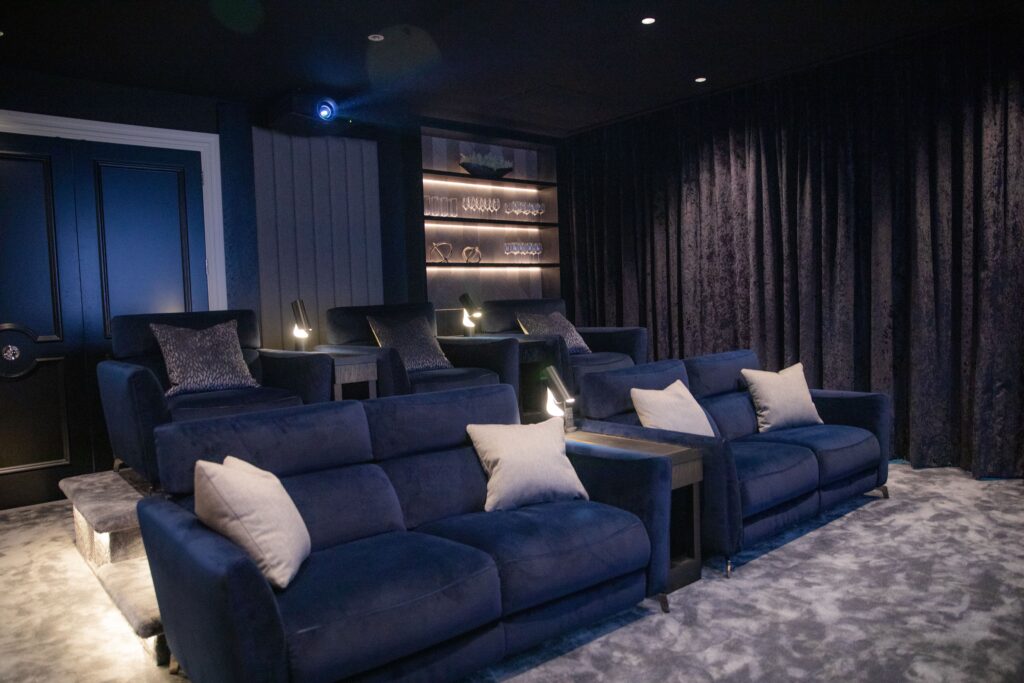
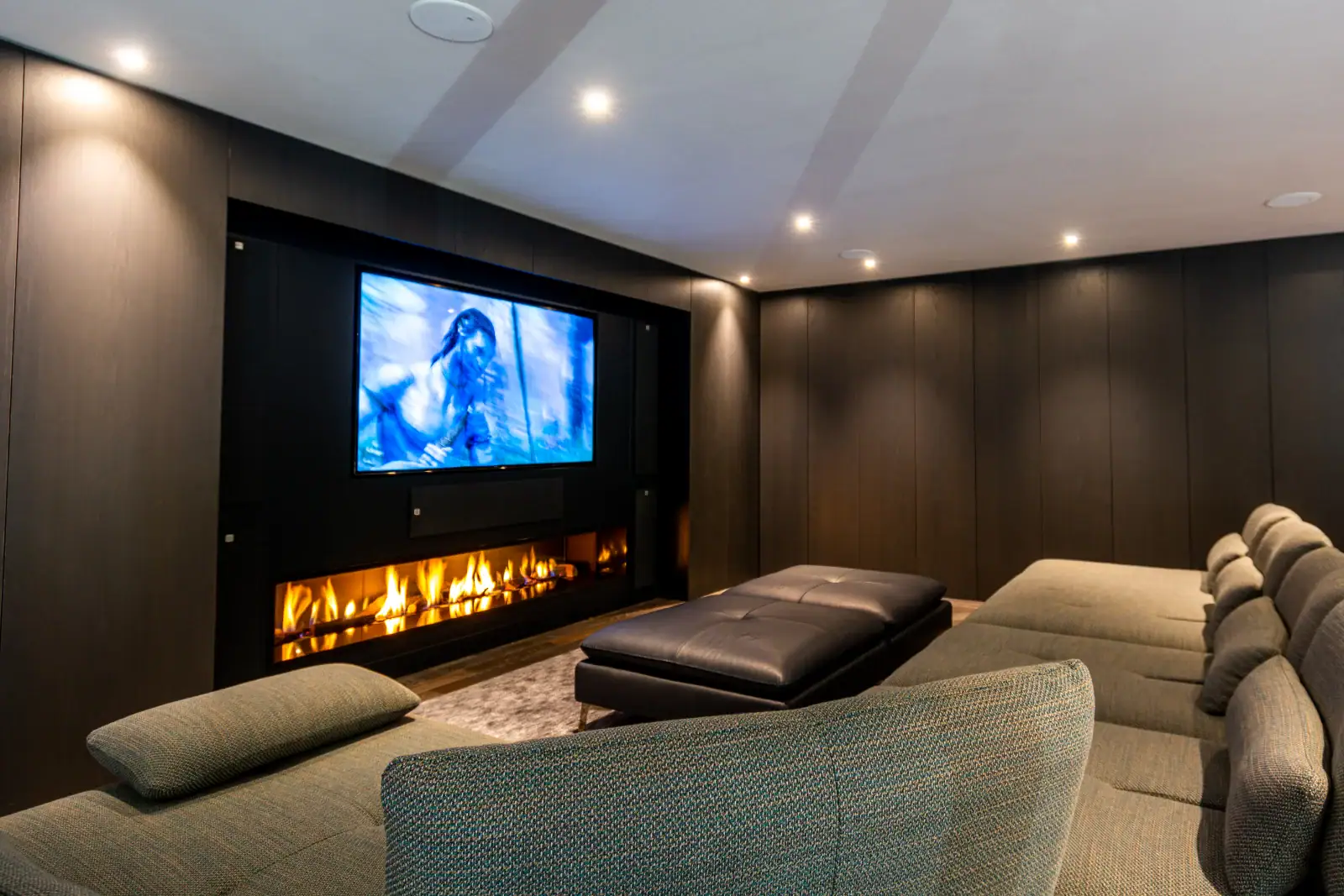
  • Weybridge: a basement cinema and sports bar in a large family home. KEF Ci speakers cover the front stage, the surrounds and the Atmos ceiling channels, with a KEF Ci subwoofer and a Denon processor. Keeping everything in the walls and ceiling kept the family space clear.
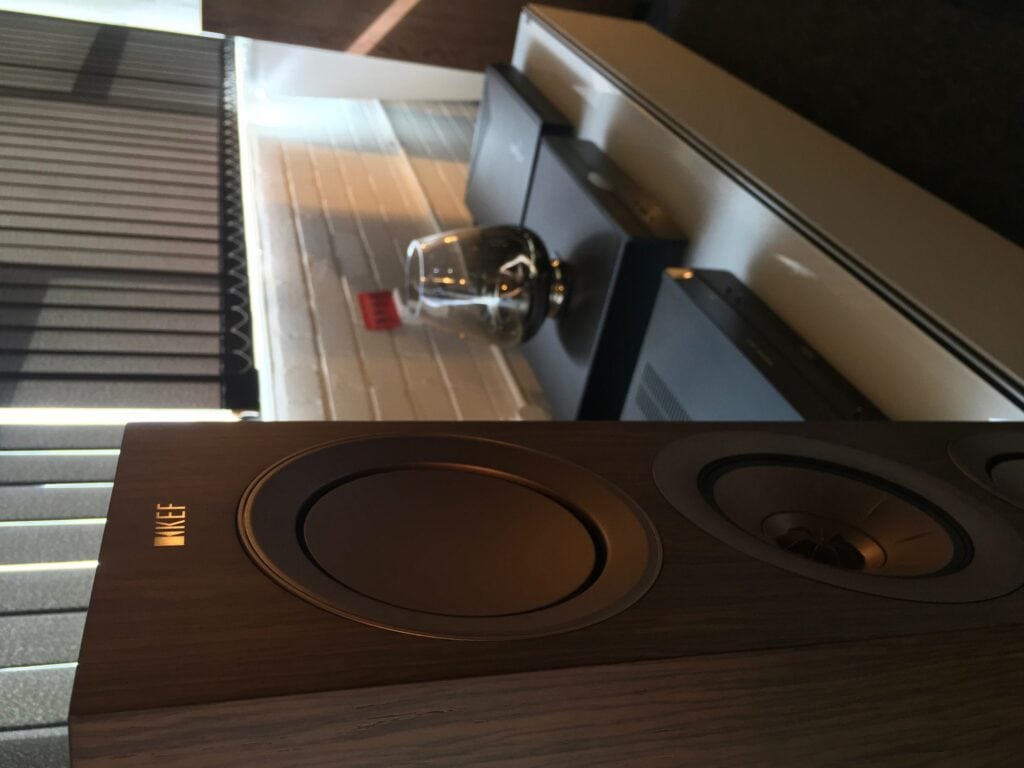
Walnut KEF R Series floorstanding loudspeaker with a Uni-Q array between two bass drivers
Photo: david falkner from Birmingham, England, CC BY 2.0, via Wikimedia Commons
Integration

How a KEF cinema works with Control4 and Lutron

KEF Ci speakers are passive, so integration happens at the AV receiver or processor, which Control4 drives along with the projector, screen and lighting. At Esher, choosing cinema mode lowers the projector from its ceiling lift and drops the screen in front of the TV, while Control4 lighting zones cover moods from party to cinema. Scenes we typically build around a KEF system:

  • Film: the processor switches to the film source and its Dolby Atmos decoding first, then the lights go down once the picture is ready.
  • Sport: brighter lighting and a dialogue-friendly sound mode, much like the separate film and sport modes programmed at Oxshott.
  • Pause: stopping the film raises the lights to a walking level so nobody misses a step.
  • Back to TV: in a dual-purpose room like Esher, one button lifts the screen and projector away and the room is ready for casual viewing on the TV again.

Where lighting runs on Lutron lighting control rather than Control4 dimmers, the same scenes are triggered from the cinema remote. Our Control4 installation page explains the wider system.

Already own KEF?

Already have KEF speakers? We can help

If your cinema or media room already has KEF in the walls, we can recalibrate it after a new processor or a change of seating, trace a channel that has gone quiet or distorted, and replace the AV electronics without disturbing the speakers. We can add KEF in-ceiling Uni-Q models to an older KEF surround layout to give it Dolby Atmos height channels, and reset a THX package whose levels have drifted after years of adjustments. If you are relocating the cinema, we can tell you which KEF models are worth lifting and reusing. See our takeover and maintenance service for systems another installer fitted.

Ask about your system Call 020 3397 9888

We also look after systems installed by other companies. See takeover and maintenance.

Compare

KEF or Sonance in the ceiling?

Both make fine in-ceiling speakers, and we use each for a different job. KEF is the natural pick when the ceiling carries Atmos height channels in a dedicated cinema, because Uni-Q and the THX-certified models are designed for that work. Sonance comes first when the brief is to make the speakers disappear, particularly its finish-over Invisible Series for music in living spaces. In a whole-house project the two sit happily side by side: KEF in the cinema, Sonance in the drawing room.

kef home cinema
Our showroom

See and hear it before you decide

Visit our demonstration cinema and smart home showroom in Walton-on-Thames and try the technology for yourself.

“Fantastic service from Andy and Adrian, who installed a cinema room and full Sonos sound integration throughout my home. I would definitely recommend them! Their communication and professionalism were excellent from start to finish, and the cinema room they created was outstanding.”

C
Chris KiplingGoogle review

“We engaged AOI for the renovation of our period property in West London. A key requirement was a discreet, high-performance cinema arrangement that would blend seamlessly with the original character of the house, and they delivered exactly that.”

F
Fraser RobsonWest London

“We've worked with the team at Art of Integration on several high-end residential projects, where they've delivered Control4 smart home systems. From the initial design through to client handover and ongoing support, their attention to detail and level of service has been outstanding.”

A
Amanda HollisTrade partner
Questions

KEF: your questions answered

Anything else, call us on 020 3397 9888.

Are KEF in-ceiling speakers good for Dolby Atmos?

Yes. KEF features its Uni-Q driver across the Ci range, and it behaves as a single point source and keeps its sound consistent across several seats, an advantage for overhead channels. In our Weybridge basement cinema the Atmos ceiling channels are KEF Ci in-ceiling speakers, and our Oxshott and Esher rooms use KEF THX packages with height channels.

What is a KEF THX package?

It is a set of KEF Ci speakers whose models carry THX certification, chosen to work together as one cinema system. KEF's UK site lists THX models across its R Series, Reference and Q Series, and describes its Extreme Home Theatre system as THX certified in the Dominus and Ultra classes. Oxshott uses a KEF THX 7.2.2 package and Esher a KEF THX 5.2.2.

What is KEF Uni-Q?

Uni-Q is KEF's coincident driver, patented in 1988. Instead of sitting above the woofer, the tweeter is built into its centre, so high and middle frequencies come from one place. KEF says this removes the narrow sweet spot of a conventional speaker, which is why it suits cinemas where several people sit away from the centre line.

Can KEF speakers sit behind a projector screen?

Yes. In our Oxshott cinema the front speakers are hidden behind a 120-inch acoustically transparent screen, which keeps the sound centred on the picture and leaves the front wall dark and plain. The screen material, the speaker depth and the space behind the screen need to be planned together, so we fix all three at the design stage.

How many KEF speakers does a home cinema need?

There is no fixed number. The Esher entertainment room, where the cinema shares space with a bar and snooker table, runs a KEF THX 5.2.2 package. The Oxshott cinema, a dedicated room with two rows of recliners, has a KEF THX 7.2.2 system. We look at how the room is used, the seating and the ceiling before choosing models.

Is KEF a British company?

KEF was founded in 1961 by Raymond Cooke and takes its name from Kent Engineering and Foundry in Maidstone, Kent, where it began in a Nissen hut. KEF describes the UK as its home and has created its speakers from there since 1961, including the Uni-Q driver it designed and patented in 1988.

Get in touch

Talk to us about KEF

Planning a new room, or need help with a KEF system you already have? Tell us a little about it and a designer will come back to you.

  1. We call you backA quick conversation about your home, the room and your timings.
  2. Design consultationAt your home or in our Walton-on-Thames showroom, where you can see and hear the technology.
  3. Design and proposalA tailored design, with 3D visuals before you commit.

Request a free consultation

It takes less than a minute.

We will get back to you as soon as possible. We use your details to reply to your enquiry and keep them as described in our Privacy Policy.

KEF is a trademark of its owner. This page describes how we design with and install these products. Project photos are our own. Other images: Photo: david falkner from Birmingham, England, CC BY 2.0, via Wikimedia Commons; Photo: david falkner from Birmingham, England, CC BY 2.0, via Wikimedia Commons.