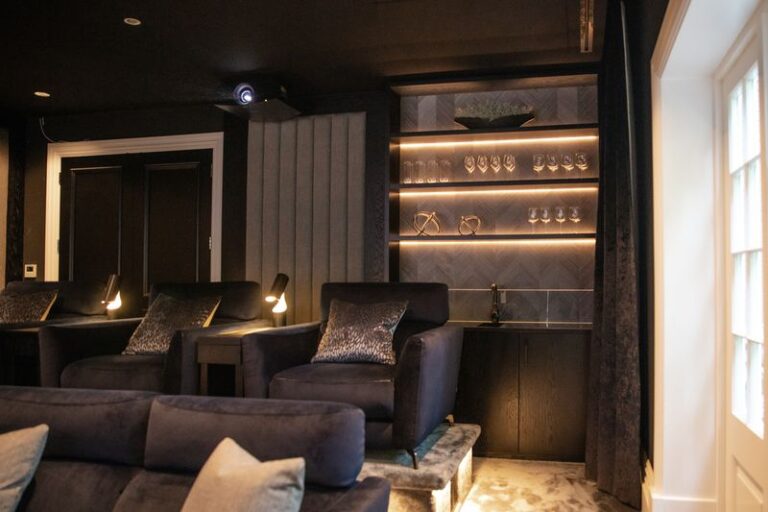
What is Wisdom Audio?
Tom and Debi Bohlender founded Wisdom Audio in 1996 to build speakers around thin-film planar magnetic drivers arranged as a line source. Two years later the company moved to Carson City, Nevada, where it still designs, engineers and manufactures its products. Planar magnetic drivers are difficult to make, so Wisdom builds its own: a flat, tensioned film diaphragm with magnets behind it, in front of it, or both, rather than a cone and dome.
The current catalogue includes:
- Sage Series: planar magnetic speakers for in-wall, on-wall, in-ceiling and freestanding use, first shown at CEDIA in 2007.
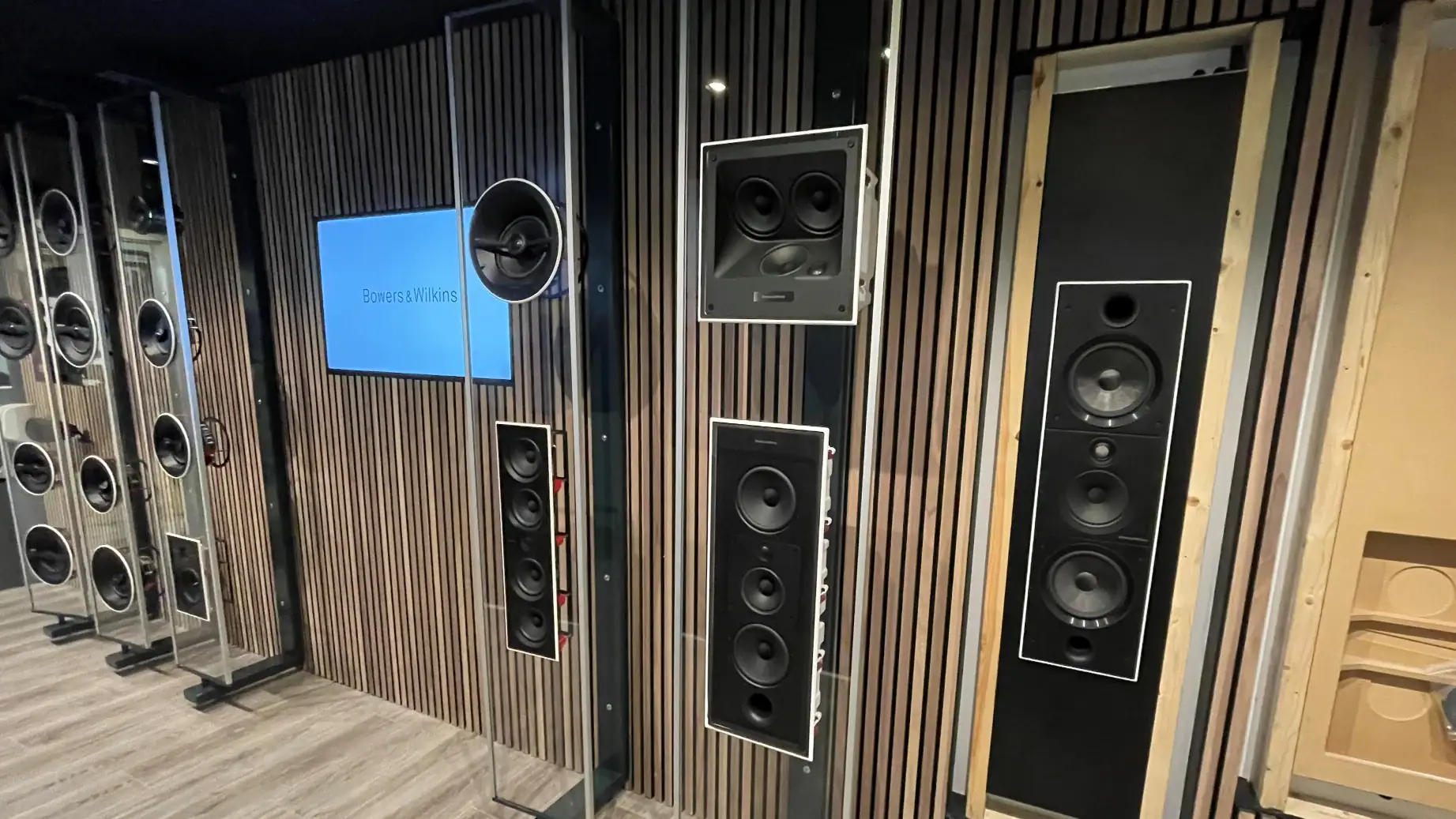
- Sage Cinema: the Line 2, Line 3 and Line 4 line source models, a Hybrid Line Source, and the Point 2 V2 and Point 3 GT point source models, aimed at private cinemas and media rooms.
- Insight Series and Wisdom Series: further in-wall and on-wall ranges.
- Subwoofers: models for walls and ceilings, plus designs based on Wisdom's RTL (regenerative transmission line) principle, which drives a folded internal pipe from both sides of the woofer.
- Electronics: SA-2, SA-3 and SA-8 amplifiers, each with a DSP version.
Why line source speakers suit a cinema with several rows
Most speakers behave like a point: sound spreads out as a sphere, so its level falls away quickly with distance. A tall line source spreads sound as a cylinder instead. Wisdom's own figures show the difference: between one and four metres, a point source loses 12 dB and a line source only 6 dB. In a room with a second or third row of seats, the back row hears close to the same level as the front, and nobody at the front is blasted so that the back can hear.
Wisdom also says a true line source removes most floor and ceiling reflections from about 530 Hz upwards, and that wall mounting removes the reflection from the wall behind. The catch is size. Wisdom says a true line source in a home needs to be roughly five to six feet tall or more. A single Sage Cinema Line 3 module is 194 cm tall but only 13.3 cm deep, made for in-baffle, in-wall or on-wall mounting behind a projection screen or fabric wall. That shape is why Wisdom belongs in a room built for films rather than a living room with a TV.
Planning a Wisdom room: modules, overheads and the rack
- Choose line or point source for each position. Line source models suit the screen wall where height allows. The Point 3 GT can be fitted horizontally or vertically and runs passively from one amplifier channel, which helps wherever a tall module will not fit.
- Plan overhead speakers with the ceiling. The Sage iCS7a is a passive in-ceiling model with an angled planar magnetic driver aimed at the seats. It needs about 16.4 cm of depth and a 25.9 cm cut-out, and an optional laser tool helps align it. For where height speakers belong, see how Dolby Atmos layouts work.
- Allow space in the rack. An SA-8 is 2U high with eight channels, and Wisdom says units can be stacked flat without undue heat. A large layout can still need several, so the rack needs room and airflow.
- Use DSP versions where the speakers need them. The SA-8 DSP adds active crossover, delay, gain and EQ profiles for every channel, FIR filters and a Dante input.
- Buy enough power. Wisdom warns that an amplifier pushed into clipping can damage tweeters, and advises buying more power than you expect to need.