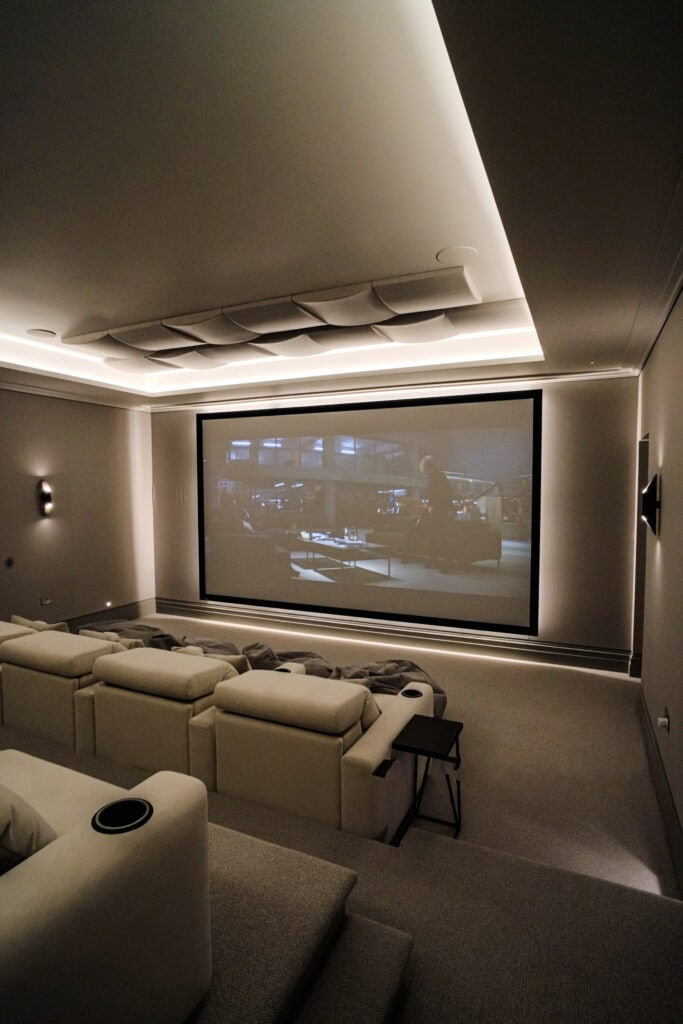
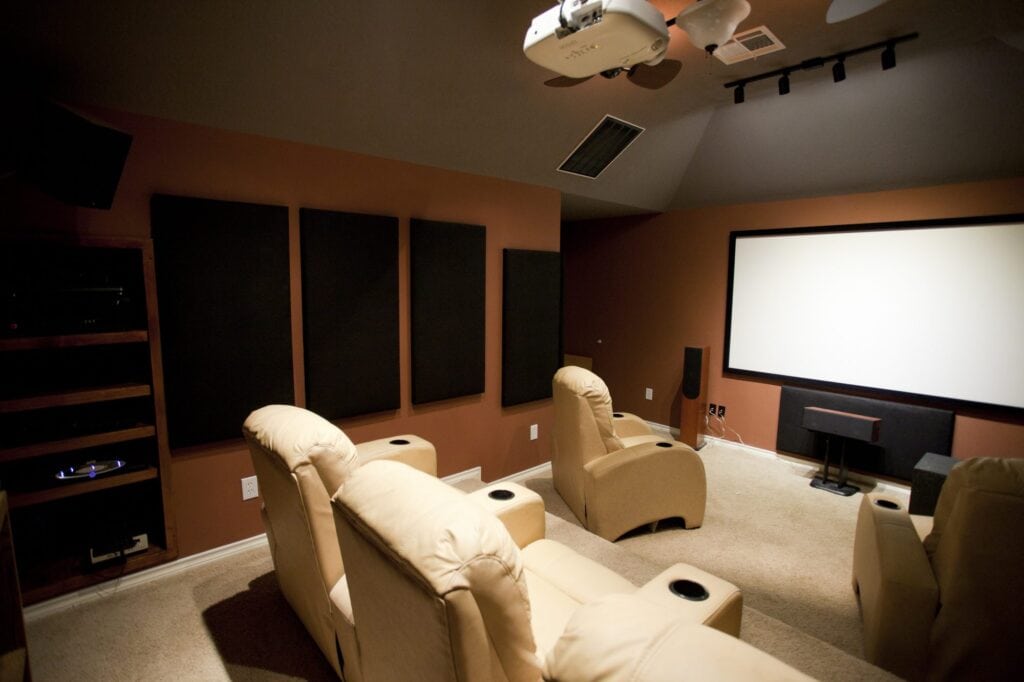
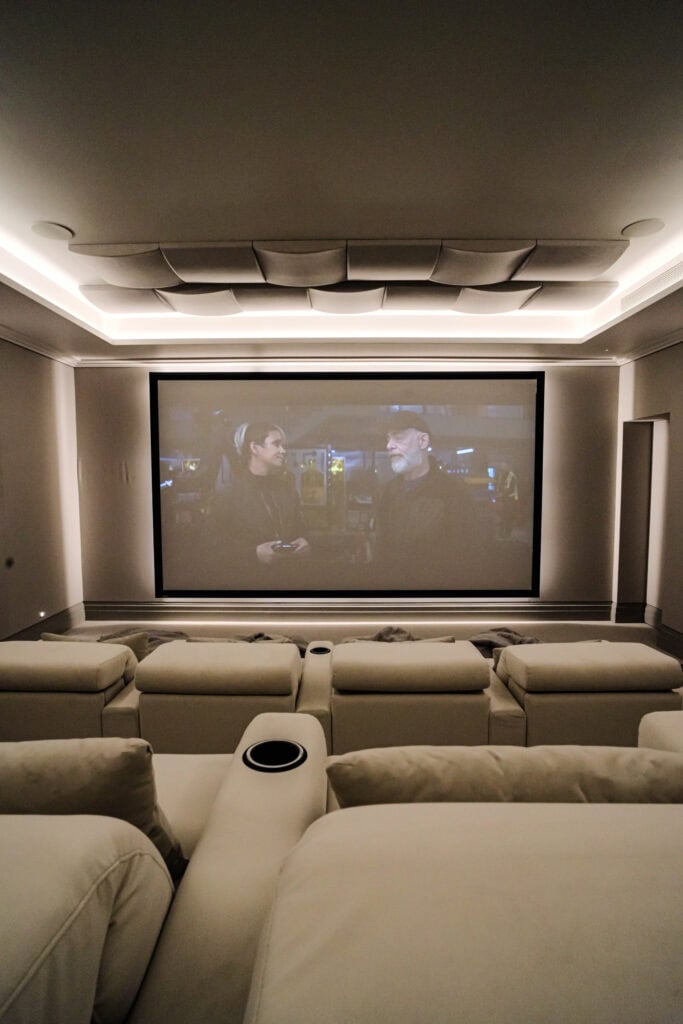
What sets cinema seating apart from a sofa?
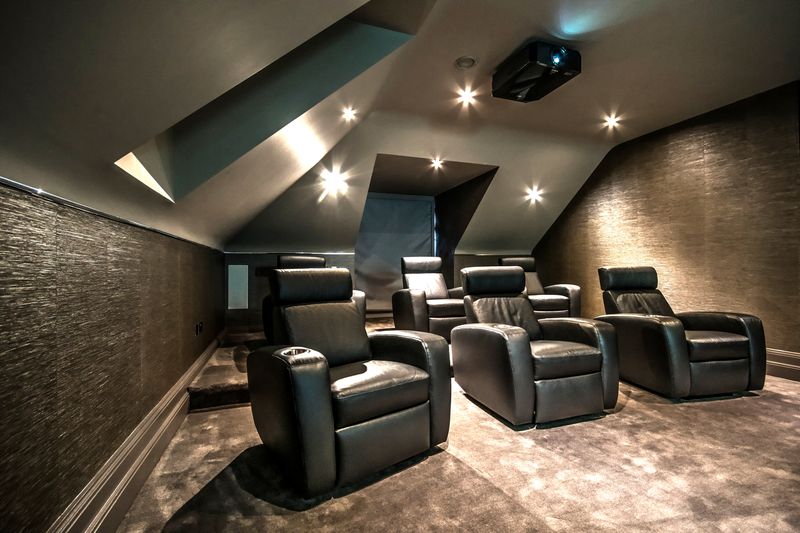
A cinema seat has to do three things a sofa does not: hold you comfortably through a three-hour film, put your eyes and ears in the right place for the screen and speakers, and move quietly at the touch of a button. Head height, recline angle and seat depth all affect what you see over the row in front and how sound reaches you, so in a dedicated room the seating is part of the technical design of a luxury home cinema, not furniture chosen at the end.
This page covers three of the seating makers we use. Moovia is a German company that began in Nagold in 2003 and makes its chairs in Germany and Europe. FrontRow Seating Ltd is based in Tunbridge Wells, Kent. Fortress started trading in Los Angeles in the late 1930s and has built home cinema seating since 1999.
Moovia, Front Row or Fortress: how the three makers differ
Moovia offers the most personal specification of the three. Collections such as Milano, Stockholm and Chesterfield can be ordered in Italian leather, fabric or faux leather, with armrests shortened or extended, and the seats offer adjustable headrests and footrests, lumbar support, heating and cooling, massage and lit cupholders. Moovia also offers native Control4 integration.
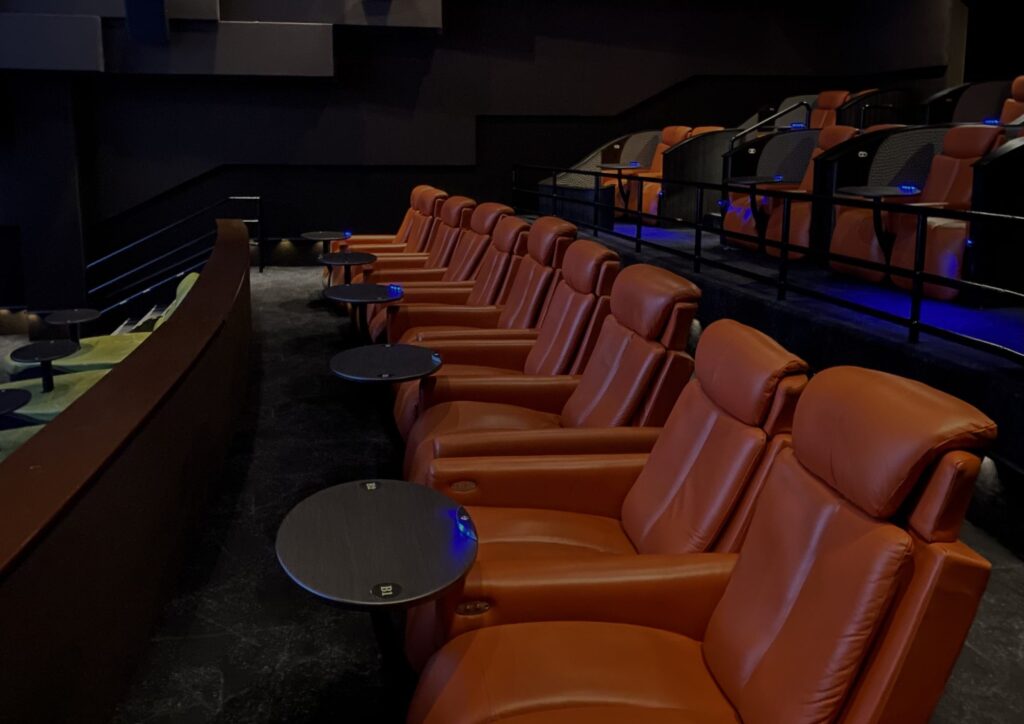
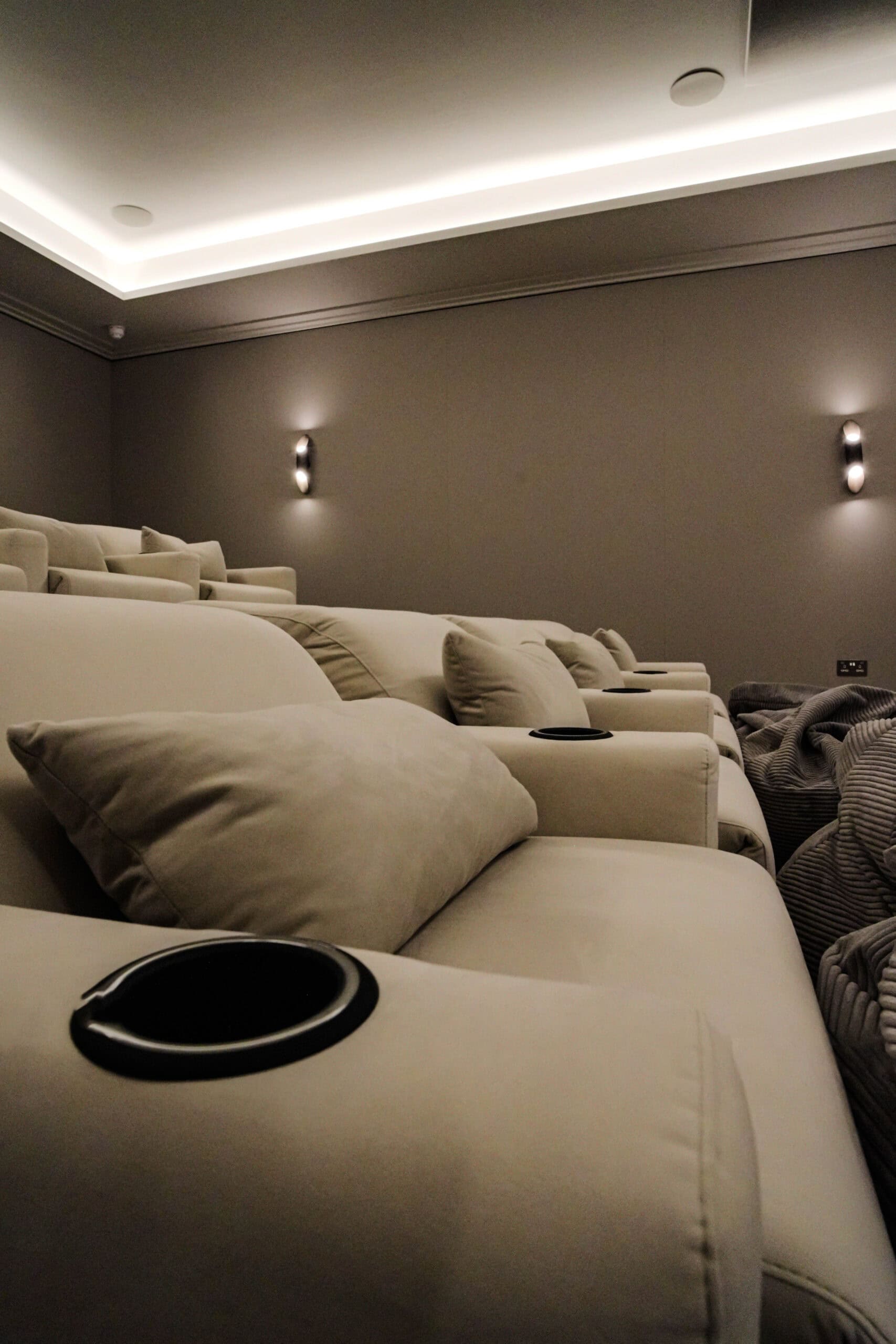
Front Row is built around modular ranges. Its Serenity seats use two motors, one for the recline and one for the headrest, and can be linked in straight or curved rows. The Modern and Luno ranges include corner configurations, and many Front Row models have cupholders and USB charging points.
Fortress builds each chair to order across more than 40 models, among them Bijou, Matinee and Palladium. Seat widths run from 20 to 26 inches, with custom sizes available, and an optional motorised system can raise an entire row by up to 8 inches.
Rows, risers, sightlines and recline clearance
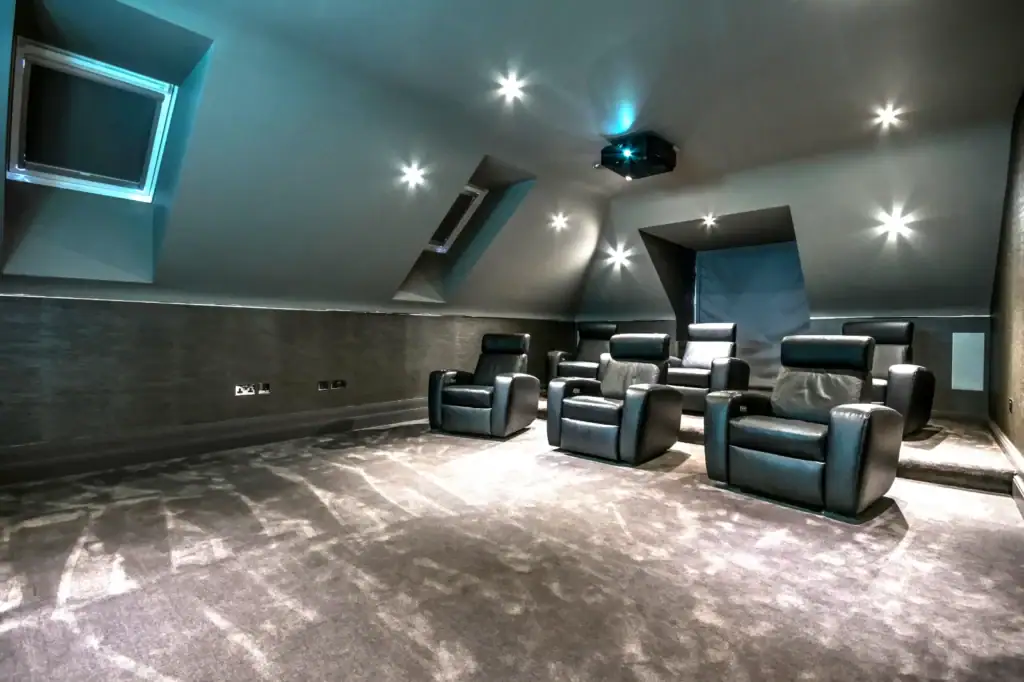
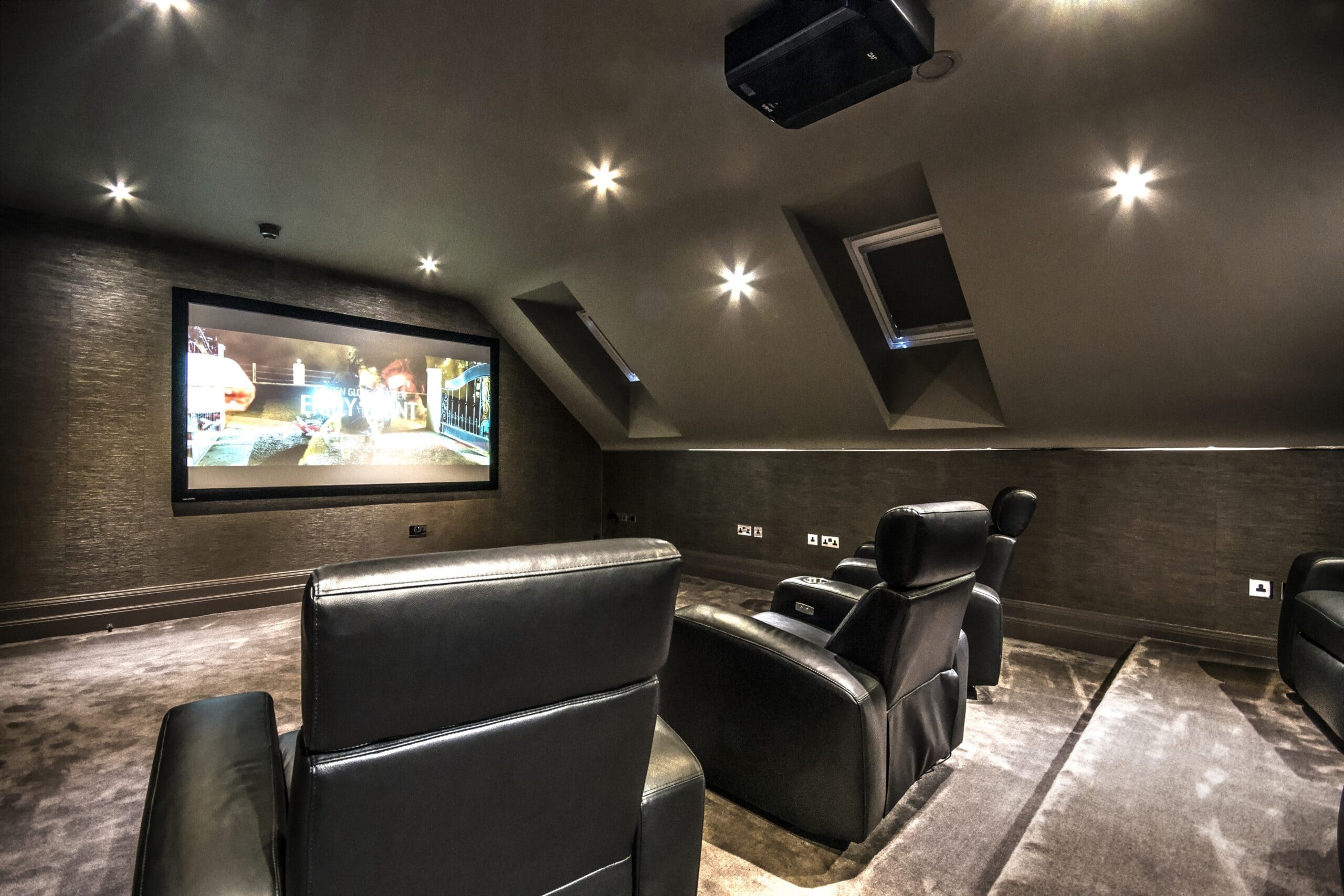
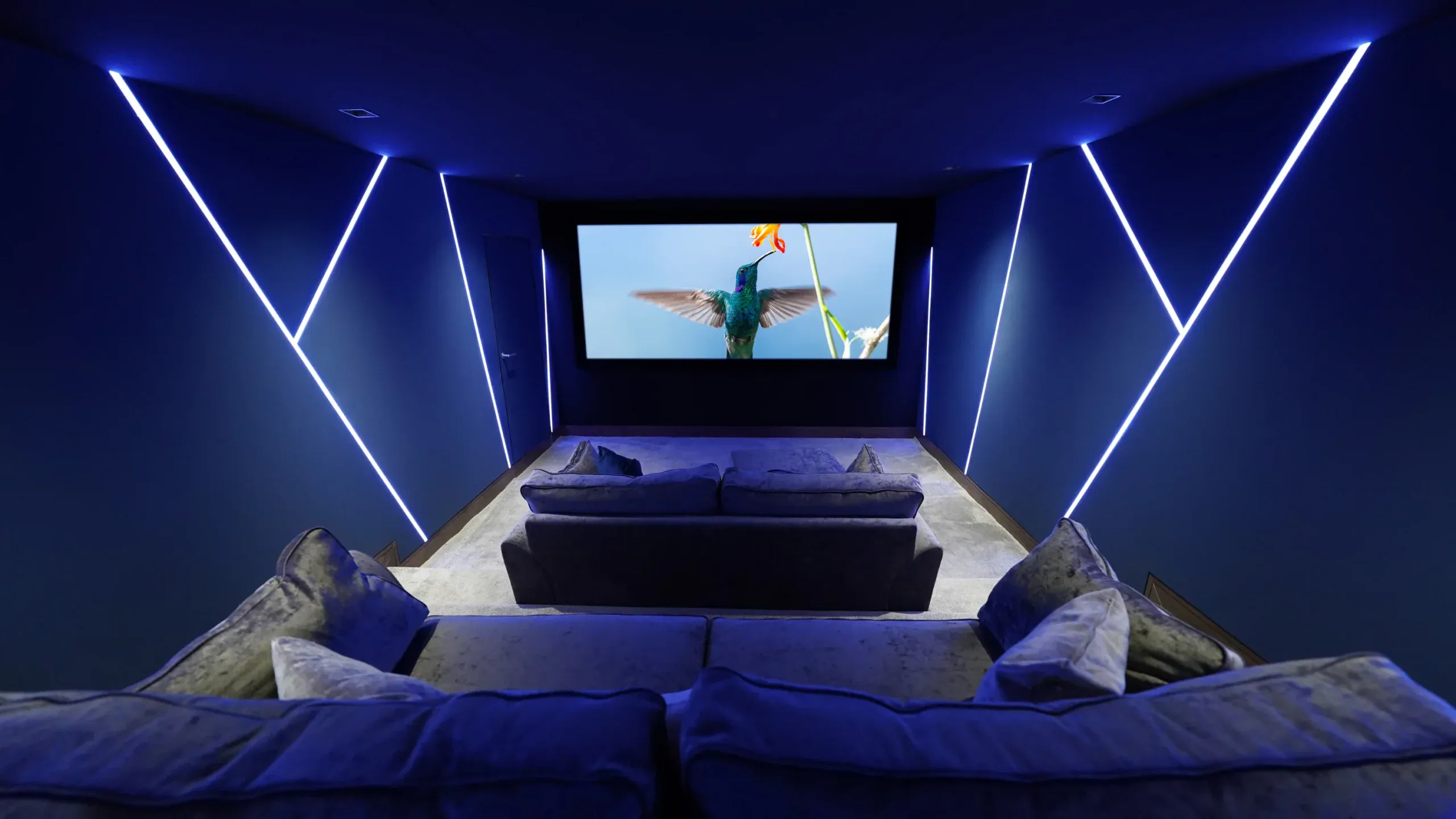
Seating is planned backwards from the screen. The front row sits at the distance that gives the right viewing angle for the screen size, and every row behind it needs enough height to see over the heads in front. That usually means a riser, whose height depends on row spacing, screen height and the head height of the chosen seat when reclined. Our home cinema room layout guide explains the geometry.
Recline changes the footprint. A seat that looks compact upright can need far more depth fully reclined, so we space rows for the reclined position plus a walkway behind. Wall clearance varies by design: Fortress's specification sheet, for example, shows a chair needing only 5 inches from the back wall at full recline. In basements with limited head height, a riser can eat into the ceiling space needed for Atmos speakers or a projector, which is why we settle the seating before the ceiling design, as our basement cinema guide describes.